 Read More

 Get A Quote

Digital Flow Transmitter Selection Guide: How to Choose an Electromagnetic Flowmeter
Home / News / Industry News / Digital Flow Transmitter Selection Guide: How to Choose an Electromagnetic Flowmeter
Product Category
NEW Category
Contact us
Contact Us
We specialise in the research, development and manufacture of electrical wires and cables.
 +86 13967196545
Related News
- How to Choose a Liquid Flow Transmitter: Electromagnetic Types, Accuracy, Installation
- Electromagnetic vs Mechanical Flow Meters: How to Choose the Right One
- Overcoming Flow Measurement Bottlenecks in Water Treatment: A Selection & Application Guide for Hangzhou Pangu’s Three Core Electromagnetic Flowmeters
- Electromagnetic Flow Meter vs. Vortex Flow Meter: Principles, Differences, and Selection Guide
Digital Flow Transmitter Selection Guide: How to Choose an Electromagnetic Flowmeter
Content
- 1 What Is a Digital Flow Transmitter?
- 2 How a Digital Electromagnetic Flow Transmitter Works
- 3 Key Specifications to Compare Before Buying
- 4 Installation Considerations for Digital Flow Transmitters
- 5 Industrial Applications of Digital Flow Transmitters
- 6 How to Choose the Right Digital Flow Transmitter
- 7 Why Calibration and Quality Control Matter
- 8 Digital Flow Transmitter FAQ
At a chemical plant in eastern China, a process engineer replaces a failed analog flow transmitter every six months. The measured rate keeps drifting, and the maintenance crew wastes hours on manual zero and span adjustments. A digital flow transmitter from Pangu Automation solves this problem by delivering a stable digital output that can be read directly by a PLC, DCS, or SCADA system.
For conductive liquids such as process water, acids, alkalis, and slurries, the most practical digital solution is an integrated electromagnetic flow meter. Pangu Automation has built this type of instrument for more than two decades and calibrates every unit in a 4,000 m² factory with three independent water calibration lines. The result is a transmitter that combines accuracy, digital diagnostics, and long service life.
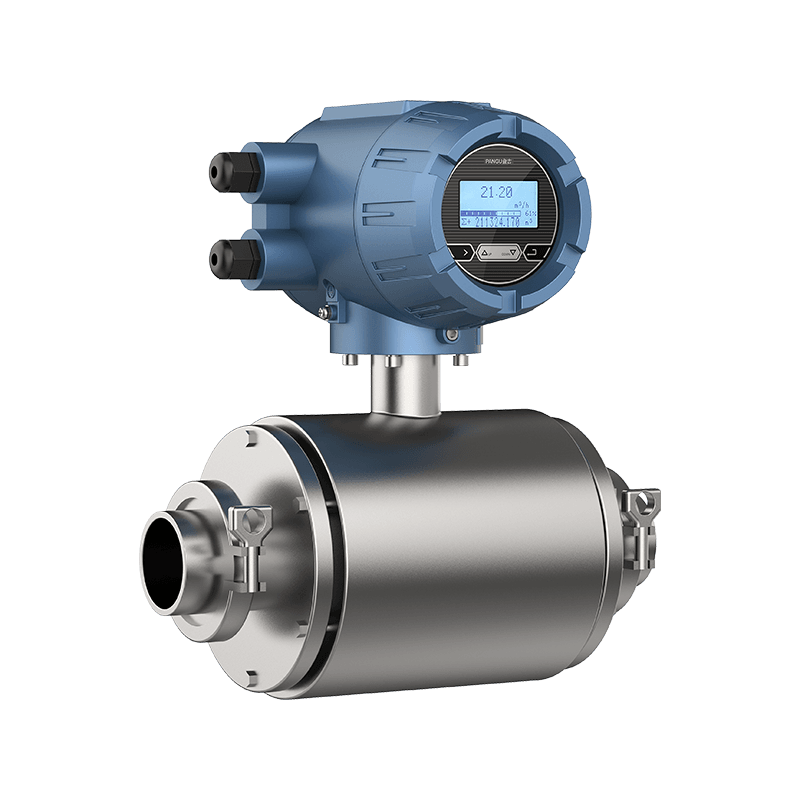
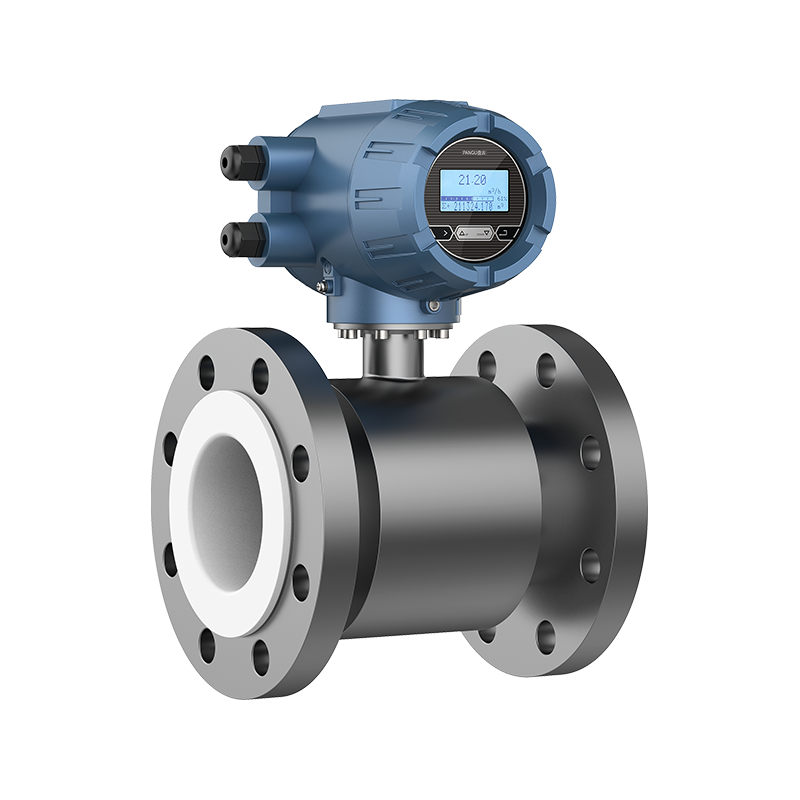 Integrated Electromagnetic Flow Meter for Conductive LiquidsThe PMF integrated electromagnetic flowmeter combines a sensor and intelligent converter, offering digital diagnostics and multiple outputs. Its 0.5% accuracy and HART/Modbus communication fit modern control systems, making it a reliable choice for process monitoring.View Product →
What Is a Digital Flow Transmitter?
A digital flow transmitter is a measurement instrument that combines a flow sensor with a microprocessor transmitter. Instead of delivering only a raw current value, the transmitter processes the sensor signal and outputs a stable analog or digital reading. Common interfaces include 4-20 mA with HART overlay, RS-485 Modbus, and pulse output.
The biggest difference from an older analog device is embedded intelligence. A digital transmitter checks coil excitation voltage, electrode signal strength, and ambient noise. When a parameter moves outside the factory limits, the transmitter sends a diagnostic warning to the control system instead of continuing to report a wrong number.
| Feature | Analog Output | Digital Output |
|---|---|---|
| Signal type | 4-20 mA only | 4-20 mA plus HART or Modbus |
| Diagnostics | Limited | Full self-check |
| Configuration | Manual zero and span | Software-based setting |
| Integration | PLC analog I/O | Direct to DCS/SCADA |
| Data logging | No | Yes with external data logger |
How a Digital Electromagnetic Flow Transmitter Works
Pangu's digital flow transmitters for conductive liquids use the electromagnetic principle. Faraday's law states that a conductive fluid moving through a magnetic field generates a voltage proportional to the velocity. The transmitter energizes two coils to create a magnetic field across the pipe, and two electrodes measure the induced voltage at the tube wall.
Because the induced voltage is proportional to the average velocity, and the pipe cross-section is known, the transmitter calculates volumetric flow in cubic meters per hour or liters per second. Repeatability is typically better than 0.1% of the measured value.
A digital design is especially useful for difficult fluids. Slurries, sewage, and liquids with entrained air produce noisy electrode signals. The microprocessor in a digital transmitter applies filtering and damping algorithms that separate the true flow signal from peaks caused by bubbles or solids. This is why a chemical industry flow meter installed in a slurry line remains stable while a legacy mechanical meter would over-report or jam.
Key Specifications to Compare Before Buying
When you evaluate a digital flow transmitter for a real plant, look beyond the price tag. The four most important parameters are accuracy, repeatability, conductivity limit, and communication protocol.
0.2%
Accuracy of reading
0.1%
Repeatability
0.5 μS/cm
Minimum conductivity
IP65 / IP67
Protection class
| Parameter | Typical Value |
|---|---|
| Span | 0.5 to 12 m/s |
| Output | 4-20 mA, pulse, HART, Modbus |
| Nominal diameter | DN15-DN1000 |
| Ambient temperature | -20°C to 60°C |
| Lining materials | Rubber, PTFE, polyurethane |
Accuracy and Repeatability
A standard digital electromagnetic flowmeter achieves an accuracy of ±0.5% of the measured value. The high precision version reaches ±0.2%. Repeatability stays inside ±0.1%. For fiscal or custody transfer metering, the high precision model is essential because a small drift can add up to significant volume differences over a year.
Output and Communication Options
Choose a transmitter that matches your existing control system. If your plant uses a distributed control system with a Modbus network, the RS-485 output is the most convenient option. If the plant runs on a traditional analog controller, a 4-20 mA signal with HART gives you both compatibility and digital access for diagnostics.
Installation Considerations for Digital Flow Transmitters
A digital flow transmitter is only as accurate as its installation. Plan the meter run before you order the device. For a full-pipe measurement, keep at least 5 pipe diameters upstream and 3 diameters downstream from the measuring point. Avoid installing the meter immediately downstream of a partially open valve or directly below a pump discharge, since these conditions create swirl and false flow signals.
Split-Type Transmitters for Difficult Locations
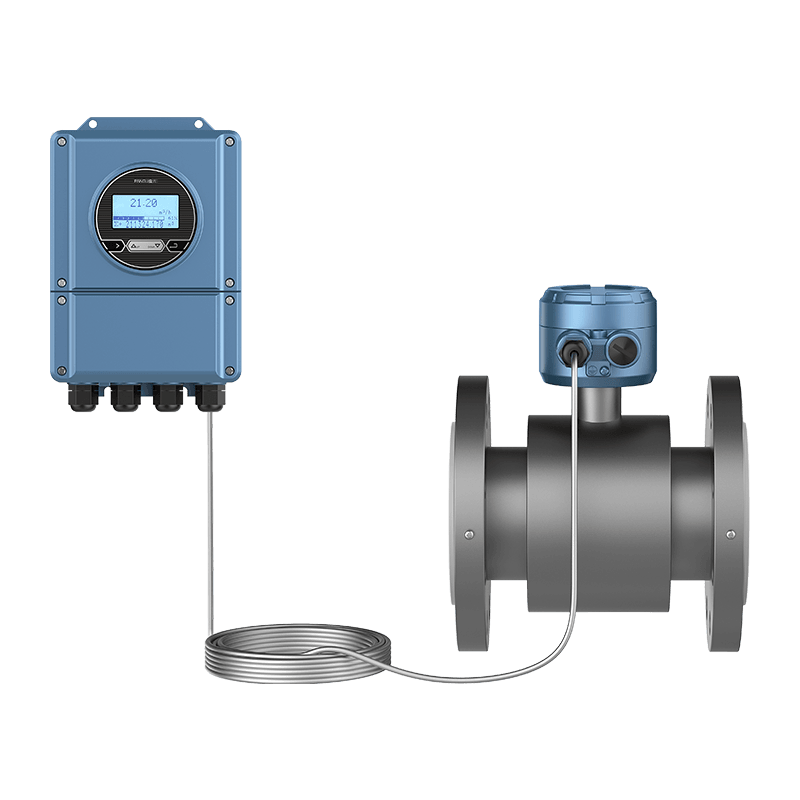
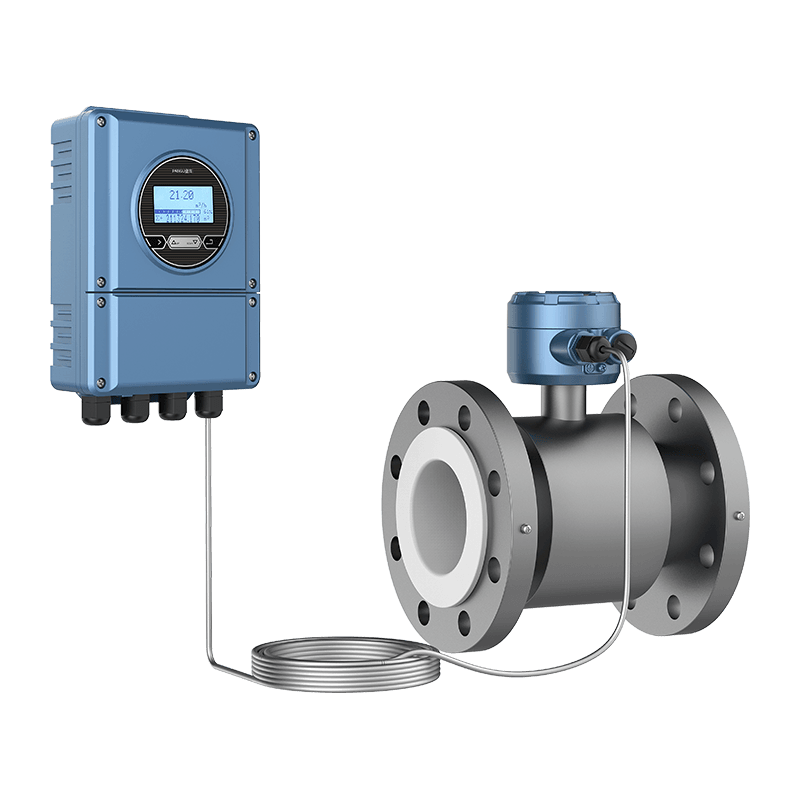
When the measurement point is placed in a hot environment above 60°C, or when access is restricted, a split-type remote electromagnetic flowmeter is the right choice. The measuring head stays at the pipe, while the transmitter electronics are mounted in a cool and safe area, usually in a nearby cabinet.
 Split-Type Remote Electromagnetic Flowmeter for Harsh ConditionsDesigned for high-temperature or inaccessible locations, this split-type flowmeter separates the converter from the measuring tube via cable, ensuring reliable operation in extreme environments. It provides accurate flow measurement with HART and Modbus interfaces.View Product →
Grounding and Noise Prevention
Grounding errors are a major cause of unstable readings. The reference electrode must be at the same potential as the process fluid. In a plant with large variable frequency drives, a stray current can reach the measuring electrode through a poor ground connection. A digital transmitter can filter some of this noise, but it cannot correct a physically wrong installation.
Industrial Applications of Digital Flow Transmitters
Digital flow transmitters are used in almost every process industry. Pangu's instrument portfolio covers six critical sectors, including chemical, water treatment, HVAC, pulp and paper, food processing, and energy measurement.
Chemical plantsWater treatmentHVACSlurry linesSewageFood processing
In the chemical sector, aggressive acids and alkalis attack mechanical flowmeters. A Pangu digital electromagnetic flowmeter with a PTFE liner and Hastelloy electrodes survives these environments and keeps the accuracy drift low. For a plant that measures both steam and liquid heat energy output, the FX1100 fiscal flow computer provides a digital calculation platform in tandem with a flow transmitter.
How to Choose the Right Digital Flow Transmitter
The selection process starts with three questions: What fluid are you measuring, what accuracy does the process require, and what installation space is available?
Evaluate the Fluid Properties
Clean water or a well-processed industrial liquid can use a standard integrated meter. When the fluid is a slurry with solids content, select a slurry-type electromagnetic flowmeter with a wear-resistant liner and a larger electrode size. For low-conductivity liquids such as boiler feedwater or demineralised water, the low-conductivity series expands the measurable range down to 0.1 μS/cm.
Match the Accuracy to the Process
For simple flow indication, ±0.5% accuracy is enough. For energy balance, mass transfer, or custody transfer, the high precision electromagnetic flowmeter delivers the additional stability required by the calculation.
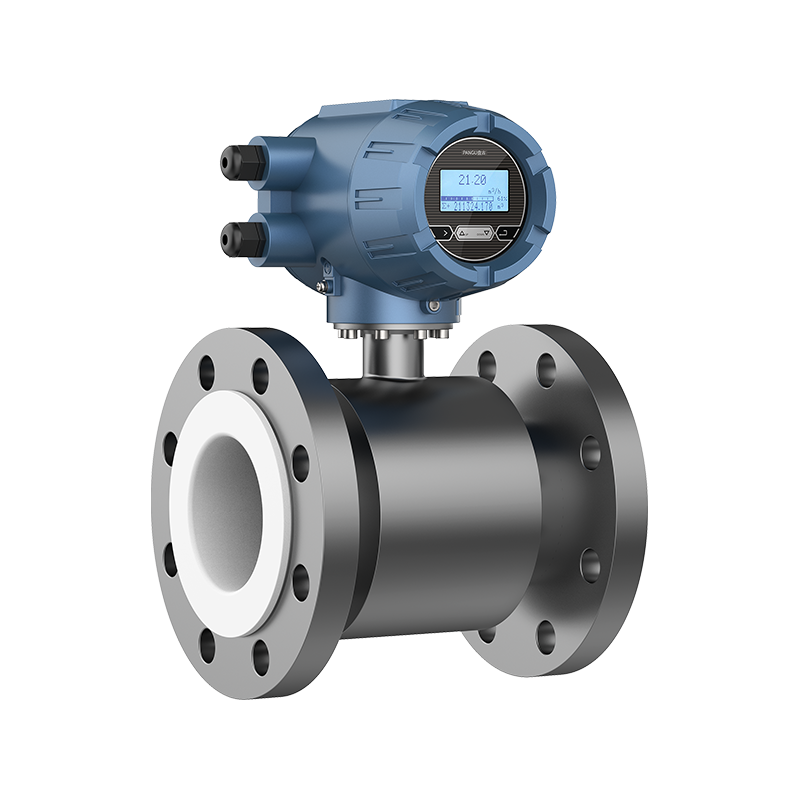
 High-Precision Electromagnetic Flowmeter for Critical MeasurementsWith an accuracy of 0.2%, this flowmeter suits applications like dosing and irrigation that require higher precision. It features a robust design with multiple outputs and wireless capabilities, supporting energy balance and custody transfer calculations.View Product →
Review the Total Cost of Ownership
A digital transmitter stores its calibration data in non-volatile memory. If the electronics module fails, a replacement unit does not require a complete re-calibration on site. This is a significant advantage over analog transmitters, which need re-zeroing after any component replacement.
Why Calibration and Quality Control Matter
Every digital flow transmitter is a measurement device, and its performance depends on the calibration system used at the factory. Pangu Automation has built a DN15 to DN1000 automatic high-accuracy water calibration facility with three independent calibration lines. Two are based on the master meter method and one uses the static mass method.
This multi-line design lets the factory verify transmitters against more than one reference, which catches systematic errors that a single line might miss. The calibration records ship with each instrument, so a plant engineer knows exactly how a digital flowmeter performed on the bench. A walk through the production and quality systems is described on the factory and calibration page.
The most important point: a digital flow transmitter should be tested in the same way it will be used in the field. For water-based fluids, the factory water loop is a sound predictor of field behavior.
Pangu Automation holds ISO 9001, ISO 10012, ISO 14001 and ISO 45001 certification. The electromagnetic series carries TUV CE EMC certification, National Fireproof certification, and hygienic certification for drinking-water contact.
Digital Flow Transmitter FAQ
Q1: What is a digital flow transmitter used for?
A digital flow transmitter measures the volumetric flow rate of a conductive liquid and sends the value to a controller. It also provides diagnostics, configuration, and data logging functions that a simple analog transmitter cannot deliver.
Q2: How accurate are digital flow transmitters?
A standard digital electromagnetic flowmeter has an accuracy of ±0.5% of the measured value. The high precision version reaches ±0.2% under calibrated flow conditions, with repeatability better than ±0.1%.
Q3: Can a digital flow transmitter measure non-conductive fluids?
An electromagnetic digital flow transmitter cannot measure non-conductive fluids. The liquid must have a minimum conductivity of about 0.5 μS/cm. For non-conductive liquids, choose a different technology such as thermal mass, Coriolis, or ultrasonic.
Q4: Do digital flow transmitters require regular maintenance?
If the liner is compatible with the medium and electrodes stay clean, maintenance is limited to periodic visual checks and a field verification test. Digital diagnostics help detect electrode fouling, empty pipe, and coil failure before the reading becomes unreliable.
Selecting the right digital flow transmitter starts with a clear understanding of the medium, the required accuracy, the installation environment, and the communication protocol. Pangu Automation's portfolio of integrated, split-type, high-precision, low-conductivity and slurry-type electromagnetic flowmeters covers these conditions with verified performance.
With three independently calibrated water loops, a 4,000 m² production facility, and digital diagnostics built into every transmitter, you get an instrument that supports stable process readings, reduces maintenance calls, and provides the data your automation system needs.
PREV:Remote Electromagnetic Flowmeter vs. Compact Type: The Ultimate Industrial Guide
NEXT:Insertion Electromagnetic Flowmeter Guide: Working Principle and Selection
NEXT:Insertion Electromagnetic Flowmeter Guide: Working Principle and Selection
Interested in cooperation or have questions?
Contact Us Now!
Kelly

+86 13967196545

pangusales@vip.163.com
Production Base:

Building 1 and Building 42, No. 889 Huancheng North Road, Deqing County, Huzhou City, Zhejiang Province
Jiji
+86 15397010616
pgsalesjiji@vip.163.com

+86-0571-87770830
Corporate Headquarters:
602-702, Block D, Building 3, Area B,Xigang New Territories, 206 Zhenhua Road,Hangzhou City, Zhejiang Province, China

Copyright © Hangzhou Pangu Automation System Co., Ltd. Rights Reserved.
Custom Digital Panel Mount Industrial Instruments Suppliers
