 Read More

 Get A Quote

Insertion Electromagnetic Flowmeter Guide: Working Principle and Selection
Home / News / Industry News / Insertion Electromagnetic Flowmeter Guide: Working Principle and Selection
Product Category
NEW Category
Contact us
Contact Us
We specialise in the research, development and manufacture of electrical wires and cables.
 +86 13967196545
Related News
- Electromagnetic Flow Meter vs. Vortex Flow Meter: Principles, Differences, and Selection Guide
- Electromagnetic Flow Meters: Pros, Cons, Selection Guide, and FAQs
- Overcoming Flow Measurement Bottlenecks in Water Treatment: A Selection & Application Guide for Hangzhou Pangu’s Three Core Electromagnetic Flowmeters
- Digital Flow Transmitter Selection Guide: How to Choose an Electromagnetic Flowmeter
Insertion Electromagnetic Flowmeter Guide: Working Principle and Selection
Content
- 1 What Is an Insertion Electromagnetic Flowmeter?
- 2 How Does an Insertion Electromagnetic Flowmeter Work?
- 3 Key Advantages of Insertion Electromagnetic Flowmeters
- 4 Selection Considerations for Insertion Electromagnetic Flowmeters
- 5 Common Applications in Water, Chemical, and Slurry Processes
- 6 FAQ
- 6.0.1 Q1: What is the difference between an insertion electromagnetic flowmeter and an in-line electromagnetic flowmeter?
- 6.0.2 Q2: What accuracy can I expect from an insertion electromagnetic flowmeter?
- 6.0.3 Q3: Can an insertion electromagnetic flowmeter measure sludge or slurry?
- 6.0.4 Q4: Is it possible to insert the probe under pressure while the line is operating?
When a plant needs to add flow measurement on an existing large-diameter pipeline without cutting the line or installing a full-bore meter, an insertion electromagnetic flowmeter is one of the most practical options. It measures the velocity of a conductive liquid at a specific point in the pipe and converts that point velocity into a volumetric flow rate. The trade-off is a lower accuracy class than an in-line meter, but the savings in installation cost, downtime, and pressure loss often make the insertion style the preferred choice for larger pipes. In practice, correct selection of the probe type, material, and factory calibration is what separates a reliable installation from a constant maintenance problem.
What Is an Insertion Electromagnetic Flowmeter?
An insertion electromagnetic flowmeter is an inductive flow sensor designed to measure the flow rate of electrically conductive liquids. Unlike a full-bore electromagnetic flowmeter, which requires the entire pipe section to be the measuring tube, an insertion meter is inserted into the pipe through a tap or small connection. The sensor projects into the flow stream and detects the local fluid velocity. The transmitter then uses a meter factor based on the probe geometry, insertion depth, and pipe cross-section to compute the total volumetric flow.
This makes the insertion meter attractive for large-diameter pipes where the cost of a full-bore magnetic flowmeter can be prohibitive, or for retrofitting existing pipelines where cutting the pipe and installing a flanged flow tube is not practical. Readers should note that the accuracy of a typical insertion electromagnetic flowmeter is usually in the range of relative error 2.0% to 2.5% of reading after field verification, compared with 0.5% to 1.0% for a full-bore meter. That difference is acceptable in many water balance, process control, and secondary metering applications.
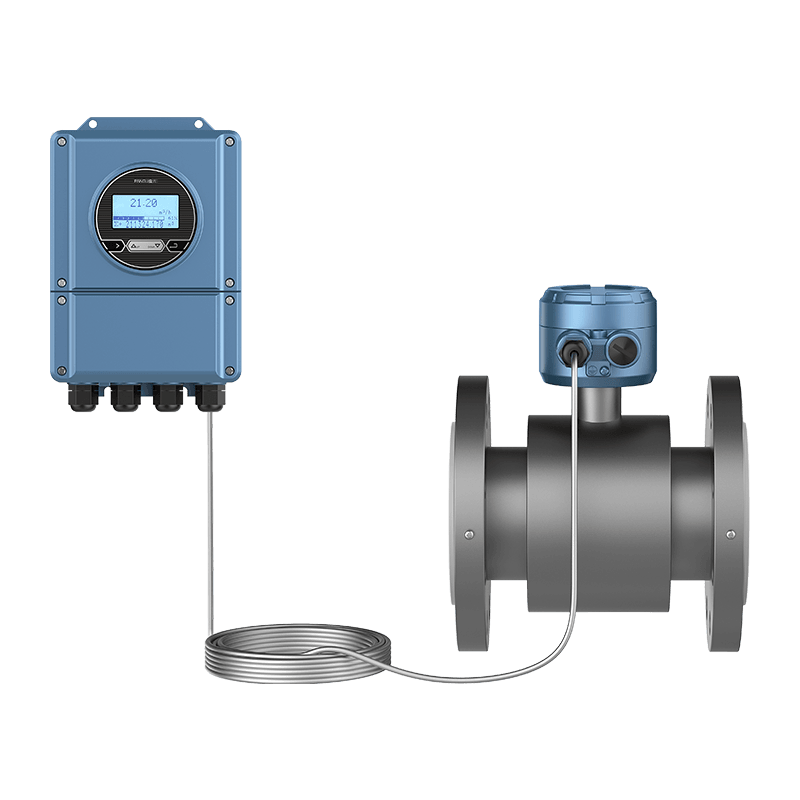
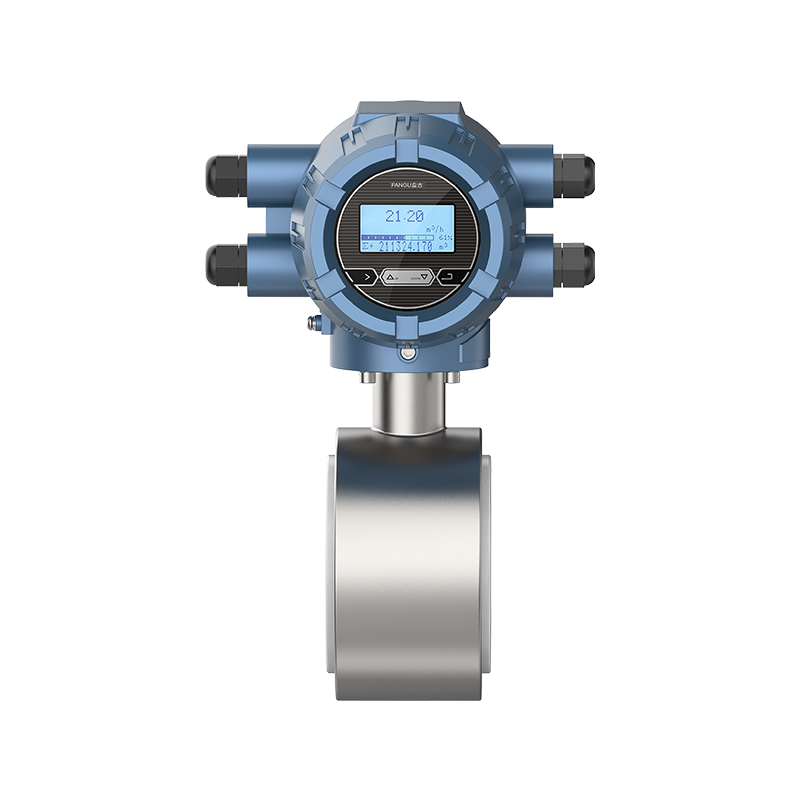
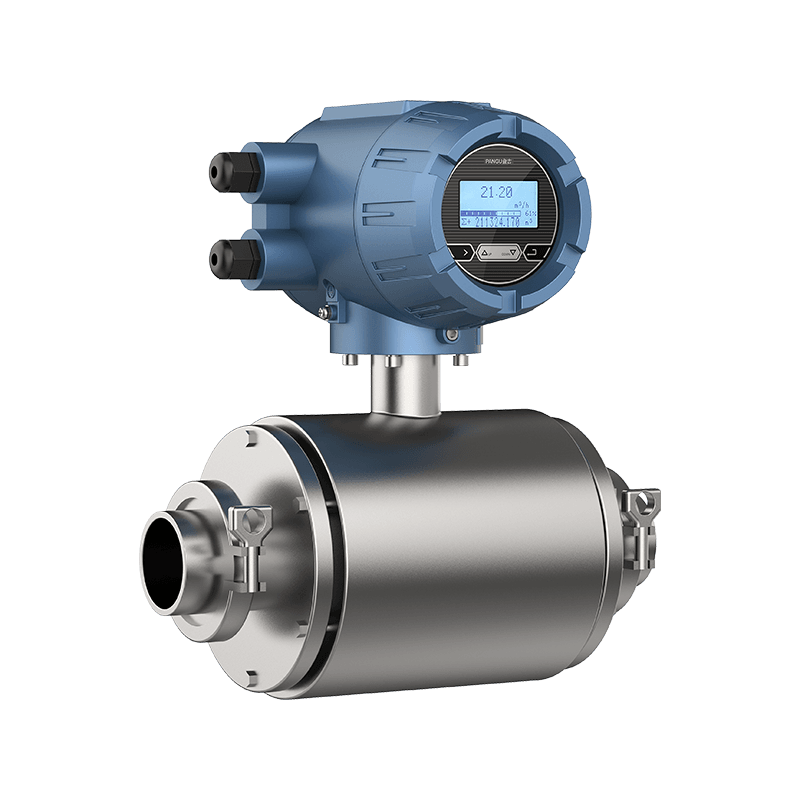
Insertion/Clamp-Type Electromagnetic Flowmeter Clamp-Type Electromagnetic Flowmeter with Flangeless Design for Easy InstallationThis compact flangeless flowmeter offers 0.5% accuracy and a stainless steel housing, making it a practical choice for retrofitting existing pipelines or large pipes where full-bore meters are costly.View Product →
How Does an Insertion Electromagnetic Flowmeter Work?
All electromagnetic flowmeters operate on Faraday's law of induction. When a conductive fluid moves through a magnetic field, a voltage is induced across the fluid. The induced voltage is proportional to the fluid velocity. In a full-bore meter, the magnetic coils are wound around the pipe and the electrodes contact the fluid at the inner wall. In an insertion meter, the probe holds a small magnet and a pair of electrodes, and it is placed directly into the flow stream. The meter measures the local velocity in the small zone around the probe, and then applies a coefficient to convert that local velocity to the average velocity over the full pipe cross-section.
Because the flow profile across a pipe is not constant in real installations, the accuracy of an insertion electromagnetic flowmeter depends heavily on the flow profile and the position of the probe. That is why the common practice is to install the probe at a distance of at least 10 diameters upstream and 5 diameters downstream from elbows, valves, or pumps. The manufacturer calibrates the meter factor using a known flow rate and a specific insertion depth. Without this calibration, the reading can be off by a significant margin. Pangu Automation uses its own DN15-DN1000 water flow calibration rig to verify meters before delivery, which helps to ensure that the instrument factor matches the factory data.
Key Advantages of Insertion Electromagnetic Flowmeters
There are several practical reasons why engineers choose insertion electromagnetic flowmeters for certain installations:
- Lower installed cost: For pipe diameters above DN300, the cost difference between an insertion meter and a full-bore meter is substantial.
- Minimal pressure loss: The insertion probe occupies only a fraction of the pipe area, so pressure drop is negligible compared to a full-bore meter.
- Retrofit without line shutdown: Most insertion probes can be installed through a ball valve under pressure, so the process does not have to be stopped.
- Simplified maintenance: The probe can be withdrawn without draining the pipe, reducing service time and cost.
- Flexible integration: Modern insertion electromagnetic flowmeters can transmit analog, pulse, or digital signals to data loggers, flow computers, or building management systems.
However, the insertion design also has limits. It is not the right choice for very small pipes, for non-conductive fluids, or for applications that require strict custody transfer accuracy. For those cases, a full-bore electromagnetic flowmeter remains the standard. A well-calibrated insertion meter, on the other hand, can fulfill most water supply, sewage, and industrial process requirements.
Selection Considerations for Insertion Electromagnetic Flowmeters
Choosing the correct insertion electromagnetic flowmeter involves more than pipe diameter and flow range. The following checklist covers the most important parameters to review before ordering.
- Fluid electrical conductivity: The liquid must be electrically conductive. In most cases a conductivity of at least 5 microseconds per centimeter (μS/cm) is required, but for low-conductivity media such as demineralized water, it is worth choosing a meter designed for low conductivity.
- Pipe size and wall thickness: The probe insertion depth must match the pipe diameter and the actual wall thickness to ensure the probe tip sits at the optimum depth. Oversized or undersized probes will distort the measurement.
- Straight-run requirements: As a practical rule, install the meter with at least 10D upstream and 5D downstream. In confined spaces, a flow conditioner may be needed.
- Process temperature and pressure: The probe material, sealing material, and sanitary design must be compatible with the process fluid and its operating conditions.
- Expected accuracy: Verify the base accuracy class and consider the overall uncertainty after installation. For water balancing or general monitoring, relative error of 2.0% is usually acceptable. For critical energy measurement, discuss the situation with the manufacturer.
- Output and communication: Determine whether the meter needs a 4-20 mA current loop, pulse output, RS485, or a direct digital connection to a data recorder. This choice has a strong effect on the transmitter setup.
If the process involves a particularly demanding application, such as a large diameter pipe with a high flow rate and a requirement for stable repeatability, a high-precision electromagnetic flowmeter with a wider measuring range and better electrode configuration may be the better fit. Pangu offers a high-precision model that is available in both insertion and full-bore forms; it is designed for improved linearity and can be paired with a flow totalizer for local indication and remote monitoring.
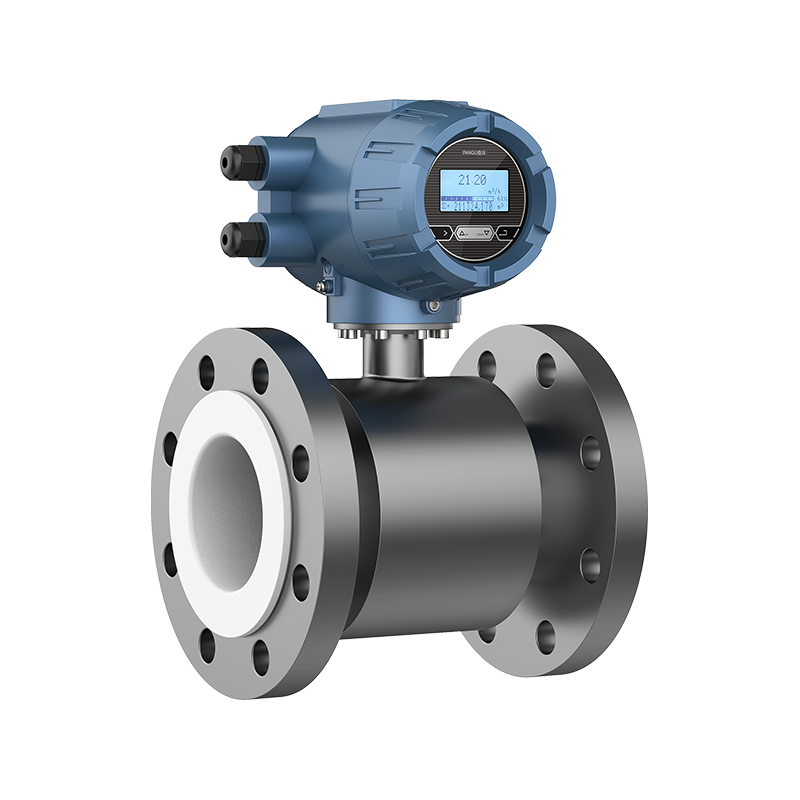
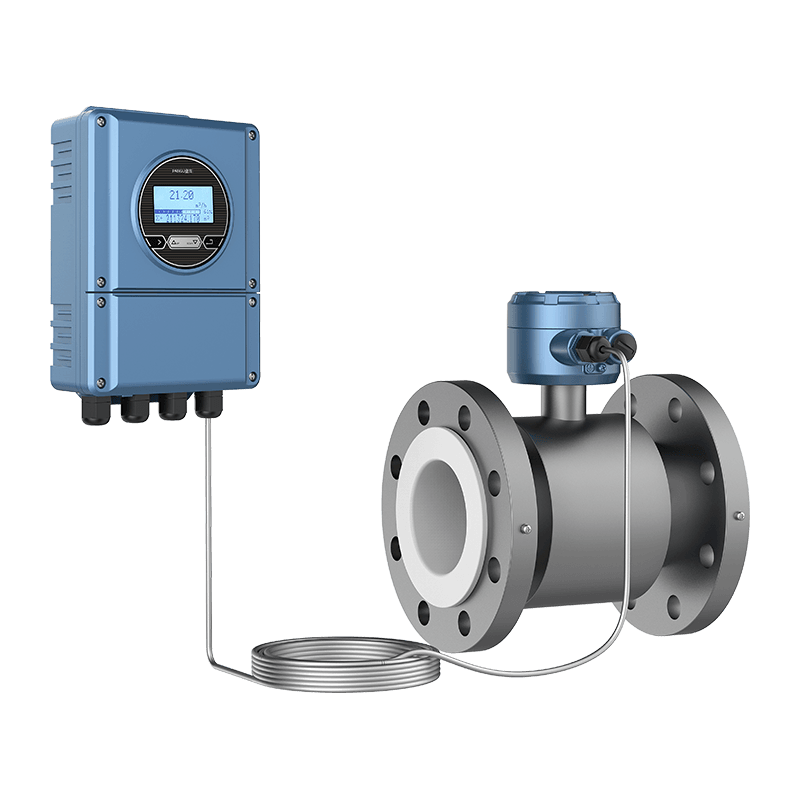
High-Precision Electromagnetic Flowmeter High-Precision Electromagnetic Flowmeter for Demanding Accuracy RequirementsWith 0.2% accuracy and multiple output options, this meter suits applications like dosing and irrigation that demand precise flow measurement and seamless integration.View Product →
Common Applications in Water, Chemical, and Slurry Processes
Insertion electromagnetic flowmeters appear throughout energy, chemical, and environmental plants. Two of the most common uses are in raw sewage lines and in chemical fluid handling. In municipal wastewater pumping stations, the large pipe sizes and the need to keep the line running argue strongly for insertion meters. The same logic applies to water supply systems and secondary pumping stations, where a meter can be inserted under pressure after the pump is running. For a closer look at these use cases, the following pages provide more details: sewage flow measurement and chemical industry flow measurement.
In slurry and sludge applications, the fluid usually contains suspended solids and is abrasive. An insertion electromagnetic flowmeter with a ceramic or rubber lining can be used, but the probe must be sized to resist erosion. Slurry-type electromagnetic flowmeters are specifically built for these environments, with larger electrodes and wear-resistant materials. For a mine or a wastewater treatment plant that handles a mixture of water and solids, a dedicated slurry meter is safer than a generic design.
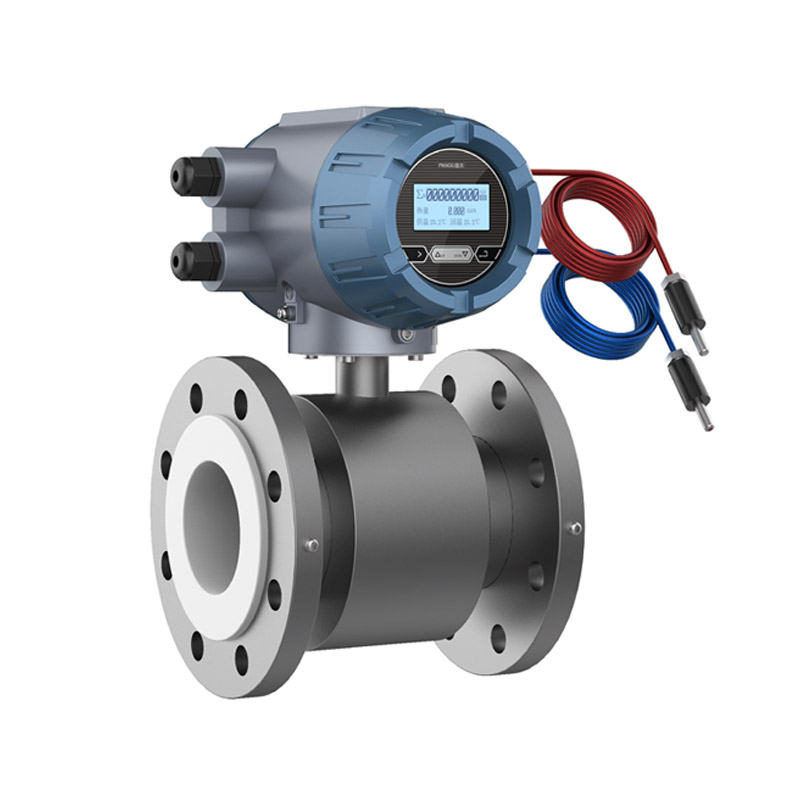
Slurry-Type Electromagnetic Flowmeter Slurry Electromagnetic Flowmeter for Solids-Laden and Abrasive FluidsDesigned to handle slurries, it uses higher excitation frequency and filtering algorithms to stabilize flow signals disrupted by solid particles, ensuring reliable metering in harsh conditions.View Product →
FAQ
Q1: What is the difference between an insertion electromagnetic flowmeter and an in-line electromagnetic flowmeter?
An insertion flowmeter measures local velocity at a point in the pipe, while an in-line meter has a measuring tube that spans the entire pipe cross-section. In-line meters provide higher accuracy and better repeatability, but they are more expensive and require the pipe to be shut down or cut for installation. Insertion meters are lower in cost and can be installed without stopping the flow, but they are generally specified for accuracy class around 2.0% of reading.
Q2: What accuracy can I expect from an insertion electromagnetic flowmeter?
After installation and proper straight-run verification, a typical insertion electromagnetic flowmeter can achieve relative error between 2.0% and 2.5% of reading, depending on the factory calibration and the pipe conditions. For many industrial and municipal applications this is sufficient. If you need better than 0.5% accuracy, you should consider a full-bore high-precision electromagnetic flowmeter and discuss your flow range with the manufacturer.
Q3: Can an insertion electromagnetic flowmeter measure sludge or slurry?
Yes, but you must choose the appropriate design. A slurry-type electromagnetic flowmeter uses robust electrodes and a lining that resists abrasion. For highly viscous or heavy slurry, you should also confirm the minimum conductivity and the maximum particle size with the supplier.
Q4: Is it possible to insert the probe under pressure while the line is operating?
Usually yes. Many insertion electromagnetic flowmeters are designed with a ball valve mounting, which allows the probe to be inserted or removed without shutting down the process. This is one of the main advantages of the insertion type when retrofitting existing pipelines.
Selecting an insertion electromagnetic flowmeter is a cost-effective engineering decision when the pipe is large and the process cannot be interrupted. It requires a careful look at the conductivity, pipe geometry, straight-run distances, and the measurement purpose. By matching the probe type to the fluid and verifying the factory calibration, you can achieve stable, repeatable flow readings for years of service. Pangu Automation's experience in building flowmeters and its in-house calibration capacity provide a practical starting point for those comparing suppliers.
PREV:Digital Flow Transmitter Selection Guide: How to Choose an Electromagnetic Flowmeter
NEXT:Electromagnetic Flow Meter Selection Guide: 5 Core Factors & On-Site Best Practices
NEXT:Electromagnetic Flow Meter Selection Guide: 5 Core Factors & On-Site Best Practices
Interested in cooperation or have questions?
Contact Us Now!
Kelly

+86 13967196545

pangusales@vip.163.com
Production Base:

Building 1 and Building 42, No. 889 Huancheng North Road, Deqing County, Huzhou City, Zhejiang Province
Jiji
+86 15397010616
pgsalesjiji@vip.163.com

+86-0571-87770830
Corporate Headquarters:
602-702, Block D, Building 3, Area B,Xigang New Territories, 206 Zhenhua Road,Hangzhou City, Zhejiang Province, China

Copyright © Hangzhou Pangu Automation System Co., Ltd. Rights Reserved.
Custom Digital Panel Mount Industrial Instruments Suppliers
