 Read More

 Get A Quote

Commercial Water Meter Guide: How to Choose the Right Electromagnetic Meter
Home / News / Industry News / Commercial Water Meter Guide: How to Choose the Right Electromagnetic Meter
Product Category
NEW Category
Contact us
Contact Us
We specialise in the research, development and manufacture of electrical wires and cables.
 +86 13967196545
Related News
Commercial Water Meter Guide: How to Choose the Right Electromagnetic Meter
Content
- 1 What Defines a Commercial Water Meter?
- 2 Why Electromagnetic Technology Is a Strong Choice for Commercial Water Metering
- 3 Key Specifications to Evaluate Before Buying a Commercial Water Meter
- 4 Commercial Water Meter Applications Across Different Facilities
- 5 Installation and Calibration Considerations
- 6 How to Choose the Right Commercial Water Meter
- 7 Frequently Asked Questions
Every commercial facility pays for water twice: once for the water that enters the building and once for the water that leaves. A small error in a 4-inch line serving a 200-room hotel can add thousands of dollars to annual utility costs. For building managers, property owners, and process engineers, the difference between a residential and a commercial water meter is not simply line size. It is the tolerances, materials, and certification requirements that allow the meter to deliver repeatable readings for years under constant load.
Commercial water meters operate at higher flow rates and larger pipe diameters than residential meters. They are expected to measure accurately across a wide flow range while resisting pressure surges, suspended solids, and temperature swings.
This guide covers the key criteria that define a commercial water meter, explains why electromagnetic technology has become a preferred solution for commercial water measurement, and provides a practical framework for selecting the right meter for your facility.
What Defines a Commercial Water Meter?
A commercial water meter is distinguished from a residential unit by several practical specifications. These include the nominal diameter, the expected flow range, the accuracy class, and the materials used in wetted parts. A residential meter typically serves a 0.5-inch to 1-inch line with a single household demand. A commercial meter, by contrast, usually handles line sizes from 2 inches up to 10 inches in a building riser or distribution header, with peak flows that vary by time of day and season.
Accuracy classes are the most important differentiator. Commercial billing and sub-metering applications typically require Class 1 or Class 2 accuracy per ISO 4064 or OIML R49. For a property manager, a meter that drifts by just 2 percent on a 100,000-gallon monthly supply can represent a significant utility cost discrepancy. The table below summarizes the main differences between residential and commercial meters.
| Criterion | Residential Meter | Commercial Meter |
|---|---|---|
| Nominal line size | 0.5 to 1 inch | 2 to 10 inch |
| Flow profile | Low, steady demand | Wide, variable demand |
| Typical accuracy class | Class 2 | Class 1 or better |
| Wetted materials | Plastic, brass | Cast iron, stainless steel |
| Data outputs | Mechanical register | Pulse, 4-20 mA, Modbus |
Why Electromagnetic Technology Is a Strong Choice for Commercial Water Metering
Mechanical water meters use a turbine, impeller, or nutating disc to measure flow. Over time, scale buildup, debris, and wear cause these meters to drift. Commercial water systems often carry sand, rust particles, and other solids that accelerate this wear. Electromagnetic flow meters measure fluid velocity using Faraday's law of induction and have no moving parts in the flow stream.
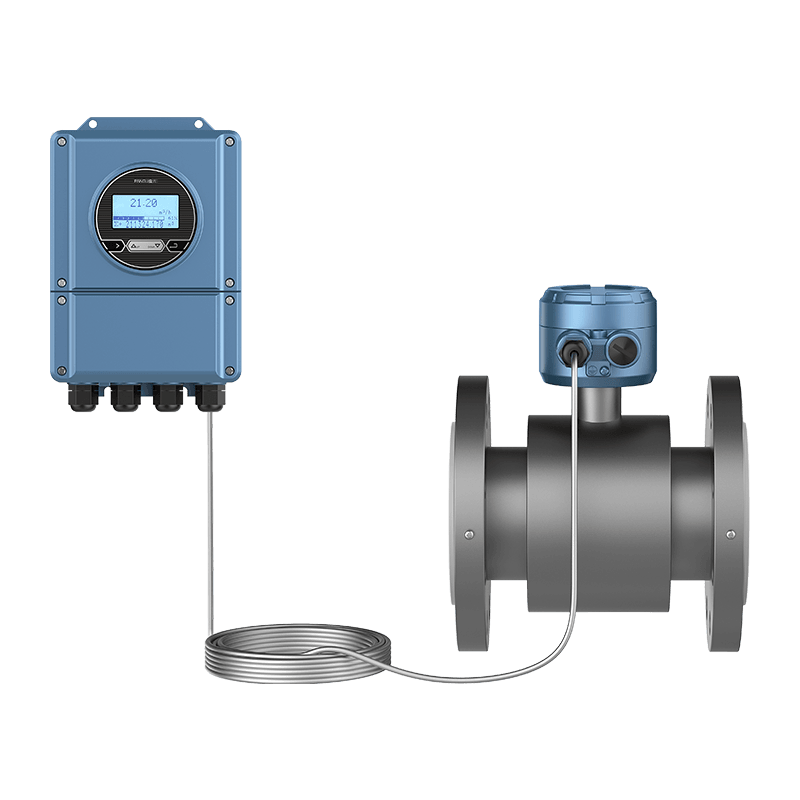
This makes an integrated electromagnetic flow meter an attractive option for commercial water metering. It performs across a wide turndown ratio, meaning it can register the low nighttime flows of a nearly empty office building and still measure peak daytime demand without losing accuracy. It also generates minimal pressure drop, which helps reduce pumping energy costs in a building water distribution system.
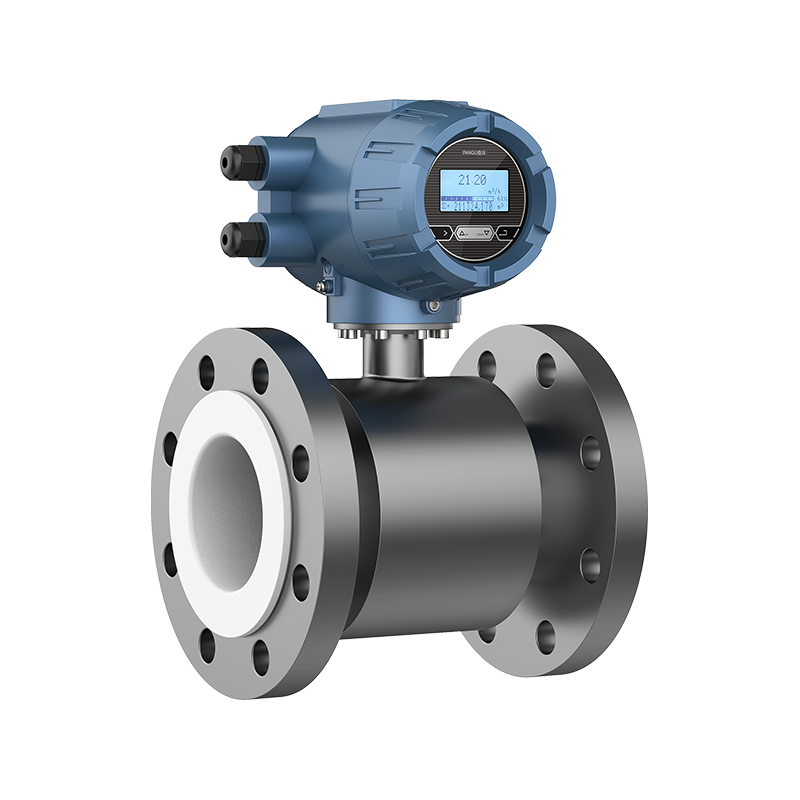
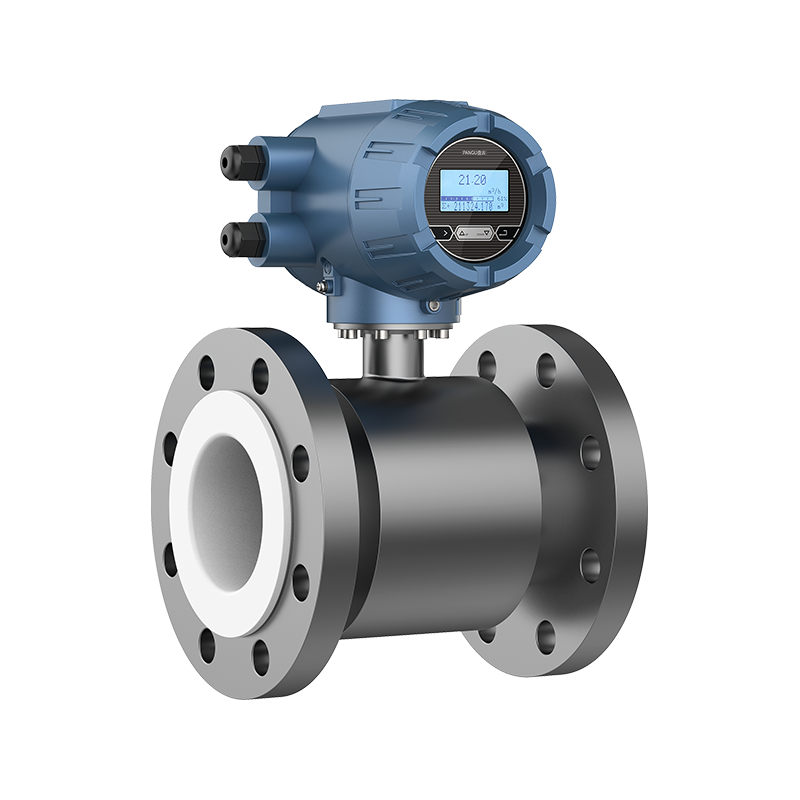 Integrated Electromagnetic Flow Meter for Conductive LiquidsThis integrated meter measures volumetric flow of conductive liquids with high accuracy and multiple outputs, suited for building management systems and industrial process control.View Product →
Modern electromagnetic flow meters support pulse output, 4-20 mA analog signals, and RS485 Modbus communication. These outputs allow a building management system to integrate water consumption data into a central dashboard, enabling automated reporting and leak detection. The absence of moving parts also reduces maintenance intervals and the likelihood of unexpected meter replacement.
Key Specifications to Evaluate Before Buying a Commercial Water Meter
Before comparing vendors, it helps to establish the specifications that matter most for your facility. Start with the accuracy requirement. If the meter is used for tenant billing or utility cost allocation, choose a high precision electromagnetic flow meter that holds a tight error band across the full operating range. If the meter is used only for process monitoring, a standard accuracy class may be sufficient.
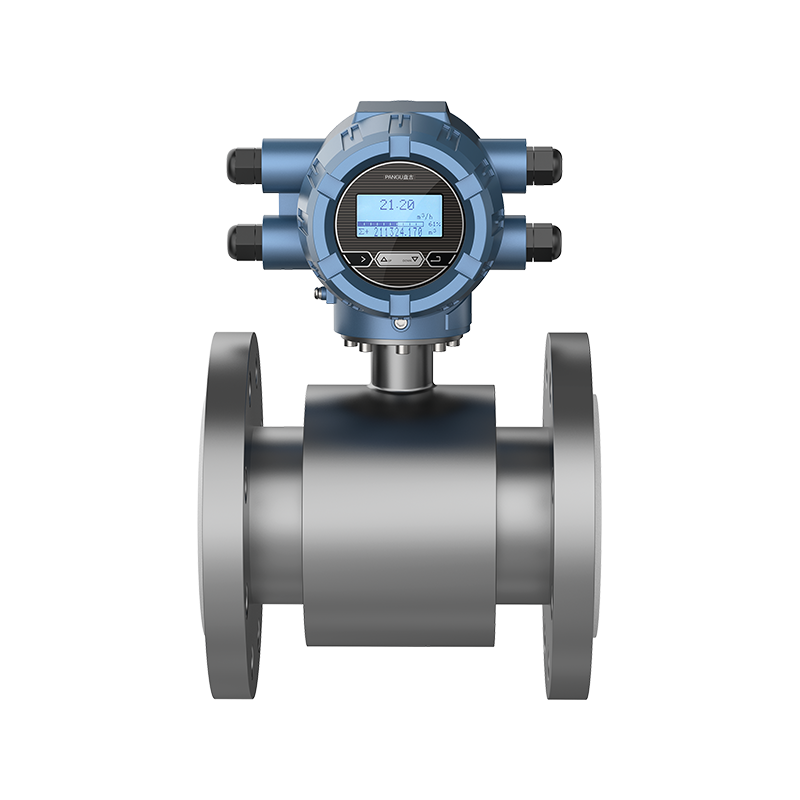
 High-Precision Electromagnetic Flowmeter for Accurate BillingWith 0.2% accuracy, this meter is ideal for tenant billing or utility cost allocation, ensuring tight error control across the operating range.View Product →
Process Connection
Commercial water meters are typically installed with flanged connections. Verify the flange standard, pressure rating, and nominal diameter before purchase. Steel pipe schedules and pressure classes vary by region, so confirm that the meter matches your existing piping system.
Communication and Integration
Decide how the meter will report readings. A pulse output is the simplest and works with most totalizers. RS485 Modbus is useful for larger installations where multiple meters feed into one data logger or building management system. If you plan to use a data logger for historical trend analysis, verify that the protocol matches the logger input.
Environmental Protection
Check the IP rating of the meter. A commercial water meter installed in a pump room may see condensation, spray, or occasional flooding. An IP67 or IP68 rating ensures that the electronics enclosure tolerates these conditions without premature failure.
Commercial Water Meter Applications Across Different Facilities
The type of commercial water meter you specify depends on the role it plays in your facility. There are three broad application categories that cover most commercial installations.
Water Supply and Secondary Pumping Stations
In a municipal or building water supply system, a commercial water meter measures the inflow from the utility line. In a secondary pump station, it tracks the water raised into the building distribution system. These meters need to handle periodic pressure surges and flow fluctuations. The water supply flow measurement approach is documented in the application pages and can guide the selection of meter size and materials for both primary and secondary supply points.
HVAC and Heat Metering
Commercial buildings that buy or allocate chilled water and heating energy use a thermal energy meter. This combination of a flow sensor and temperature sensors calculates the heat delivered to each zone. An electromagnetic thermal energy meter is well suited for HVAC systems because it measures the flow of treated water without wear and captures the small flow rates that occur in part-load conditions. For HVAC heat metering strategies, the HVAC calorimeter application provides a practical reference.
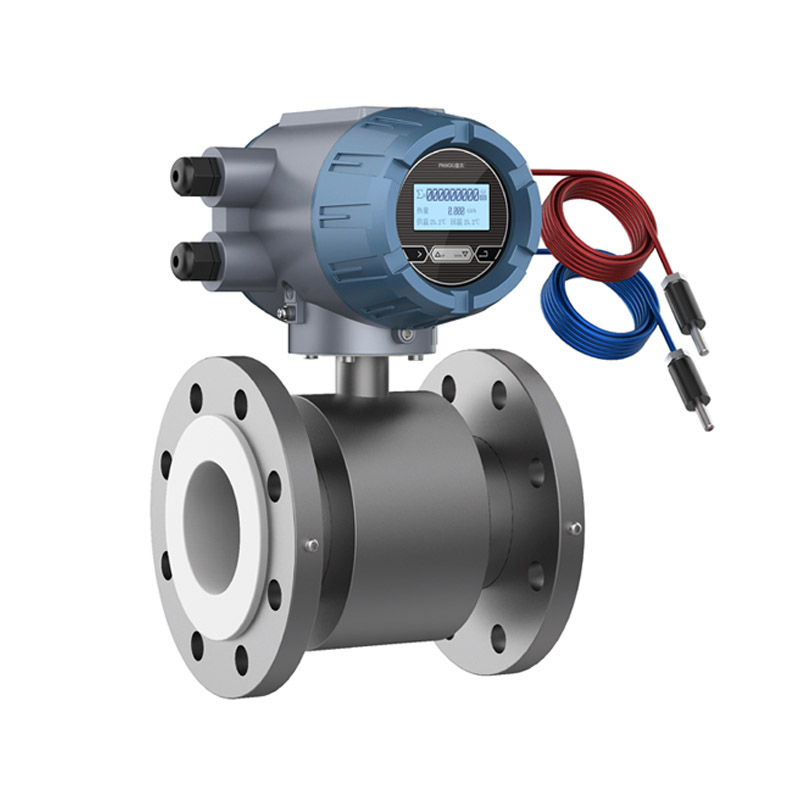 Electromagnetic Thermal Energy Meter for HVAC SystemsDesigned for heat metering in cooling and heating systems, it measures flow and temperature to calculate energy use, supporting building energy monitoring and allocation.View Product →
Industrial and Process Water
Factories and processing plants use commercial water meters to measure cooling water, utility water, and wastewater. These streams may contain suspended solids, chemicals, or high temperatures. Electromagnetic technology handles these conditions well, provided the liner and electrode materials are selected for the specific fluid chemistry.
Installation and Calibration Considerations
Even a well-built commercial water meter will deliver inaccurate readings if it is installed incorrectly. Electromagnetic flow meters require a fully pressurized, completely filled pipe to measure accurately. Install the meter in a location that ensures full-pipe flow and avoid spots where air can accumulate. A commonly overlooked requirement is the straight pipe length. A minimum of 5 pipe diameters upstream and 2 pipe diameters downstream from the meter is a good rule of thumb for stable flow profiles.
Grounding is another important factor. The flow signal is generated between the electrodes and the fluid, and an unbonded ground can introduce noise. Use proper grounding rings or grounding wires to connect the meter body to the pipe flanges.
On the calibration side, it is worth checking whether the manufacturer can verify the meter across its full diameter range. A factory with a DN15-DN1000 calibration bench demonstrates a commitment to traceable verification and improves confidence in the meter's long-term accuracy.
How to Choose the Right Commercial Water Meter
Start with a clear list of application requirements and then match them to available products. The checklist below summarizes the main decision points.
- Determine the maximum and minimum expected flow rate and compare it with the meter's turndown ratio.
- Confirm the accuracy class required for billing or process monitoring.
- Select the wetted material that is compatible with the water chemistry and temperature.
- Choose the communication output that matches your data acquisition system.
- Verify that the meter's protection rating suits the installation environment.
- Check the manufacturer's calibration capability and quality certifications.
Purchasing a commercial water meter is a long-term investment. A meter that is selected with care and installed according to manufacturer guidance will provide consistent readings, lower maintenance costs, and fewer surprises at billing time.
Frequently Asked Questions
Q1: How accurate should a commercial water meter be?
For utility billing and sub-metering, Class 1 accuracy or better is usually recommended. Class 2 is acceptable for general process monitoring where small deviations do not affect financial settlement.
Q2: Can an electromagnetic water meter measure hot water?
Yes. Electromagnetic flow meters measure the velocity of any conductive fluid. The liner and electrode materials must be selected to withstand the water temperature. For commercial heating loops, thermal energy meters combine the flow sensor with temperature sensors to calculate heat consumption.
Q3: How long does a commercial water meter last?
Electromagnetic meters commonly operate for 10 to 15 years or more because they have no moving parts. The service life depends on the fluid chemistry, the liner material, and the installation environment.
Q4: Do I need a data logger for a commercial water meter?
If you want to track consumption trends, detect leaks, and generate usage reports, a data logger is very helpful. Many commercial meters can output pulse or Modbus signals to a paperless recorder for continuous historical data capture.
PREV:How Can You Achieve Zero-Contamination & Faster CIP Cleaning in Sanitary Flow Measurement?
NEXT:How to Choose a Liquid Flow Transmitter: Electromagnetic Types, Accuracy, Installation
NEXT:How to Choose a Liquid Flow Transmitter: Electromagnetic Types, Accuracy, Installation
Interested in cooperation or have questions?
Contact Us Now!
Kelly

+86 13967196545

pangusales@vip.163.com
Production Base:

Building 1 and Building 42, No. 889 Huancheng North Road, Deqing County, Huzhou City, Zhejiang Province
Jiji
+86 15397010616
pgsalesjiji@vip.163.com

+86-0571-87770830
Corporate Headquarters:
602-702, Block D, Building 3, Area B,Xigang New Territories, 206 Zhenhua Road,Hangzhou City, Zhejiang Province, China

Copyright © Hangzhou Pangu Automation System Co., Ltd. Rights Reserved.
Custom Digital Panel Mount Industrial Instruments Suppliers
