 Read More
 Get A Quote

How to Choose a Flow Meter That Survives Aggressive Chemical Service
Home / News / Industry News / How to Choose a Flow Meter That Survives Aggressive Chemical Service
Product Category
NEW Category
Contact us
Contact Us
We specialise in the research, development and manufacture of electrical wires and cables.
 +86 13967196545
Related News
- How Integrated Electromagnetic Flow Meters Optimize Municipal Water Treatment Performance
- How Electromagnetic Flow Meters Deliver Accurate Readings in Raw Sewage and Sludge Lines
- Magnetic Flow Meter Showing Reading with No Flow? Don't Rush to Replace It!
- Pangu Automation’s 4,000+m² Smart Factory: High‑Precision Water Flow Calibration for DN15 to DN1000
How to Choose a Flow Meter That Survives Aggressive Chemical Service
Content
- 1 Understanding Chemical Aggressiveness in Flow Measurement
- 2 Key Failure Modes When Flow Meters Meet Corrosive Media
- 3 Comparing Flow Meter Technologies for Corrosive Service
- 4 Material Selection: Liners, Electrodes, and Wetted Parts
- 5 Sizing and Installation Considerations
- 6 Signal Output, Reliability and Long-term Cost
- 7 A Practical Selection Workflow
- 8 Field Practice Patterns Worth Knowing
- 9 Frequently Asked Questions
- 9.0.1 Q1: What is the biggest mistake engineers make when selecting a flow meter for corrosive chemicals?
- 9.0.2 Q2: Can one flow meter technology handle every type of aggressive chemical?
- 9.0.3 Q3: How often should liners and electrodes be inspected in corrosive service?
- 9.0.4 Q4: Does a higher-cost material always mean better long-term value?
- 9.0.5 Q5: What early warning signs indicate a flow meter is failing in corrosive service?
Understanding Chemical Aggressiveness in Flow Measurement
Choosing a flow meter for an aggressive chemical stream is not the same exercise as sizing an instrument for water or compressed air. Aggressive media -- concentrated acids, caustic solutions, chlorinated solvents, oxidizers, and slurries with corrosive carriers -- attack wetted materials at rates that depend on concentration, temperature, velocity, and the presence of solids. A meter that performs flawlessly on a clean utility line can fail within weeks when exposed to hydrofluoric acid or sodium hypochlorite, so the selection process has to start with the chemistry, not the catalog page.
Three variables drive most failures in chemical services: material compatibility, mechanical intrusion into the flow path, and the meter's tolerance for conductivity or dielectric variation. A technology that ignores all three at once, rather than compromising on one, tends to hold up longest. This is why many process engineers evaluating electromagnetic flowmeters for corrosive duty look first at liner and electrode chemistry before ever comparing accuracy specifications.
It also helps to separate two questions that are often blended together: whether a technology can survive the fluid at all, and whether it can measure that fluid accurately once it has survived. Some designs tolerate a corrosive stream mechanically but lose measurement accuracy as coatings build up on internal surfaces or as conductivity shifts with temperature and concentration. A meter that never leaks but drifts silently out of calibration can be more costly over time than one that fails visibly and gets replaced promptly, because a silent drift can distort dosing, billing, or regulatory reporting for months before anyone notices.
For that reason, a thorough selection process treats survivability and measurement stability as two separate checklists rather than one combined score. A liner or electrode can be chemically compatible on paper yet still produce a signal that wanders once solids concentration, temperature, or entrained gas changes during normal operation, so pilot testing under representative conditions remains valuable even after the paper screening is complete.
Working definition: an aggressive chemical, for measurement purposes, is any fluid capable of degrading common wetted materials -- 316 stainless steel, standard elastomers, or uncoated brass -- within the expected service life of the instrument, typically five to ten years.
Key Failure Modes When Flow Meters Meet Corrosive Media
Before comparing technologies, it helps to categorize how meters actually fail in corrosive service. Field data collected across chemical processing and wastewater treatment sites points to four recurring patterns.
| Failure Mode | Typical Cause | Common Result |
|---|---|---|
| Liner erosion | High velocity slurry, abrasive solids | Loss of insulation, signal drift |
| Electrode pitting | Halide ions, strong oxidizers | Noisy or intermittent signal |
| Seal degradation | Solvent swelling of elastomers | Process leakage at flanges |
| Body corrosion | External splash or condensate | Structural weakening, housing failure |
Notice that only two of these four failure modes involve the fluid contacting an internal moving part. That distinction matters because it explains why non-intrusive and reduced-intrusion technologies dominate the corrosive chemical space: fewer contact points mean fewer paths for chemical attack.
Failure timing also tends to follow a recognizable pattern rather than occurring at random. Liner erosion and electrode pitting typically progress gradually, showing up first as small repeatability errors long before an outright failure. Seal degradation and body corrosion, on the other hand, are more likely to fail suddenly once a critical thickness is lost, which is why external inspection schedules matter just as much as internal signal monitoring. Building both types of checks into a maintenance plan, rather than relying on one alone, catches a wider range of failure modes before they interrupt production.
Comparing Flow Meter Technologies for Corrosive Service
Five technologies commonly appear on a shortlist for aggressive chemical duty: electromagnetic, ultrasonic clamp-on, Coriolis, vortex, and lined variable area meters. Each trades off differently across chemical resistance, obstruction to flow, and cost. The horizontal chart below ranks relative suitability for continuous exposure to strong acids and caustics, based on typical wetted-material options available for each technology class.
Scores reflect general availability of chemically resistant liners, wetted electrodes, or fully non-contact sensing paths, not a claim about any single manufactured product. Non-intrusive ultrasonic clamp-on units score well because the sensor never touches the fluid, while lined variable area meters score lower because moving floats remain exposed to continuous mechanical wear from the chemical stream.
The radar chart below compares the same five technologies across four decision criteria that matter most for aggressive duty: chemical resistance, resistance to abrasive solids, installation simplicity, and long-term maintenance burden.
Electromagnetic Ultrasonic clamp-on
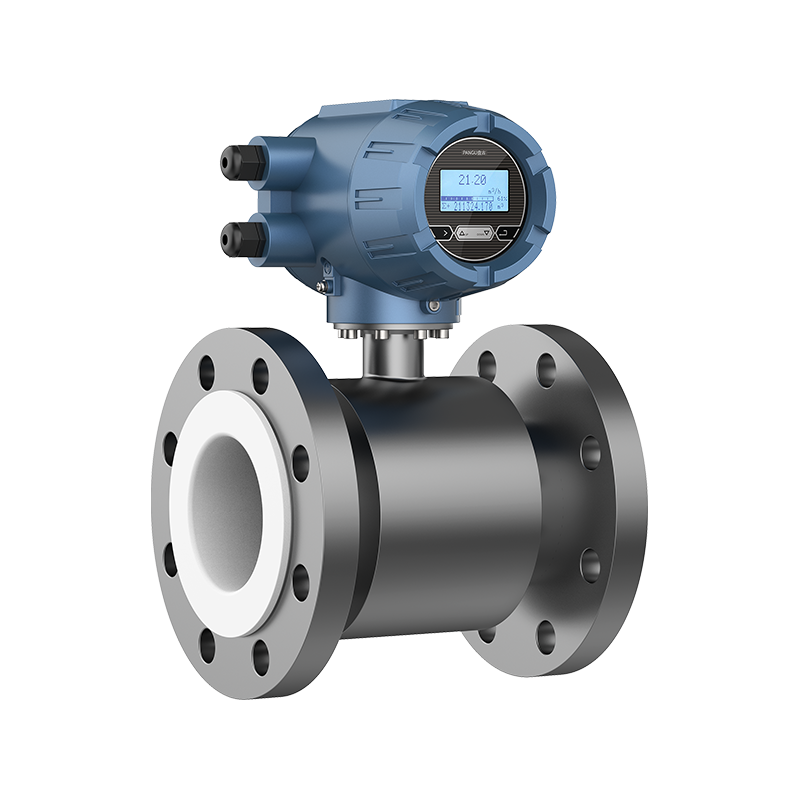
Electromagnetic units, when fitted with a chemically resistant liner such as PTFE or PFA and tantalum or Hastelloy electrodes, consistently score highest on chemical resistance while also tolerating moderate solids loading, which is why industrial flow meters for corrosive liquids in acid dosing, causticizing, and wastewater neutralization lines are so often built on this measuring principle.
Coriolis meters remain the preferred option whenever mass flow, density, or concentration data is needed alongside volumetric flow, and their fully enclosed tube path avoids the conductivity requirement that limits electromagnetic technology to conductive fluids. The trade-off is that Coriolis tubes are still wetted and still intrusive, so tube material selection carries the same weight as liner selection does for electromagnetic designs, and pressure drop across the sensor tends to be higher than for a straight-through electromagnetic body of the same line size.
Vortex meters can work well on clean, low-viscosity corrosive fluids but generally struggle once solids or high viscosity enter the picture, since the shedding bar itself sits directly in the flow path and is prone to both erosion and fouling. Lined variable area meters remain useful for low-flow, visual local indication applications where absolute accuracy is secondary to a quick, reliable read at the point of use, but they are rarely the right choice as the primary measurement point on a continuously monitored corrosive process line.
Material Selection: Liners, Electrodes, and Wetted Parts
Once a measuring principle is chosen, the real engineering decision shifts to material selection. For electromagnetic technology, that means picking a liner and an electrode pairing that matches the process fluid's chemistry, temperature, and abrasiveness.
| Liner Material | Best Suited For | Limitation |
|---|---|---|
| PTFE | Strong acids, most solvents, high temperature | Lower abrasion resistance |
| PFA | Hot concentrated acids, ultra-pure fluids | Higher cost than PTFE |
| Hard rubber | Neutral to mildly corrosive slurries | Poor resistance to strong oxidizers |
| Polyurethane | Abrasive mineral slurries | Limited chemical range |
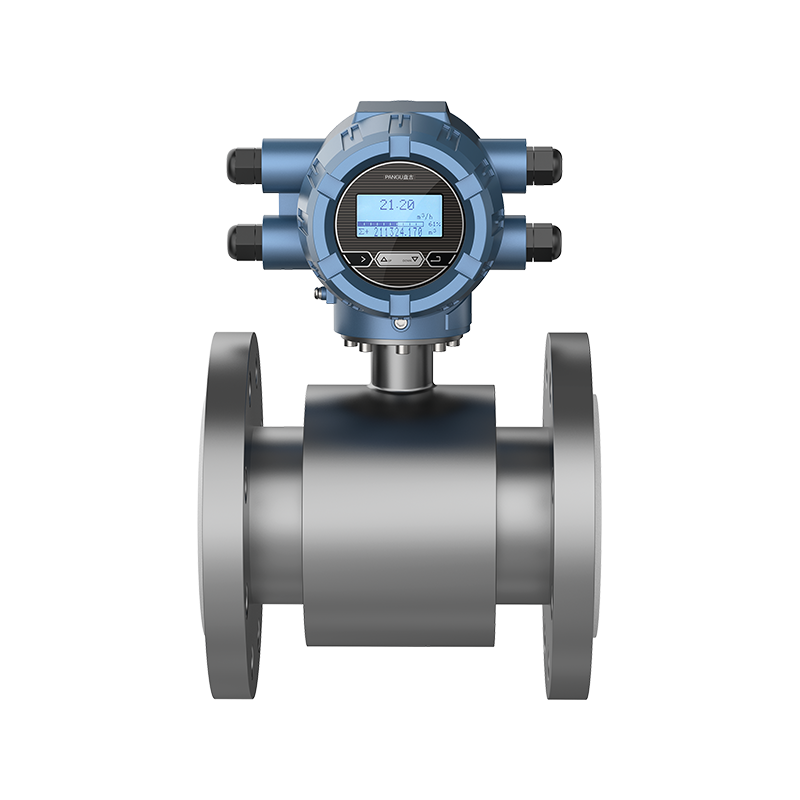
Electrode choice follows a similar logic. Hastelloy C handles a broad range of acids and chlorides at moderate cost. Tantalum resists nearly all mineral acids except hydrofluoric acid and fuming sulfuric acid, but comes at a premium. Titanium performs well in oxidizing chlorides but is unsuitable for reducing acid environments. Platinum-iridium remains the most universally resistant option and is typically reserved for the most demanding services where downtime cost outweighs material cost.
- Match liner chemistry to the continuous operating temperature, not just the room-temperature compatibility chart
- Verify electrode compatibility against the full chemical mixture, including trace additives and cleaning agents
- Account for velocity-driven erosion when solids exceed roughly two percent by volume
- Request material certification traceable to the batch, not just the product family
Gasket and flange material selection deserves the same scrutiny as the liner itself, since a mismatched gasket is one of the most common sources of leakage on an otherwise well-specified installation. PTFE-based gaskets cover a broad chemical range and are frequently the default choice for corrosive duty, but hardness and creep behavior still need to be checked against the specific bolt torque and flange rating being used, particularly on plastic-lined piping where over-torquing can crack the liner rather than improve the seal.
Sizing and Installation Considerations
Undersized meters accelerate liner wear through excess velocity; oversized meters lose accuracy at low flow. For electromagnetic and most other velocity-based technologies, the practical operating window sits between roughly zero point five and ten meters per second, with accuracy typically degrading outside that band. The line chart below illustrates a representative accuracy curve across the velocity range for a lined electromagnetic sensor in a moderately conductive chemical stream.
Accuracy peaks in the middle of the range and falls off at both extremes -- at low velocity due to signal-to-noise limitations, and at high velocity due to turbulence and accelerated liner wear. A practical rule for aggressive chemical duty is to size the meter so normal operating flow sits between thirty and seventy percent of the sensor's maximum rated velocity, which extends liner life without sacrificing measurement resolution.
Installation orientation matters as much as sizing. Vertical upflow installation keeps the meter fully wetted at all times, which is important for conductivity-dependent technologies and also reduces the risk of gas pockets forming against the liner in outgassing chemicals such as sodium hypochlorite. Where vertical installation is not possible, horizontal mounting with the electrode axis kept off the vertical plane avoids trapped air interfering with the signal path.
Pipe support and vibration also deserve attention on corrosive lines, since lined piping is often more brittle than bare metal pipe and can develop stress cracks at unsupported spans that would go unnoticed on an unlined line. Adding support close to both sides of the meter, matching the pipe manufacturer's recommended span rather than relying on generic steel piping tables, reduces the risk of a slow leak developing at the liner-to-flange transition long before the rest of the piping shows any visible wear.
Signal Output, Reliability and Long-term Cost
Total cost of ownership for chemical service instrumentation rarely tracks purchase price alone. Liner replacement, electrode cleaning, calibration drift, and unplanned downtime from premature failure typically outweigh the initial capital difference between technologies within three to five years of continuous service. The column chart below compares an illustrative five-year cost breakdown across three common technology choices for a mid-size corrosive dosing line.
The gap widens further when unplanned shutdown costs are included, since intrusive mechanical components in aggressive service tend to fail without much warning, while liner wear on non-intrusive designs is progressive and can be tracked through periodic signal quality checks.
Signal output selection also affects reliability in the field. A 4 to 20 milliamp analog output remains the most robust choice for long cable runs in electrically noisy chemical plant environments, while digital fieldbus outputs add diagnostic depth -- liner wear estimates, empty pipe detection, and electrode fouling alerts -- that shortens troubleshooting time considerably compared with analog-only instrumentation.
Spare parts strategy is another factor that rarely appears in an initial cost comparison but shapes real-world reliability. Keeping a spare converter or transmitter on hand, rather than only spare wetted parts, shortens the most disruptive category of downtime, since electronics failures are typically unrelated to the corrosive service itself and can often be swapped without draining or opening the process line. Standardizing on a single technology family across similar duty points in a plant, where the chemistry allows it, also reduces the number of distinct spare part types that need to be stocked and simplifies technician training.
A Practical Selection Workflow
Rather than starting from a technology preference, a repeatable selection sequence keeps the decision grounded in process reality.
Skipping straight to a technology choice before the chemistry screening step is the single most common cause of premature field failure. A meter that passes a generic corrosion chart but has never been checked against the plant's actual mixture, including trace impurities and periodic cleaning chemicals, is far more likely to fail early than one selected through the full sequence.
- Document the full chemical composition, concentration range, and temperature swing the meter will see over its service life
- Cross-check candidate wetted materials against every component of the mixture, not only the primary chemical
- Prioritize non-intrusive or reduced-intrusion designs where solids or strong oxidizers are present
- Confirm sizing keeps normal flow within the mid-band of the sensor's rated velocity range
- Build a five-year cost model that includes calibration, spare liners or electrodes, and estimated downtime risk
Field Practice Patterns Worth Knowing
Across chemical processing and municipal wastewater sites, a few recurring practices separate installations with long trouble-free service from those needing repeated intervention.
Grounding rings on non-metallic pipe Upstream straight-run allowance Periodic zero-point verification Cathodic protection isolation
Grounding is a frequent oversight on plastic or lined pipe runs, where the absence of a reference ground can introduce measurement noise that mimics electrode fouling. Straight-run allowance upstream and downstream of the sensor -- typically five diameters upstream and three downstream as a starting guideline, adjusted for the specific fitting configuration -- reduces velocity profile distortion that otherwise shows up as repeatability drift rather than an outright fault.
Sites using mag meters for wastewater dosing and neutralization commonly schedule a zero-point check during planned shutdowns, since a shifted zero is often the earliest indicator of liner degradation, appearing well before any visible damage would show up on a borescope inspection.
Where the pipeline sits near cathodic protection systems, electrical isolation flanges or spool pieces prevent stray current from interfering with the measurement signal, an issue that is easy to overlook during initial installation planning but expensive to diagnose after commissioning.
Frequently Asked Questions
Q1: What is the biggest mistake engineers make when selecting a flow meter for corrosive chemicals?
The most common mistake is screening candidate meters against a generic chemical compatibility chart for the primary chemical only, while ignoring trace additives, cleaning agents, and temperature extremes the line actually experiences. A material that resists the primary acid at room temperature can still fail quickly once operating temperature or trace contaminants are factored in.
Q2: Can one flow meter technology handle every type of aggressive chemical?
No single technology is universally optimal. Electromagnetic designs with resistant liners and electrodes cover a very wide range of conductive corrosive fluids, but non-conductive solvents typically require a different measuring principle such as Coriolis or ultrasonic technology, since conductivity-dependent designs cannot measure non-conductive media at all.
Q3: How often should liners and electrodes be inspected in corrosive service?
Inspection frequency depends on concentration and velocity, but a reasonable starting point is an annual zero-point verification combined with a visual liner check during any planned shutdown, then adjusting the interval based on observed wear rate rather than a fixed calendar schedule.
Q4: Does a higher-cost material always mean better long-term value?
Not necessarily. Premium electrode or liner materials only pay off when the chemistry genuinely requires that level of resistance. Specifying platinum-iridium electrodes for a moderately corrosive stream that Hastelloy could handle adds cost without a corresponding reliability benefit, so material selection should be matched precisely to the actual chemical exposure rather than defaulting to the most resistant option available.
Q5: What early warning signs indicate a flow meter is failing in corrosive service?
Gradual zero drift, increasing signal noise, and small repeatability errors that grow over successive calibrations are typically earlier indicators than an outright failure. Catching these trends during routine verification checks allows planned replacement before the meter fails during production. Logging these readings over time, rather than checking them only when a problem is suspected, turns a single data point into a trend line that makes the difference between a planned swap and an unplanned shutdown.
PREV:How Electromagnetic Flow Meters Deliver Accurate Readings in Raw Sewage and Sludge Lines
NEXT:Electromagnetic Flow Meter vs. Vortex Flow Meter: Principles, Differences, and Selection Guide
NEXT:Electromagnetic Flow Meter vs. Vortex Flow Meter: Principles, Differences, and Selection Guide
Interested in cooperation or have questions?
Contact Us Now!
Kelly

+86 13967196545

pangusales@vip.163.com
Production Base:

Building 1 and Building 42, No. 889 Huancheng North Road, Deqing County, Huzhou City, Zhejiang Province
Jiji
+86 15397010616
pgsalesjiji@vip.163.com

+86-0571-87770830
Corporate Headquarters:
602-702, Block D, Building 3, Area B,Xigang New Territories, 206 Zhenhua Road,Hangzhou City, Zhejiang Province, China

Copyright © Hangzhou Pangu Automation System Co., Ltd. Rights Reserved.
Custom Digital Panel Mount Industrial Instruments Suppliers
