 Read More

 Get A Quote

How Do You Choose the Right Magnetic Flow Meter for Your Process Fluid?
Home / News / Industry News / How Do You Choose the Right Magnetic Flow Meter for Your Process Fluid?
Product Category
NEW Category
Contact us
Contact Us
We specialise in the research, development and manufacture of electrical wires and cables.
 +86 13967196545
Related News
- Magnetic Flow Meter Showing Reading with No Flow? Don't Rush to Replace It!
- How to Choose a Flow Meter That Survives Aggressive Chemical Service
- Why Do Water Flow Meters Lose Accuracy and How Can You Fix Them?
- Pangu Automation’s 4,000+m² Smart Factory: High‑Precision Water Flow Calibration for DN15 to DN1000
How Do You Choose the Right Magnetic Flow Meter for Your Process Fluid?
Content
- 1 Why Electromagnetic Flow Meters Remain the Standard for Conductive Liquids
- 2 How the Magnetic Flow Measurement Process Works
- 3 Comparing Magnetic Flow Meter Types: Compact, Separate, and Specialized Designs
- 4 Choosing a Mag Meter for Wastewater and Municipal Applications
- 5 Selecting Magnetic Flowmeters for Chemical, Abrasive, and Sanitary Fluids
- 6 Installation Factors That Affect Accuracy and Signal Stability
- 7 Flow Meter Performance Comparison Across Applications
- 8 Data Snapshot: Typical Specifications by Meter Type
- 9 Frequently Asked Questions About Magnetic Flow Meters
- 9.0.1 Q1: What minimum conductivity does a fluid need for electromagnetic measurement?
- 9.0.2 Q2: Can a mag meter for wastewater handle intermittent flow with solids present?
- 9.0.3 Q3: Why does liner material matter more for chemical service than for water service?
- 9.0.4 Q4: Is a clamp-on sanitary design as accurate as a flanged version?
- 9.0.5 Q5: How much straight pipe run is needed before and after the sensor?
- 9.0.6 Q6: What causes accuracy to drift over time on an installed meter?
Why Electromagnetic Flow Meters Remain the Standard for Conductive Liquids
Across water treatment plants, chemical dosing skids, and food-grade pipelines, magnetic flow meter technology has become the default choice whenever the fluid being measured carries an electrical charge. Unlike mechanical meters that rely on moving parts, an electromagnetic flowmeter has no internal obstruction in the flow path, which keeps pressure loss low and eliminates a major source of mechanical wear.
The core advantage of electromagnetic flowmeters is that measurement accuracy does not depend on fluid viscosity, density, or temperature in the way that differential pressure or turbine devices do. As long as the liquid has a minimum conductivity threshold, typically in the range of a few microsiemens per centimeter, the meter can generate a stable, repeatable output regardless of whether the fluid is thin process water or a heavier chemical slurry.
This tolerance for varied fluid properties is why plants managing everything from raw wastewater to demineralized boiler feedwater standardize on the same underlying sensor technology, even though the wetted materials, liner compounds, and electrode designs shift significantly between applications.
How the Magnetic Flow Measurement Process Works
The operating concept behind every electromagnetic flow meter follows the same sequence of events, regardless of pipe size or fluid type. A coil arrangement around the pipe generates a magnetic field perpendicular to the direction of flow. As the conductive liquid passes through that field, it induces a small voltage that is picked up by two electrodes in contact with the fluid. That voltage is proportional to the average velocity of the liquid, which the transmitter then converts into a volumetric flow reading.
Because the signal is generated by the motion of the fluid itself rather than by a mechanical sensor, there is nothing inside the pipe to erode, jam, or foul in the way a paddlewheel or turbine blade eventually would. This is one of the main reasons abrasive and particulate-heavy streams are still measured electromagnetically rather than mechanically.
Modern transmitters sample this induced voltage many times per second and apply digital filtering to remove electrical noise from pumps, variable frequency drives, or nearby motors. This is part of what separates a basic analog device from a high accuracy digital electromagnetic flow meter, which can maintain stable readings even in electrically noisy industrial environments.
Comparing Magnetic Flow Meter Types: Compact, Separate, and Specialized Designs
Not every installation calls for the same physical configuration. The three most common structural formats are compact integrated units, separate remote-mounted systems, and specialized designs built for hygienic or abrasive service. Choosing between them usually comes down to ambient temperature at the sensor location, access for maintenance, and whether the transmitter needs to be viewable from a control room or catwalk.
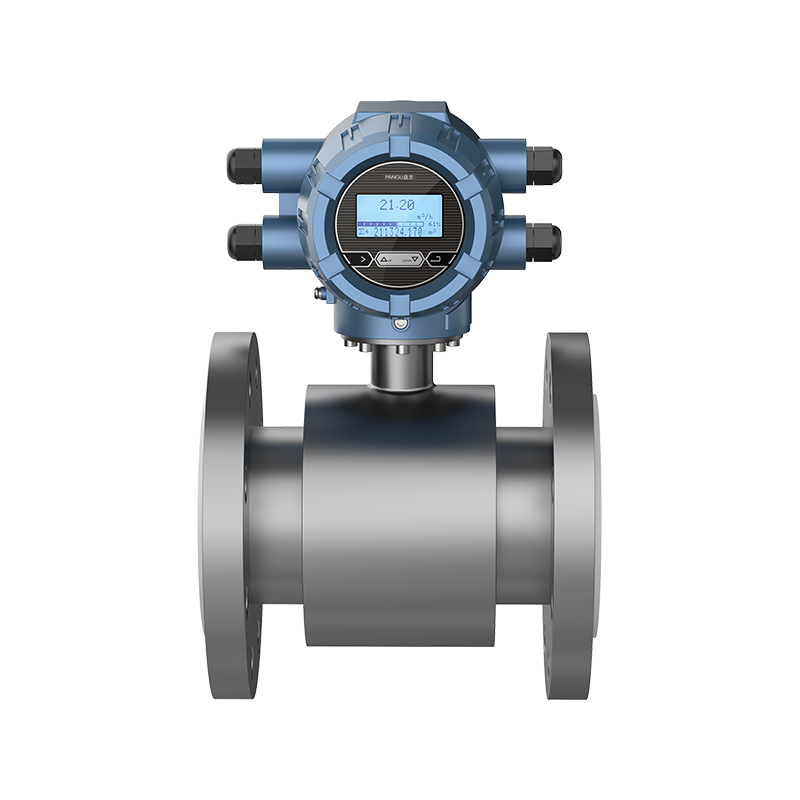
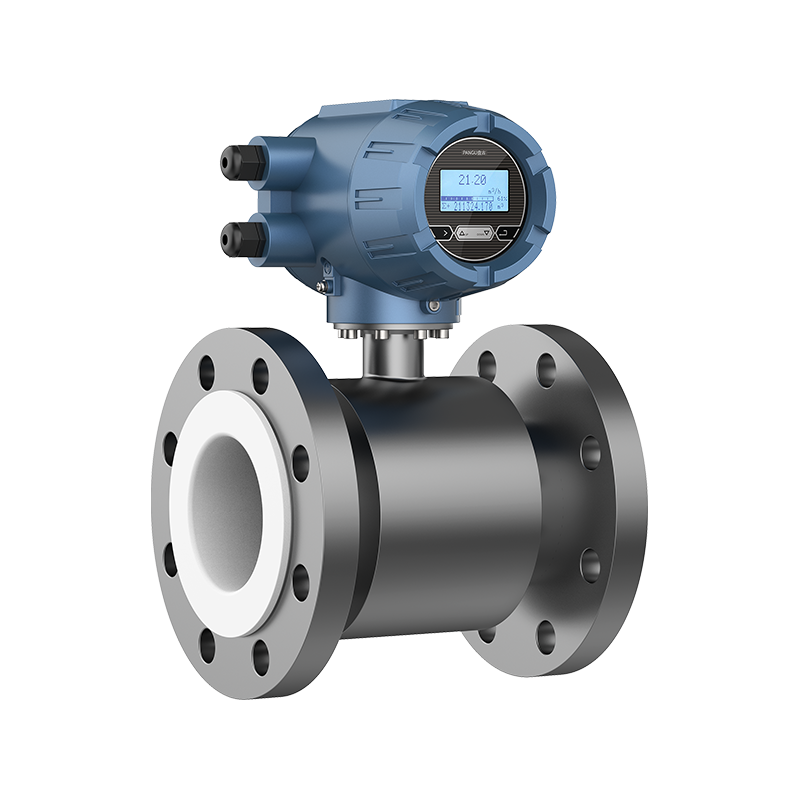
A compact integrated sensor and transmitter assembly for standard pipeline mounting.
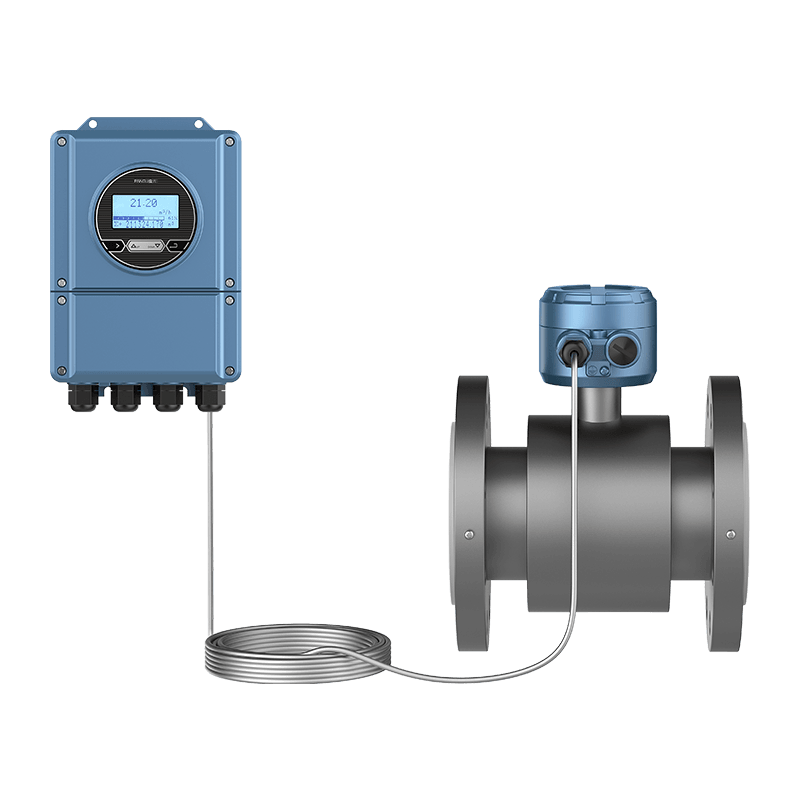
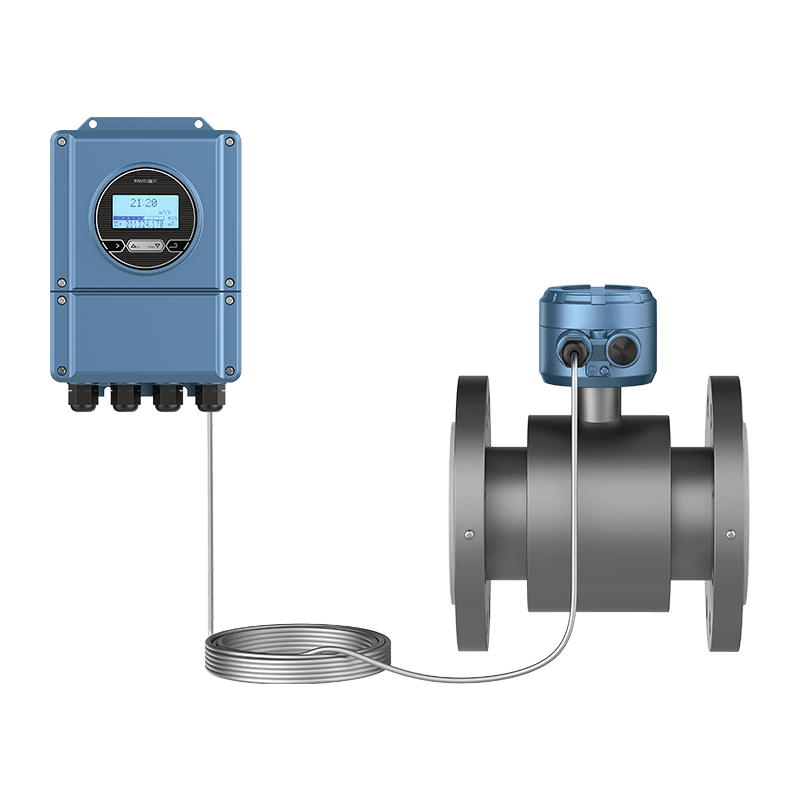
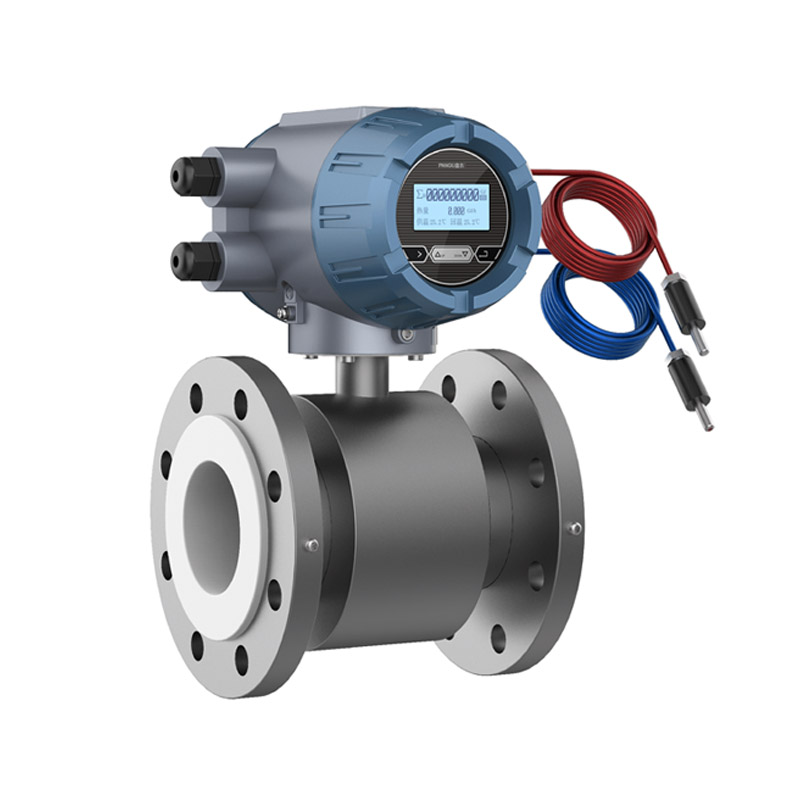
A separate remote transmitter connected to a submerged or buried sensor body.
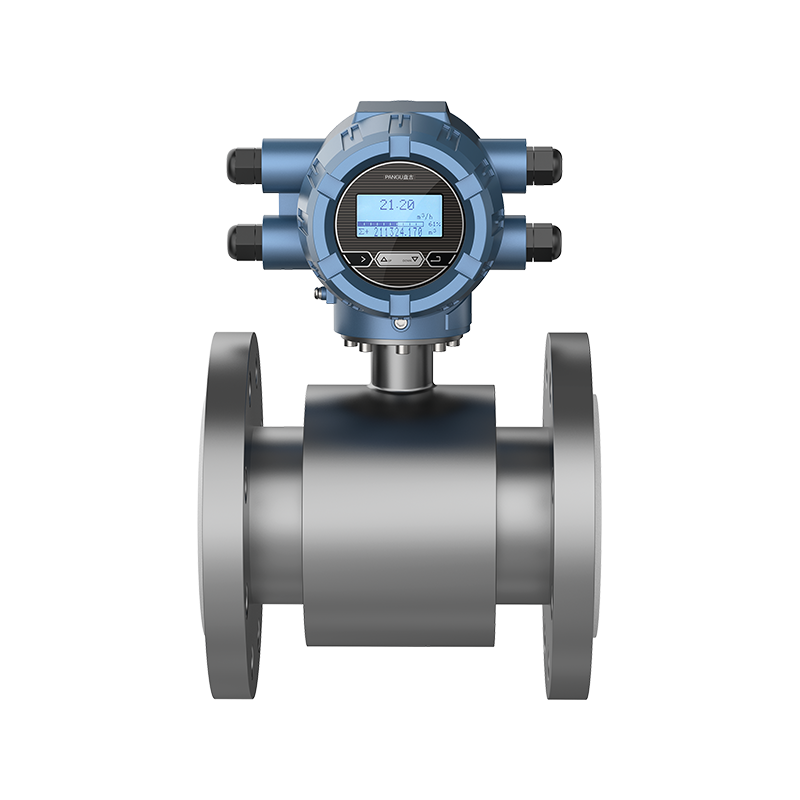
compact magnetic flow meters combine the sensor and transmitter into a single housing mounted directly on the pipe. This format is favored where floor space is tight and where the pipeline is easily accessible for reading the display. Flanged integrated mag flow meters in this category are typically bolted directly into the process line and are common on clean water distribution mains, cooling loops, and general utility metering.
Separate type magnetic flow meters split the sensor body from the transmitter electronics, connecting the two with a signal cable. This arrangement is used where the sensor must sit in a pit, a submerged vault, or a high-temperature area that would otherwise damage transmitter electronics. Keeping the transmitter in an accessible, temperature-controlled panel room while the sensor stays in the field is a common configuration for buried wastewater lines and lift station metering.
| Format | Typical Accuracy Class | Best Suited Environment |
|---|---|---|
| Compact Integrated | 0.5 percent | Accessible indoor or outdoor piping |
| Separate Remote | 0.5 percent | Submerged, buried, or high-temperature sites |
| Sanitary Clamp-On | 0.5 to 1.0 percent | Food, beverage, and pharmaceutical lines |
| Slurry and Abrasive Design | 1.0 percent | Mining, mineral, and heavy slurry transport |
Choosing a Mag Meter for Wastewater and Municipal Applications
Municipal and industrial wastewater streams carry solids, grit, and fluctuating conductivity levels, which makes reliable wastewater flow measurement one of the more demanding applications for this technology. A mag meter for wastewater typically uses a hard rubber or polyurethane liner rather than a PTFE liner, since rubber compounds resist abrasion from suspended grit better over long service intervals.
Electrode design also shifts for wastewater duty. Standard electrodes can accumulate a coating from grease, biological film, or scale, which gradually degrades signal quality. Many wastewater-rated sensors use scraper electrodes or a self-cleaning electrode design that physically wipes the sensing surface as the fluid passes, extending the interval between manual cleaning cycles.
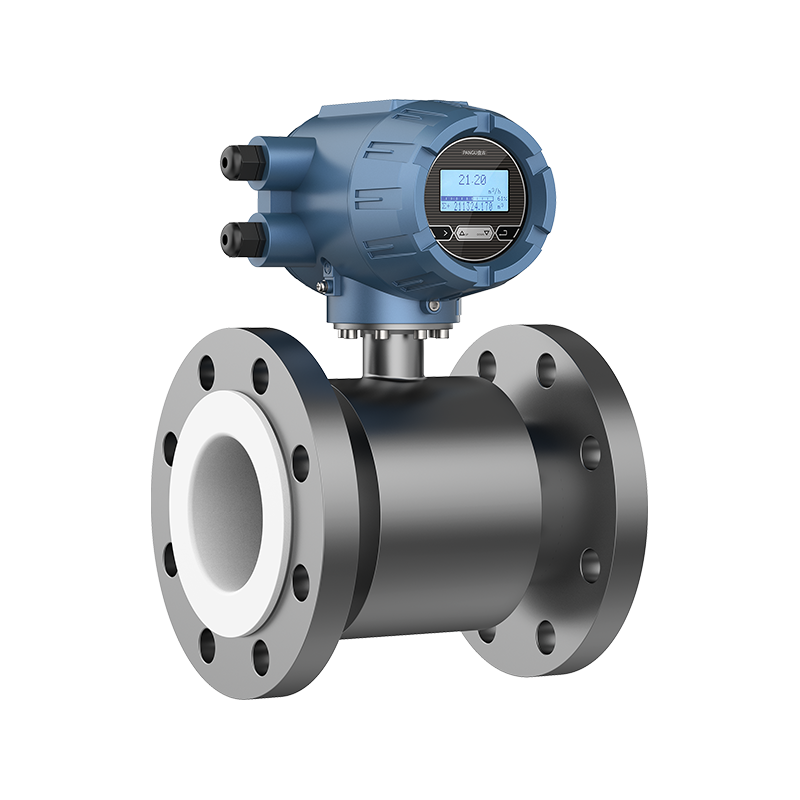
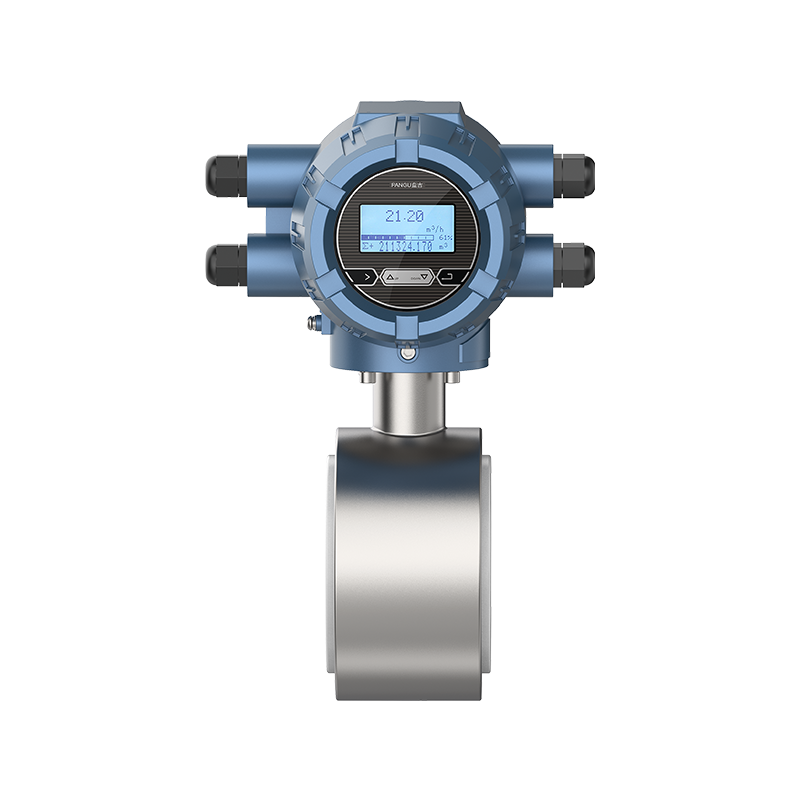
A precision sensor designed for low-conductivity demineralized water service.
On the opposite end of the conductivity spectrum, demineralized water mag meters face a different challenge entirely. Demineralized and reverse-osmosis permeate water often sits close to the lower conductivity limit at which a standard electromagnetic sensor can still generate a usable signal. Meters built for this duty use larger electrode surface area and higher-sensitivity amplification circuitry to maintain a stable reading even as conductivity drops into the low microsiemens range, which is common in power plant boiler feed and semiconductor rinse water systems.
Selecting between these two extremes is really a question of what the liquid contains, not just how fast it moves. A raw influent line with high solids loading needs abrasion resistance and self-cleaning electrodes, while a polished water loop needs amplification sensitivity and a liner material that will not leach contaminants into an already-purified stream.
Selecting Magnetic Flowmeters for Chemical, Abrasive, and Sanitary Fluids
Chemical liquid magnetic flowmeters carry the heaviest material selection burden of any variant in this product family, because liner and electrode compatibility with the specific chemical determines both meter lifespan and measurement safety. A liner that is not chemically resistant to the process fluid can degrade, swell, or crack, leading to leaks at the sensor body rather than a simple accuracy drift.
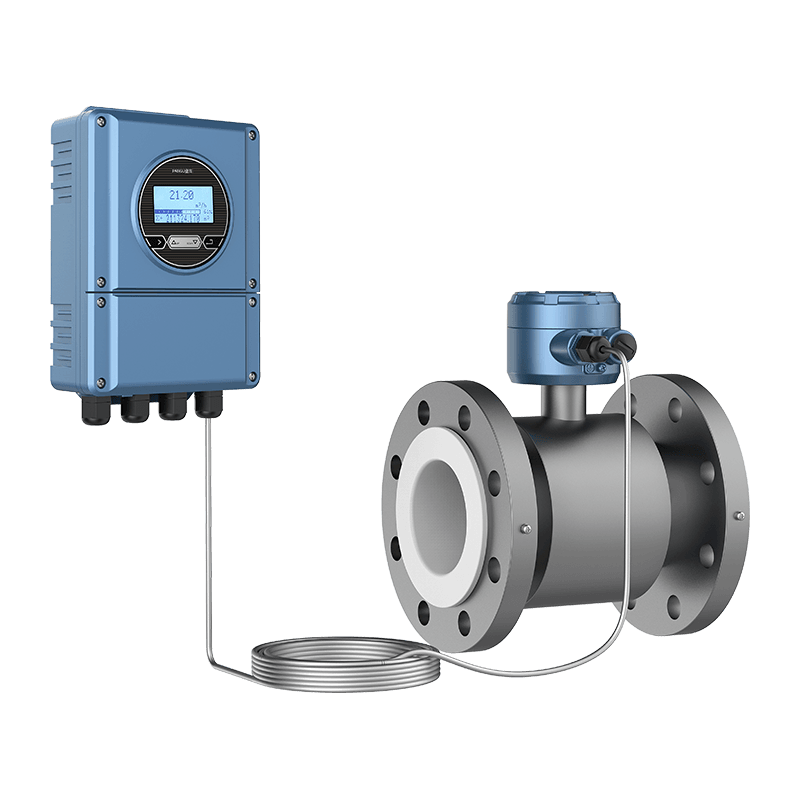
A high-precision sensor built with chemically resistant liner and electrode materials.
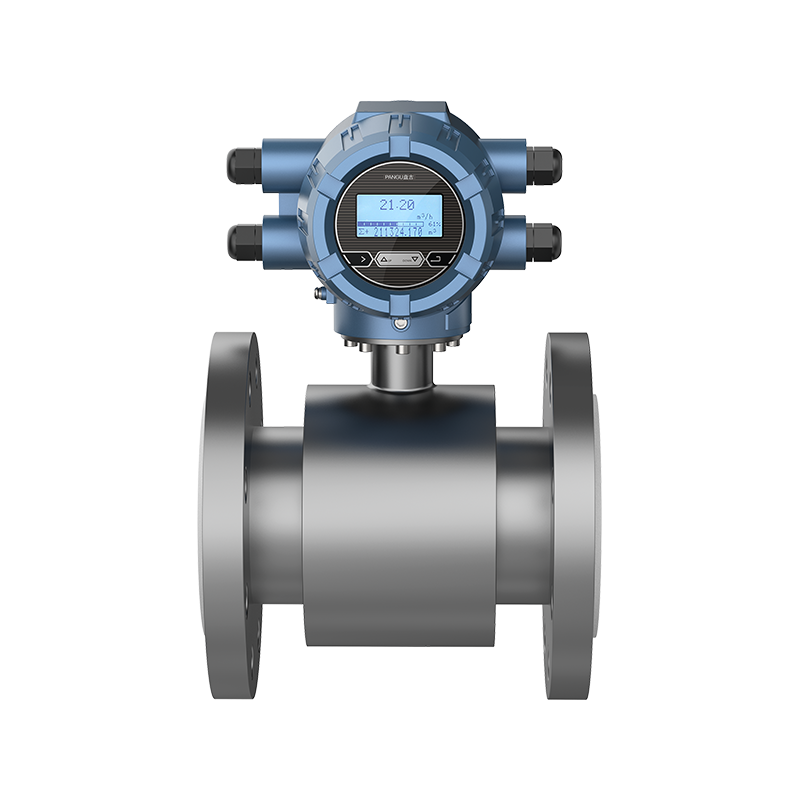
An abrasion-resistant sensor body designed for slurry and particulate-heavy streams.
PTFE and PFA liners are the common choice for acid, caustic, and solvent-heavy service because of their broad chemical resistance, and platinum or tantalum electrodes are frequently specified for the most aggressive fluids where standard stainless steel would corrode over time. Selecting a corrosive liquid flow meter without confirming the exact chemical concentration and operating temperature is one of the most frequent causes of premature liner failure in the field.
Abrasive fluid magnetic flowmeters solve a different problem: particulate wear rather than chemical attack. Mining slurries, mineral processing streams, and pulp suspensions contain solid particles that continuously scour the internal liner surface. Ceramic-lined sensors and thicker rubber compounds are the typical response, along with reduced flow velocity limits to slow the rate of erosion on the liner and electrode faces.
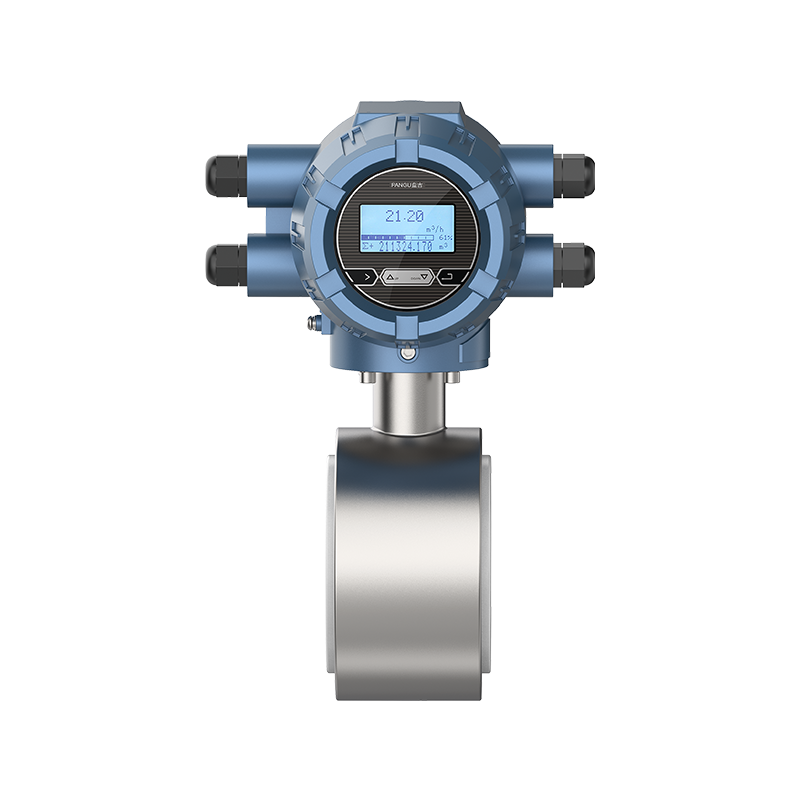
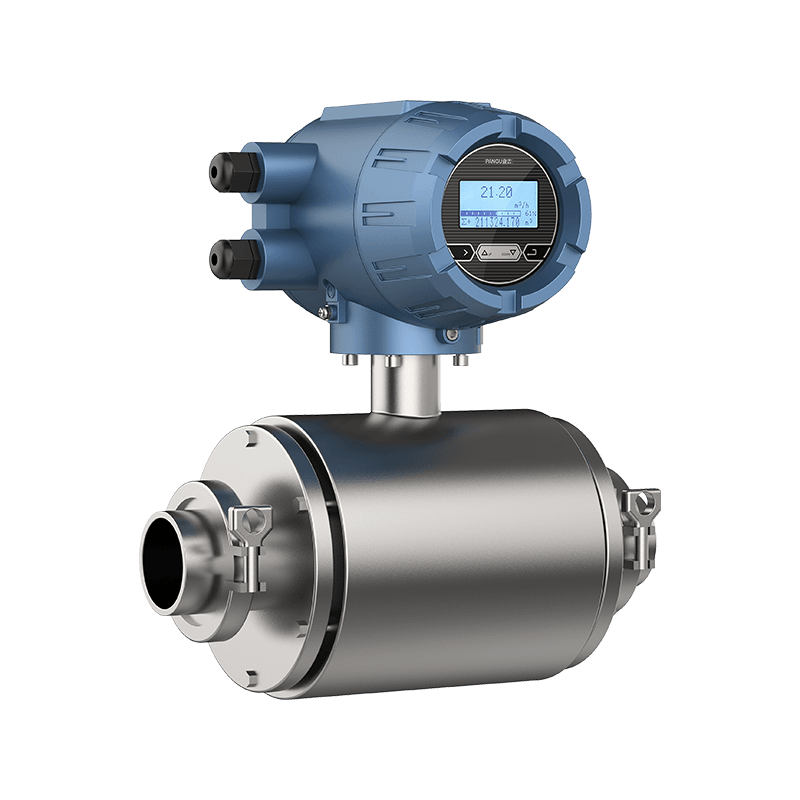
A clamp-style sanitary sensor built for tri-clamp connections in hygienic process lines.
sanitary clamp mag meters sit at the opposite end of the design spectrum, prioritizing cleanability over chemical or abrasion resistance. These use tri-clamp fittings for tool-free removal, polished interior surfaces free of crevices where bacteria could collect, and food-grade elastomer or PTFE liners approved for direct product contact. Sanitary clamp magnetic flow meters are common on dairy, brewing, and pharmaceutical lines where the entire wetted assembly needs to be removed and cleaned or sterilized on a defined schedule.
Installation Factors That Affect Accuracy and Signal Stability
Mag meter installation quality has as much influence on long-term accuracy as the sensor selection itself. The sensor must remain fully flooded at all times, since a partially filled pipe exposes the electrodes to air and produces an unstable or false reading. This is why vertical installation with upward flow is often preferred over horizontal runs on lines that do not consistently run full.
Straight pipe runs before and after the sensor allow the velocity profile to stabilize before it reaches the measurement point. A disturbed profile caused by an elbow, valve, or pump placed too close to the sensor introduces asymmetric flow that the meter cannot fully correct for, even with internal signal processing.
Grounding is another detail that is easy to overlook but critical to signal quality. Because the meter reads a very small induced voltage, stray electrical currents from unbonded pipe sections or nearby equipment can introduce measurement error. Grounding rings or grounding electrodes are standard practice on plastic-lined or non-conductive pipe sections to give the induced signal a clean reference path back to the transmitter.
For lines where a full-bore sensor cannot be installed due to size, cost, or shutdown constraints, an electromagnetic insertion flow meter offers a hot-tap alternative. These insertion designs place a single probe-mounted sensor into the center of the flow stream through a compression fitting, trading some accuracy for the ability to install or service the meter without cutting the pipeline. Insertion-style and clamp-on formats are frequently the subject of searches such as ifm mag flow meter or blancett flow meter, reflecting the range of insertion and clamp-style products available for retrofit metering where a full-bore flanged installation is not practical.
Flanged mag meter specifications also deserve attention during procurement, since flange rating, face-to-face dimension, and liner pressure rating must match the existing pipeline schedule. Ordering a sensor with the wrong flange class is one of the more common and costly mistakes during a mag meter installation, often discovered only once the shipment arrives on site.
Flow Meter Performance Comparison Across Applications
Liner and electrode lifespan varies significantly by application, and understanding that variation helps set realistic maintenance intervals during budgeting. Chemical service tends to shorten liner life through gradual permeation and swelling, while abrasive slurry service shortens it through mechanical wear. Sanitary and demineralized water applications, by contrast, typically see the longest liner service life because the fluids are gentle on the wetted materials.
A radar comparison across five common decision factors highlights why no single meter design dominates every category. Sanitary designs lead on hygiene compliance but trail slightly on raw cost efficiency due to polished finishing and certification requirements. Slurry designs lead on abrasion resistance but score lower on signal stability at very low flow velocities, where thick liners can slightly dampen the induced signal.
Data Snapshot: Typical Specifications by Meter Type
The following summary consolidates the specification ranges discussed above into a quick reference for early-stage procurement planning. These figures represent common industry ranges rather than a single fixed value, since exact performance depends on line size, fluid conductivity, and installation quality.
Compact Integrated
Accuracy: 0.5 percent of reading
Liner: PTFE or rubber
Best fit: General utility and clean water lines
Separate Remote
Accuracy: 0.5 percent of reading
Liner: PTFE or rubber
Best fit: Buried, submerged, or high-heat locations
Chemical High-Precision
Accuracy: 0.2 percent of reading
Liner: PFA or PTFE
Best fit: Acid, caustic, and solvent dosing lines
Slurry and Abrasive
Accuracy: 1.0 percent of reading
Liner: Ceramic or thick rubber
Best fit: Mining and mineral slurry transport
Sanitary Clamp
Accuracy: 0.5 to 1.0 percent of reading
Liner: Food-grade PTFE or elastomer
Best fit: Dairy, beverage, and pharmaceutical lines
Low-Conductivity Water
Accuracy: 0.5 percent of reading
Liner: PTFE with enhanced electrode area
Best fit: Demineralized and RO permeate systems
Frequently Asked Questions About Magnetic Flow Meters
Q1: What minimum conductivity does a fluid need for electromagnetic measurement?
Most electromagnetic flowmeters require a minimum fluid conductivity in the low microsiemens per centimeter range. Pure hydrocarbons, oils, and deionized water below that threshold generally cannot generate a usable signal with standard sensor designs.
Q2: Can a mag meter for wastewater handle intermittent flow with solids present?
Yes, as long as the pipe remains flooded during measurement. Wastewater-rated sensors with self-cleaning or scraper electrodes are specifically built to tolerate suspended solids without a rapid loss of signal quality.
Q3: Why does liner material matter more for chemical service than for water service?
Chemical liquid magnetic flowmeters are exposed to fluids that can chemically attack certain liner compounds over time, causing swelling, cracking, or permeation. Water service is far less aggressive, so liner selection there is driven more by cost and temperature than by chemical compatibility.
Q4: Is a clamp-on sanitary design as accurate as a flanged version?
Sanitary clamp mag meters typically fall in a slightly wider accuracy band than flanged industrial designs, largely due to the compression-fitting connection method. For most hygienic process applications this difference is well within acceptable tolerance.
Q5: How much straight pipe run is needed before and after the sensor?
General practice calls for several diameters of straight, unobstructed pipe upstream and a shorter run downstream, though the exact figure depends on the upstream disturbance, such as an elbow, tee, or partially open valve, near the installation point.
Q6: What causes accuracy to drift over time on an installed meter?
Electrode coating from grease, scale, or biological film is the most common cause of gradual accuracy drift, followed by liner wear on abrasive service and grounding issues introduced by pipeline maintenance work.
PREV:The Critical Role of Flow Measurement in Modern Industrial Operations
NEXT:From Pen to Pixel: Why Facilities Are Moving Past Paper Chart Recorders
NEXT:From Pen to Pixel: Why Facilities Are Moving Past Paper Chart Recorders
Interested in cooperation or have questions?
Contact Us Now!
Kelly

+86 13967196545

pangusales@vip.163.com
Production Base:

Building 1 and Building 42, No. 889 Huancheng North Road, Deqing County, Huzhou City, Zhejiang Province
Jiji
+86 15397010616
pgsalesjiji@vip.163.com

+86-0571-87770830
Corporate Headquarters:
602-702, Block D, Building 3, Area B,Xigang New Territories, 206 Zhenhua Road,Hangzhou City, Zhejiang Province, China

Copyright © Hangzhou Pangu Automation System Co., Ltd. Rights Reserved.
Custom Digital Panel Mount Industrial Instruments Suppliers
