 Read More
 Get A Quote

The Critical Role of Flow Measurement in Modern Industrial Operations
Home / News / Industry News / The Critical Role of Flow Measurement in Modern Industrial Operations
Product Category
NEW Category
Contact us
Contact Us
We specialise in the research, development and manufacture of electrical wires and cables.
 +86 13967196545
Related News
- The Backbone of Water Utility Operations: Why Flow Accuracy Drives Modern Municipal Networks
- Solving Flow Measurement Failures: High-Precision Electromagnetic Flowmeter for Harsh Industrial Applications
- Mastering Wastewater Flow: The Engineering, Selection, and Maintenance of Electromagnetic Flow Meters
- Overcoming Flow Measurement Bottlenecks in Water Treatment: A Selection & Application Guide for Hangzhou Pangu’s Three Core Electromagnetic Flowmeters
The Critical Role of Flow Measurement in Modern Industrial Operations
Content
- 1 The Growing Role of Flow Measurement in Modern Industrial Instrumentation
- 2 Core Technologies Behind Flow Sensing and Measurement
- 3 Digital Panel Mount Instruments and the Shift Toward Local Visibility
- 4 Flow Totalizers: From Basic Counting to Intelligent Energy Accounting
- 5 Comparing Flow Meter Types Across Practical Performance Criteria
- 6 Calibration Discipline and Integration With Process Automation
- 7 Selecting Process Control Instrumentation for Your Facility
- 8 Common Implementation Challenges and Practical Solutions
- 9 Frequently Asked Questions
- 9.0.1 Q1: What is the difference between flow rate and totalized flow?
- 9.0.2 Q2: How often should a flow totalizer be calibrated?
- 9.0.3 Q3: Can insertion flow meters achieve custody transfer accuracy?
- 9.0.4 Q4: Why do steam totalizers need temperature and pressure compensation?
- 9.0.5 Q5: Is a portable flow meter accurate enough for permanent monitoring?
The Growing Role of Flow Measurement in Modern Industrial Instrumentation
Flow measurement has quietly become one of the most consequential disciplines inside industrial facilities. Every cubic meter of gas, every ton of steam, and every liter of process fluid that moves through a plant eventually needs to be counted, billed, or balanced against a mass or energy budget. When that counting is inaccurate, the downstream effects are rarely small: overstated energy consumption, mismatched custody transfer records, or process control loops reacting to numbers that do not reflect reality.
This is why industrial flow measurement equipment has shifted from being a secondary utility function to a core part of plant reliability strategy. Facilities in chemical processing, power generation, food production, and water treatment increasingly treat flow data as a primary input for both financial reporting and safety-critical automation, not a background number checked once a shift.
Flow measurement error of even two percent, compounded across a year of continuous operation, can translate into measurable financial variance on utility and custody transfer accounts.
The broader category of Industrial Instrumentation now spans pressure, temperature, level, and flow sensing, but flow instrumentation carries unique complexity because it must account for changing fluid properties, temperature and pressure compensation, and in many cases, energy content calculations rather than simple volumetric counts.
Core Technologies Behind Flow Sensing and Measurement
Selecting the right sensing technology is the first decision in any flow measurement project, and it depends heavily on pipe size, fluid type, required accuracy class, and whether the installation is permanent or temporary.
Insertion and In-Line Sensing
insertion flow meters are commonly used on larger diameter pipes where installing a full bore in-line meter would be cost prohibitive. A single probe or multi-point sensor is inserted through a hot-tap fitting, which allows measurement without cutting the pipe. This makes insertion technology attractive for retrofits on existing gas and water lines where shutting down the line for a full replacement is not practical.
Ultrasonic and Transit-Time Approaches
An ultra flow meter based on transit-time ultrasonic principles measures the difference in signal travel time between transducers mounted upstream and downstream of the flow. Because there are no moving parts in contact with the fluid, these meters tend to hold calibration longer and are well suited to clean liquids and gases where mechanical wear would otherwise degrade accuracy over time.
Open Channel and Portable Configurations
Facilities dealing with gravity-fed flow, such as wastewater channels or irrigation systems, rely on open channel flow meter configurations that combine level measurement with a known channel geometry to calculate flow rate. Where a permanent installation is not justified, a portable flow meter allows engineers to perform spot checks, audits, or temporary monitoring campaigns without disturbing the pipeline.
- Insertion sensors: cost-effective for large diameter retrofit projects
- Ultrasonic sensors: minimal maintenance, no obstruction to flow
- Open channel sensors: suited to gravity flow and environmental monitoring
- Portable units: ideal for verification, audits, and short-term studies
Digital Panel Mount Instruments and the Shift Toward Local Visibility
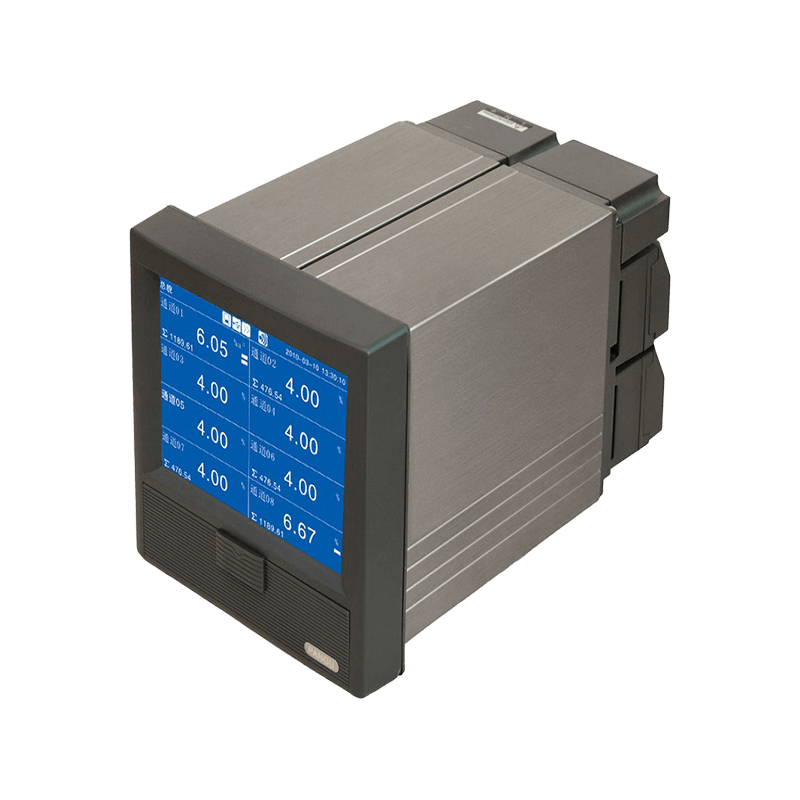
Alongside sensing technology, the way flow data is displayed and consumed at the field level has changed substantially. digital panel mount industrial instruments now provide operators with real-time totals, rate indication, and alarm status directly at the point of measurement, reducing reliance on control room screens for routine checks.
Adoption of these local digital displays varies by sector, largely driven by how frequently operators need to reference flow data manually versus relying entirely on automated systems.
Relative Adoption of Digital Panel Mount Displays by Industry Segment
Sectors with continuous, safety-relevant flow such as chemical processing show the highest reliance on local digital indication, since operators frequently need to confirm readings during rounds without depending solely on distributed control system screens.
Flow Totalizers: From Basic Counting to Intelligent Energy Accounting
A flow rate reading tells an operator what is happening right now; a totalizer tells the facility what has happened over time, which is what actually drives billing, energy balancing, and regulatory reporting. This is why natural gas and steam energy totalizers occupy such a central role in utility metering.
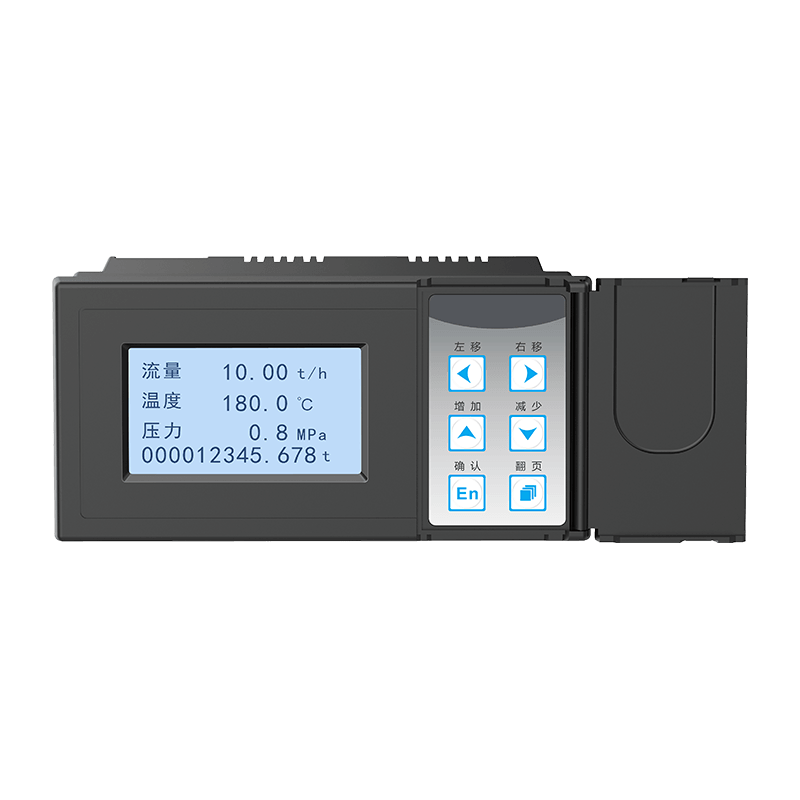
Modern digital flow totalizers go well beyond simple pulse counting. They apply temperature and pressure compensation, correct for fluid density changes, and in the case of steam or gas, convert volumetric flow into a mass or energy basis so that billing reflects actual energy delivered rather than raw volume, which can vary significantly with temperature and pressure conditions.
From Rate Display to Fiscal-Grade Accounting
A basic flow Rate Indicator Totalizers setup may only display an instantaneous rate and a running total. Facilities with custody transfer requirements, however, need Intelligent Flow Totalizers capable of logging historical data, generating audit trails, and applying industry-standard compensation algorithms so that figures used for invoicing can withstand scrutiny from counterparties or regulators.
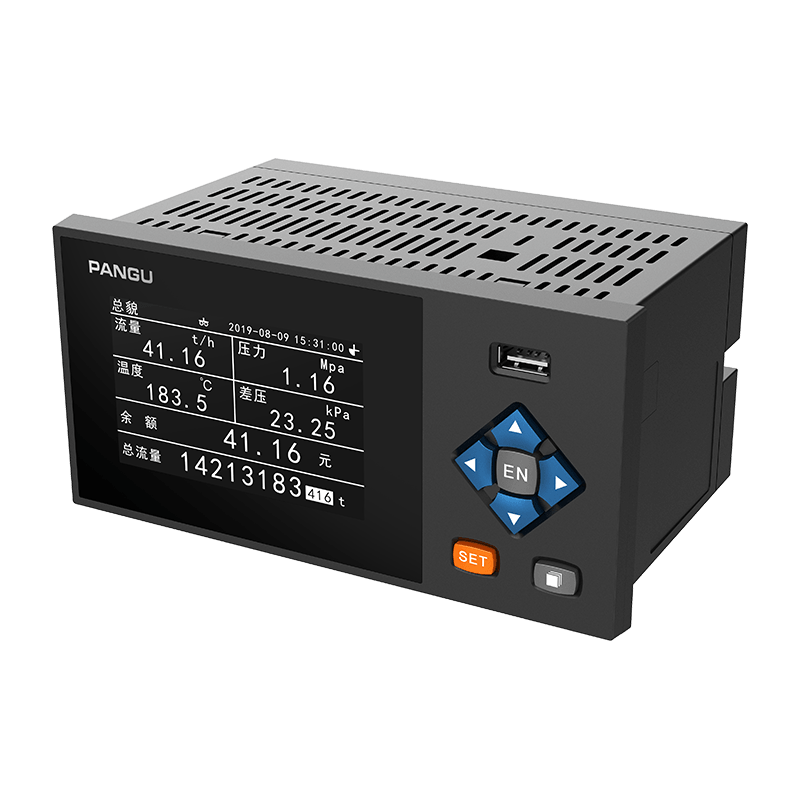
For steam systems specifically, steam heat totalizers calculate energy content by combining flow, temperature, and pressure inputs, which is essential because the enthalpy of steam changes with saturation conditions in ways that a simple volumetric count cannot capture.
| Totalizer Function | Basic Counter | Fiscal-Grade Totalizer |
|---|---|---|
| Volumetric Totalizing | Yes | Yes |
| Temperature and Pressure Compensation | No | Yes |
| Energy or Mass Basis Conversion | No | Yes |
| Audit Trail and Data Logging | Limited | Extensive |
| Suitable for Custody Transfer | Rarely | Yes |
Comparing Flow Meter Types Across Practical Performance Criteria
No single flow sensing technology is universally superior. The right choice depends on how the facility weighs accuracy, maintenance burden, upfront cost, robustness to dirty or multiphase fluid, and response time to rate changes.
Relative Performance Comparison of Common Flow Meter Types
Ultrasonic technology tends to score well on accuracy and low maintenance since it avoids moving parts, while insertion meters remain attractive where retrofit simplicity and cost efficiency matter more than achieving the highest possible accuracy class.
Calibration Discipline and Integration With Process Automation
Even the best industrial process automation instruments degrade in accuracy without a defined calibration schedule. Flow sensors are particularly sensitive to this because small drifts accumulate silently into large totalized volumes over months of continuous operation.
Typical Measurement Drift Relative to Calibration Interval
This pattern is why most fiscal metering programs specify calibration or verification at fixed intervals rather than relying on run-to-failure assumptions. A defined flow computer calibration schedule, verified against a reference standard, keeps drift within an acceptable band before it materially affects totalized values.
Data Flow Into Automation Systems
Beyond calibration, the value of a flow measurement point depends on how cleanly it integrates into the plant automation layer. A well-configured measurement point does not just display a number locally; it feeds a control loop, historian, and alarm system in a coordinated sequence.
Typical Signal Path From Sensor to Automation Layer
Selecting Process Control Instrumentation for Your Facility
Choosing the right process control equipment requires balancing accuracy requirements against installation constraints and long-term maintenance capacity. The following considerations apply broadly across most industrial flow applications.
| Consideration | Key Question |
|---|---|
| Fluid Type | Is the medium clean liquid, gas, steam, or a mixed-phase fluid |
| Pipe Access | Can the line be shut down for installation or does it require hot-tap methods |
| Accuracy Class | Is the reading used for custody transfer or general process monitoring |
| Environmental Conditions | Will the instrument face temperature extremes, vibration, or corrosive exposure |
| Data Integration | Does the measurement need to feed a digital automation network directly |
Facilities standardizing on a consistent instrumentation platform across multiple sites also gain an operational advantage: technicians become familiar with a single interface and calibration procedure, which reduces training time and lowers the chance of configuration errors during commissioning.
Common Implementation Challenges and Practical Solutions
Inconsistent Readings After Installation
Many accuracy complaints trace back not to the sensor itself but to insufficient straight pipe run upstream and downstream of the measurement point. Turbulence from a nearby elbow or valve can distort the velocity profile the sensor relies on.
Data Silos Between Field and Office
Where totalized data still requires manual transcription from a local panel to a spreadsheet, transcription errors and reporting delays are common. Migrating to networked digital flow indicator outputs that report directly into the historian removes this manual step entirely.
Underestimating Calibration Labor
Facilities sometimes select high-accuracy instrumentation without budgeting for the recurring labor and reference-standard cost of maintaining that accuracy. Matching the instrument class to the actual reporting requirement, rather than defaulting to the highest available accuracy everywhere, keeps the long-term maintenance load realistic.
- Verify straight pipe run requirements before finalizing sensor placement
- Prioritize networked output where manual data transcription currently occurs
- Match accuracy class to actual reporting or billing requirements
- Schedule calibration verification proactively rather than reactively
Frequently Asked Questions
Q1: What is the difference between flow rate and totalized flow?
Flow rate is an instantaneous measurement of how fast fluid is moving at a given moment, typically expressed per unit of time. Totalized flow is the cumulative sum of that flow over a defined period, which is what utility billing and custody transfer records rely on.
Q2: How often should a flow totalizer be calibrated?
Calibration intervals depend on the application and regulatory requirements, but fiscal metering points are commonly verified on a fixed schedule, often annually or semi-annually, against a traceable reference standard to keep drift within an acceptable range.
Q3: Can insertion flow meters achieve custody transfer accuracy?
Insertion meters can be suitable for general process monitoring, but achieving custody transfer grade accuracy typically requires careful profile calibration and, in many cases, supplementary verification against a full bore reference meter.
Q4: Why do steam totalizers need temperature and pressure compensation?
Steam properties, including density and enthalpy, change significantly with temperature and pressure. Without compensation, a volumetric reading alone would not accurately reflect the actual mass or energy content being delivered.
Q5: Is a portable flow meter accurate enough for permanent monitoring?
Portable meters are generally designed for spot checks, audits, and temporary studies rather than continuous long-term monitoring, since they lack the fixed installation conditions that support sustained high-accuracy performance.
PREV:Overcoming Flow Measurement Bottlenecks in Water Treatment: A Selection & Application Guide for Hangzhou Pangu’s Three Core Electromagnetic Flowmeters
NEXT:How Do You Choose the Right Magnetic Flow Meter for Your Process Fluid?
NEXT:How Do You Choose the Right Magnetic Flow Meter for Your Process Fluid?
Interested in cooperation or have questions?
Contact Us Now!
Kelly

+86 13967196545

pangusales@vip.163.com
Production Base:

Building 1 and Building 42, No. 889 Huancheng North Road, Deqing County, Huzhou City, Zhejiang Province
Jiji
+86 15397010616
pgsalesjiji@vip.163.com

+86-0571-87770830
Corporate Headquarters:
602-702, Block D, Building 3, Area B,Xigang New Territories, 206 Zhenhua Road,Hangzhou City, Zhejiang Province, China

Copyright © Hangzhou Pangu Automation System Co., Ltd. Rights Reserved.
Custom Digital Panel Mount Industrial Instruments Suppliers
