 Read More

 Get A Quote

How Integrated Electromagnetic Flow Meters Optimize Municipal Water Treatment Performance
Home / News / Industry News / How Integrated Electromagnetic Flow Meters Optimize Municipal Water Treatment Performance
Product Category
NEW Category
Contact us
Contact Us
We specialise in the research, development and manufacture of electrical wires and cables.
 +86 13967196545
Related News
- How Electromagnetic Flow Meters Deliver Accurate Readings in Raw Sewage and Sludge Lines
- Electromagnetic Flow Meter vs. Vortex Flow Meter: Principles, Differences, and Selection Guide
- How to Choose a Flow Meter That Survives Aggressive Chemical Service
- Pangu Automation’s 4,000+m² Smart Factory: High‑Precision Water Flow Calibration for DN15 to DN1000
How Integrated Electromagnetic Flow Meters Optimize Municipal Water Treatment Performance
Content
- 1 Flow Accuracy Is the Backbone of Water Utility Operations
- 2 Common Measurement Challenges in Potable Water Networks
- 3 How an Integrated Electromagnetic Flow Meter Actually Works
- 4 Comparing Accuracy Across Common Flow Measurement Technologies
- 5 Measurement Drift Over Time in Service Conditions
- 6 Lifecycle Maintenance Cost Comparison
- 7 Weighing Technology Trade-Offs Side by Side
- 8 Typical Technical Specification Range
- 9 Installation Practices That Preserve Long-Term Accuracy
- 10 A Practical Scenario: Upgrading an Aging Distribution Network
- 11 Frequently Asked Questions
- 11.0.1 Q1: What makes electromagnetic flow meters suitable for potable water applications?
- 11.0.2 Q2: How often do these meters require recalibration?
- 11.0.3 Q3: Can electromagnetic meters measure very low night-time flows accurately?
- 11.0.4 Q4: Do these meters work in below-grade vaults with intermittent flooding?
- 11.0.5 Q5: What water conditions can reduce measurement accuracy?
Flow Accuracy Is the Backbone of Water Utility Operations
Every decision a municipal water utility makes, from chemical dosing to billing to regulatory reporting, depends on one number: how much water is actually moving through a pipe at a given moment. When that number drifts even slightly, the consequences ripple outward. Over-dosed disinfectant wastes chemical budget and can trigger taste and odor complaints. Under-reported consumption erodes revenue that utilities depend on to fund infrastructure upgrades. Inaccurate readings at treatment intakes can throw off entire process control loops downstream.
This is why flow measurement technology has become a quiet but critical focus area for utility engineers. A properly specified water treatment plant flow meter does more than record a number on a display. It feeds real-time data into SCADA systems, supports non-revenue water audits, and helps operators respond to demand swings before they become service issues.
Common Measurement Challenges in Potable Water Networks
Municipal water systems present a distinct set of measurement obstacles compared to industrial process lines. Flow rates swing widely between night-time low demand and peak morning or evening usage. Water chemistry varies seasonally with turbidity, temperature, and mineral content. Pipe networks are often decades old, with irregular diameters and imperfect straight runs upstream of any meter.
| Challenge | Typical Impact | Measurement Concern |
|---|---|---|
| Wide flow range (low night flow to peak demand) | Meter may lose accuracy at range extremes | Turndown ratio |
| Variable water conductivity | Signal strength changes with mineral content | Sensor sensitivity |
| Suspended solids or turbidity | Fouling on sensing surfaces over time | Long-term drift |
| Limited straight pipe runs | Flow profile disturbance near fittings | Installation accuracy |
| Intermittent or reversing flow | Direction changes during maintenance or transfer | Bidirectional capability |
Any technology selected to serve as a long-term municipal water supply flow meter needs to hold accuracy across all of these variables simultaneously, not just under laboratory test conditions.
How an Integrated Electromagnetic Flow Meter Actually Works
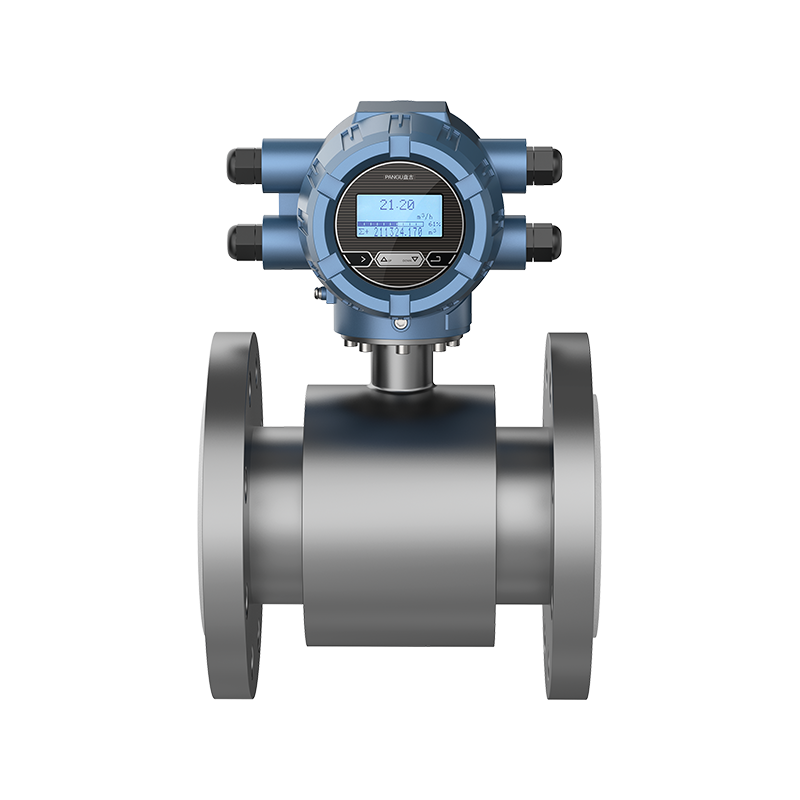
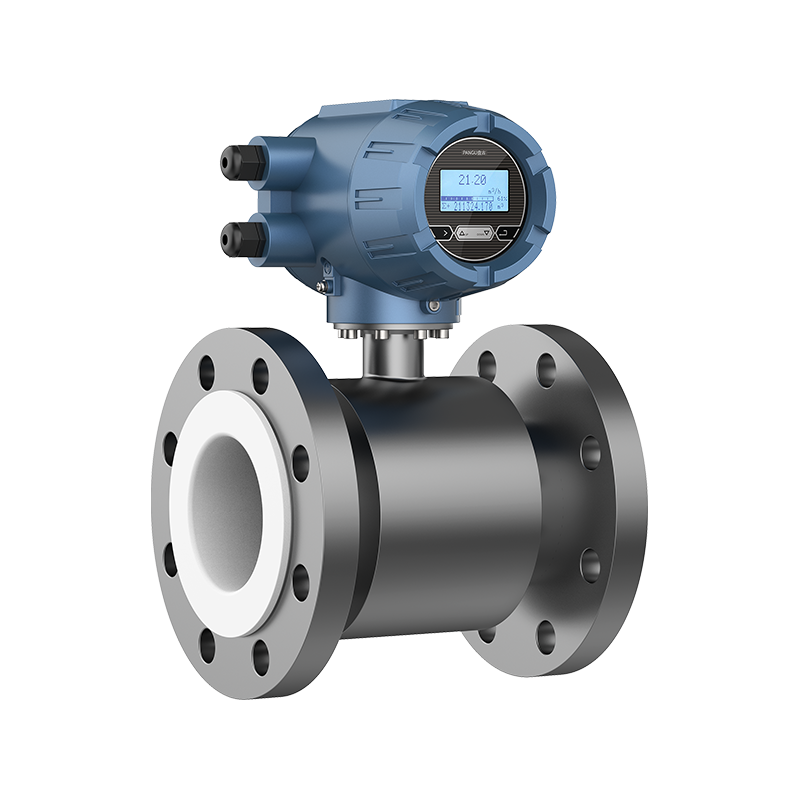
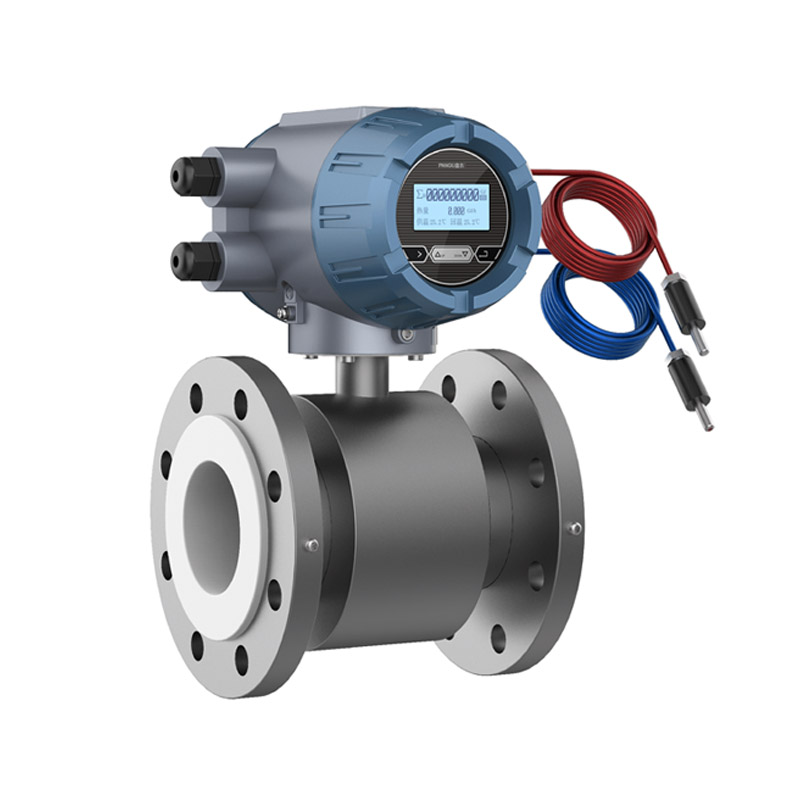
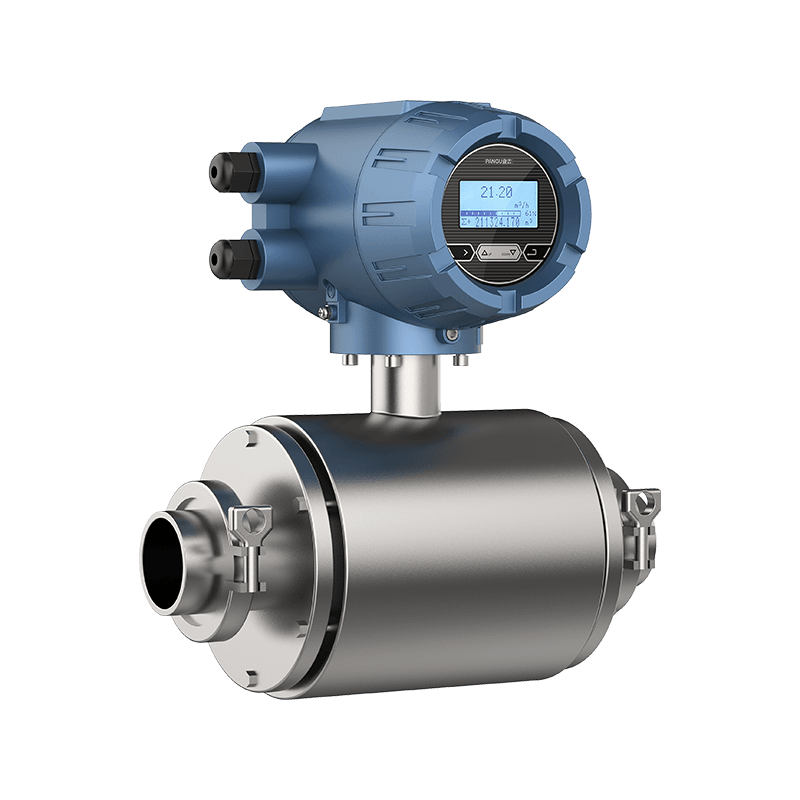
Rather than relying on moving mechanical parts, an integrated electromagnetic flow meter generates a controlled magnetic field across the pipe cross section. As conductive water passes through that field, it produces a small voltage signal that is picked up by a pair of electrodes mounted flush with the pipe wall. That signal is proportional to the velocity of the water, and an integrated transmitter converts it directly into a flow rate reading without a separate remote converter unit.
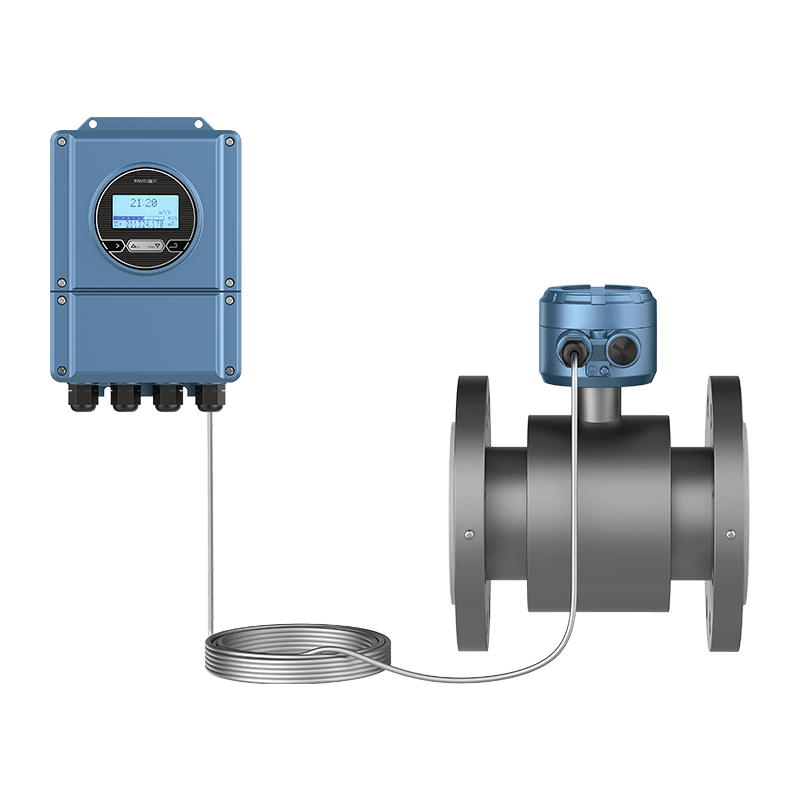
Because the integrated design combines the sensor and transmitter into a single housing, utilities avoid long signal cable runs between separate components, which reduces both installation cost and the risk of interference in below-grade vaults or pump station environments.
Comparing Accuracy Across Common Flow Measurement Technologies
Accuracy is rarely uniform across a meter's full operating range. The chart below reflects typical accuracy retention at mid-range flow, a common benchmark utilities use when comparing technologies during a specification review.
Because the electromagnetic sensing method has no moving parts to wear, its accuracy tends to remain closer to factory calibration throughout its service life, which matters most for billing and compliance data.
Measurement Drift Over Time in Service Conditions
Long-term stability matters as much as day-one accuracy. Utilities that track calibration verification data across a twelve month cycle typically see a clear separation between mechanical and electromagnetic technologies once fouling and bearing wear begin to affect moving components.
Lifecycle Maintenance Cost Comparison
Purchase price is only one part of a utility's total cost of ownership calculation. Maintenance labor, replacement parts, and downtime for recalibration typically account for a larger share of lifetime cost, especially for meters with mechanical wear components.
Weighing Technology Trade-Offs Side by Side
No single metric tells the whole story. The radar comparison below scores each technology across five practical dimensions utilities weigh during specification, on a relative scale where a larger area indicates stronger overall performance.
Utilities evaluating a new potable water flow measurement standard typically find that electromagnetic technology scores consistently in the upper range across all five criteria, rather than excelling in one area at the expense of another.
Typical Technical Specification Range
When drafting a specification for a new or replacement meter, engineers generally reference a range of parameters rather than a single fixed value, since municipal applications vary by pipe size and service point.
| Parameter | Typical Range |
|---|---|
| Line size | DN15 to DN1200 |
| Accuracy class | Plus or minus 0.5 percent of reading |
| Output signal | 4 to 20mA, pulse, or digital bus |
| Ingress protection | IP68 for submersible vault installation |
| Lining material | PTFE or hard rubber |
| Electrode material | Stainless steel or Hastelloy |
Installation Practices That Preserve Long-Term Accuracy
- Maintain adequate straight pipe runs upstream and downstream of the sensor
- Ensure the pipe remains fully liquid-filled at the measurement point
- Provide proper grounding to prevent stray electrical interference
- Avoid installation directly downstream of control valves or pumps where turbulence is highest
- Select electrode material compatible with local water chemistry
Utilities that follow these practices consistently report fewer field recalibration visits and more reliable long-term billing data.
A Practical Scenario: Upgrading an Aging Distribution Network
Consider a mid-sized utility operating a distribution network with meters installed over multiple decades. Inconsistent readings across zones made it difficult to reconcile production totals with billed consumption, a common symptom of aging mechanical meters losing accuracy at low flow. After replacing key network nodes with a modern municipal water supply flow meter, the utility was able to narrow its non-revenue water gap and gain clearer zone-level visibility for leak detection efforts.
This kind of phased replacement approach, prioritizing high-flow trunk lines first, allows utilities to spread capital cost over several budget cycles while still capturing the largest accuracy gains early.
Frequently Asked Questions
Q1: What makes electromagnetic flow meters suitable for potable water applications?
They have no moving parts in the flow path, which reduces wear, minimizes pressure loss, and helps maintain stable accuracy across a wide flow range typical of municipal demand patterns.
Q2: How often do these meters require recalibration?
Most utilities schedule verification checks every two to five years, though actual intervals depend on water quality, installation conditions, and internal regulatory requirements.
Q3: Can electromagnetic meters measure very low night-time flows accurately?
Yes, their wide turndown ratio allows reliable measurement at both very low and peak flow rates without the mechanical stall issues seen in turbine-style meters.
Q4: Do these meters work in below-grade vaults with intermittent flooding?
Integrated units rated to IP68 are designed for temporary submersion, making them suitable for many vault installations common in municipal networks.
Q5: What water conditions can reduce measurement accuracy?
Very low conductivity water or heavy entrained air can affect signal quality, so proper sizing and installation location are important during the design phase.
PREV:No previous article
NEXT:How Electromagnetic Flow Meters Deliver Accurate Readings in Raw Sewage and Sludge Lines
NEXT:How Electromagnetic Flow Meters Deliver Accurate Readings in Raw Sewage and Sludge Lines
Interested in cooperation or have questions?
Contact Us Now!
Kelly

+86 13967196545

pangusales@vip.163.com
Production Base:

Building 1 and Building 42, No. 889 Huancheng North Road, Deqing County, Huzhou City, Zhejiang Province
Jiji
+86 15397010616
pgsalesjiji@vip.163.com

+86-0571-87770830
Corporate Headquarters:
602-702, Block D, Building 3, Area B,Xigang New Territories, 206 Zhenhua Road,Hangzhou City, Zhejiang Province, China

Copyright © Hangzhou Pangu Automation System Co., Ltd. Rights Reserved.
Custom Digital Panel Mount Industrial Instruments Suppliers
