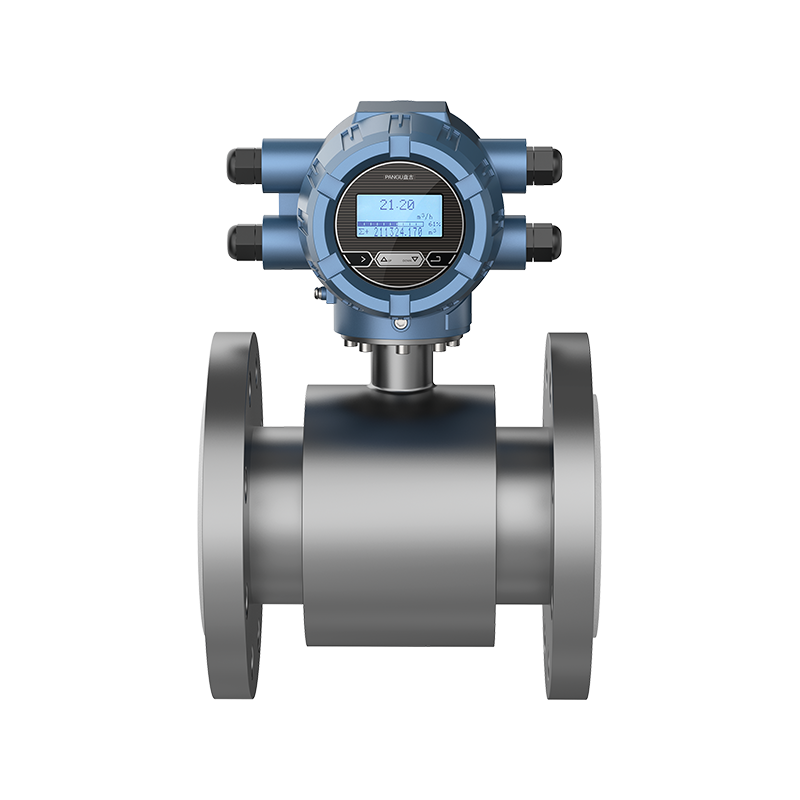
 Read More

 Get A Quote

Potable Water Flow Meter: Accurate Measurement for Utilities & Industry
Home / News / Industry News / Potable Water Flow Meter: Accurate Measurement for Utilities & Industry
Product Category
NEW Category
Contact us
Contact Us
We specialise in the research, development and manufacture of electrical wires and cables.
 +86 13967196545
Related News
- Overcoming Flow Measurement Bottlenecks in Water Treatment: A Selection & Application Guide for Hangzhou Pangu’s Three Core Electromagnetic Flowmeters
- How Do You Choose the Right Magnetic Flow Meter for Your Process Fluid?
- Why Do Water Flow Meters Lose Accuracy and How Can You Fix Them?
- Pangu Automation’s 4,000+m² Smart Factory: High‑Precision Water Flow Calibration for DN15 to DN1000
Potable Water Flow Meter: Accurate Measurement for Utilities & Industry
Content
- 1 Why Electromagnetic Flow Meters Suit Potable Water
- 2 Key Selection Criteria for Potable Water Flow Meters
- 3 Calibration and Verification: The Backbone of Trustworthy Data
- 4 Real-World Applications Across the Water Supply Chain
- 5 Installation and Maintenance Best Practices
- 6 Frequently Asked Questions
- 6.0.1 Q1: Can an electromagnetic flow meter be used for potable water without affecting drinking water safety?
- 6.0.2 Q2: What should I do if my water flow meter shows a flow reading when the pump is stopped?
- 6.0.3 Q3: How long does an electromagnetic flow meter typically last?
- 6.0.4 Q4: Is it necessary to buy a highly accurate (0.2%) meter for all potable water lines?
- 7 A Practical Path to Reliable Potable Water Flow Data
When a municipal water utility in a fast-growing district began losing an average of 6% of its treated water to unexplained line losses, the engineering team discovered that aging mechanical meters were the root cause. The flow data was too inconsistent to support pressure management, billing reconciliation, or leak detection. This is a common scenario. Potable water networks need measurement instruments that deliver repeatable, verifiable data over decades of continuous service, not estimates that degrade after a few seasons.
The electromagnetic flow meter, often referred to as a magmeter, has become the standard choice for potable water because it offers a unique combination of high accuracy, obstruction-free flow, and a sanitary design that suits utility and industrial water lines alike. Here is what water professionals should consider before specifying one.
Why Electromagnetic Flow Meters Suit Potable Water
Electromagnetic flow meters operate on Faraday's law of induction. A magnetic field is applied across the flow tube, and the movement of conductive water generates a voltage proportional to the flow velocity. Because there are no moving parts, the meter does not create pressure losses, is unaffected by suspended solids, and requires very little maintenance over its lifespan.
For potable water applications, this technology offers three decisive advantages:
- Sanitary and safe: The flow tube can be fitted with food-grade liners like PTFE or Neoprene, ensuring no contamination and easy cleaning.
- Accuracy independent of pressure and temperature: The measurement is not affected by viscosity or density changes, making it reliable for varying water conditions.
- Wide turndown ratio: A single meter can measure from very slow trickle flows to high peak demand, reducing the need for multiple parallel meters.
How It Compares to Other Measuring Technologies
| Technology | Accuracy (typical) | Maintenance | Pressure Drop | Suitability |
|---|---|---|---|---|
| Electromagnetic | ±0.5% of reading | Low | Negligible | Fully lined, no moving parts |
| Ultrasonic | ±1.0% of reading | Moderate | Negligible | Sensitive to air bubbles and scaling |
| Vortex | ±1.5% of reading | Moderate | Moderate | Best for low-viscosity fluids, not for low flow |
| Positive Displacement | ±0.5% of reading | High | High | Reserved for small lines and billing |
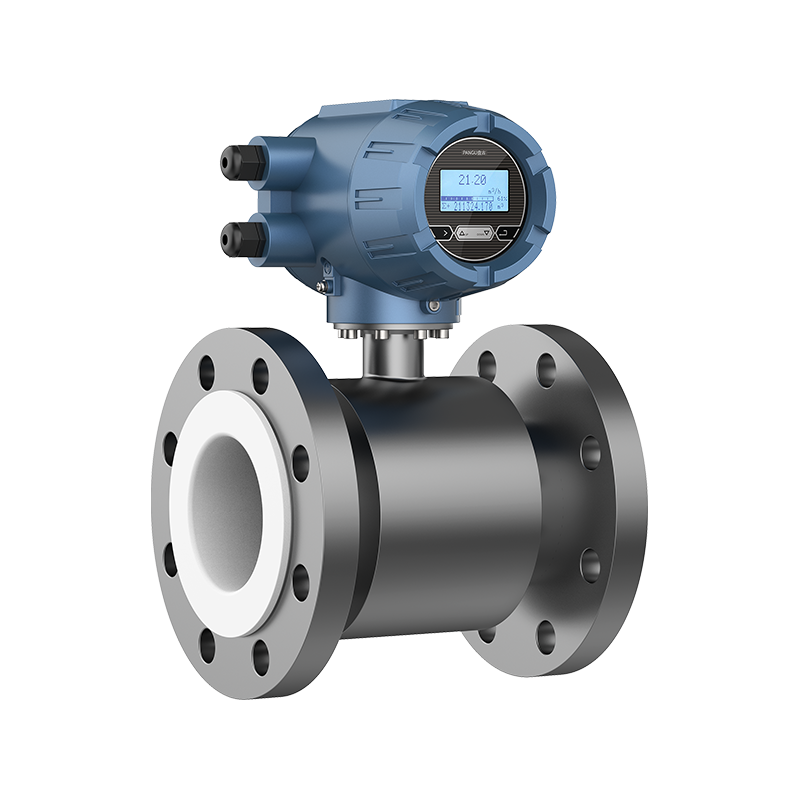
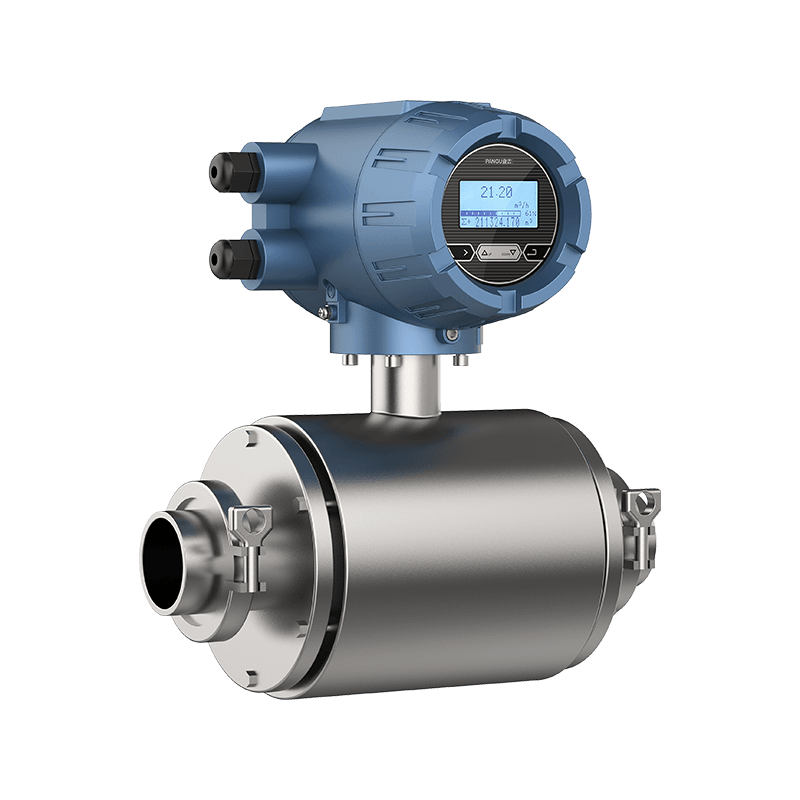
This is why the integrated electromagnetic flow meter is frequently the first choice for utility engineers who need a robust, compact unit with a local display. For retrofitting existing pipes without cutting the line, a clamp-on electromagnetic flow meter delivers comparable accuracy when the pipe has a smooth, conductive exterior.
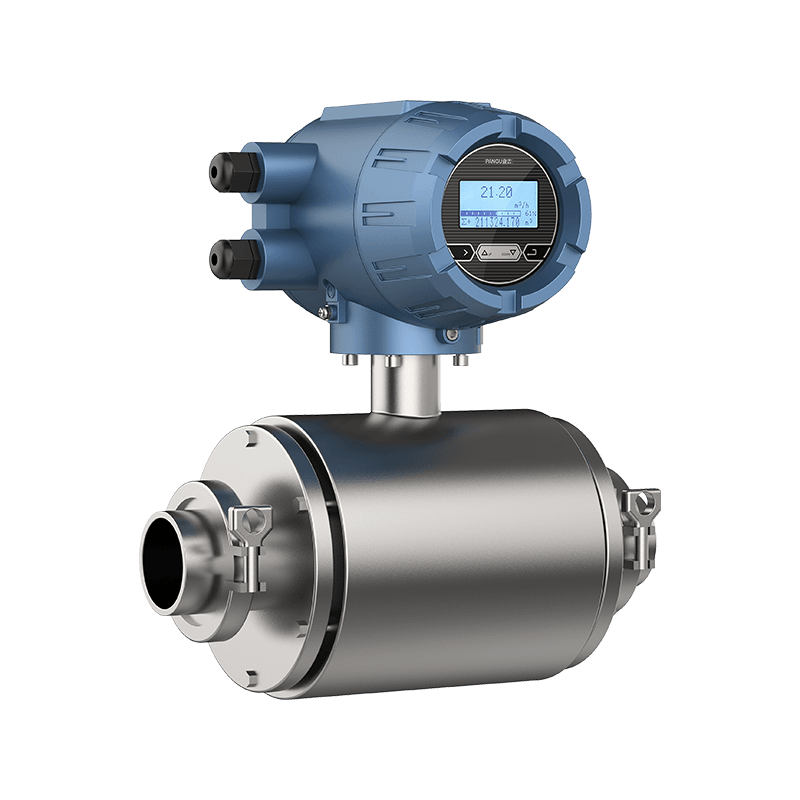 Clamp-On Electromagnetic FlowmeterThe clamp-on electromagnetic flowmeter is also designed and manufactured based on Faraday's law of electromagnetic induction. Its structure and function are identical ...View Product →
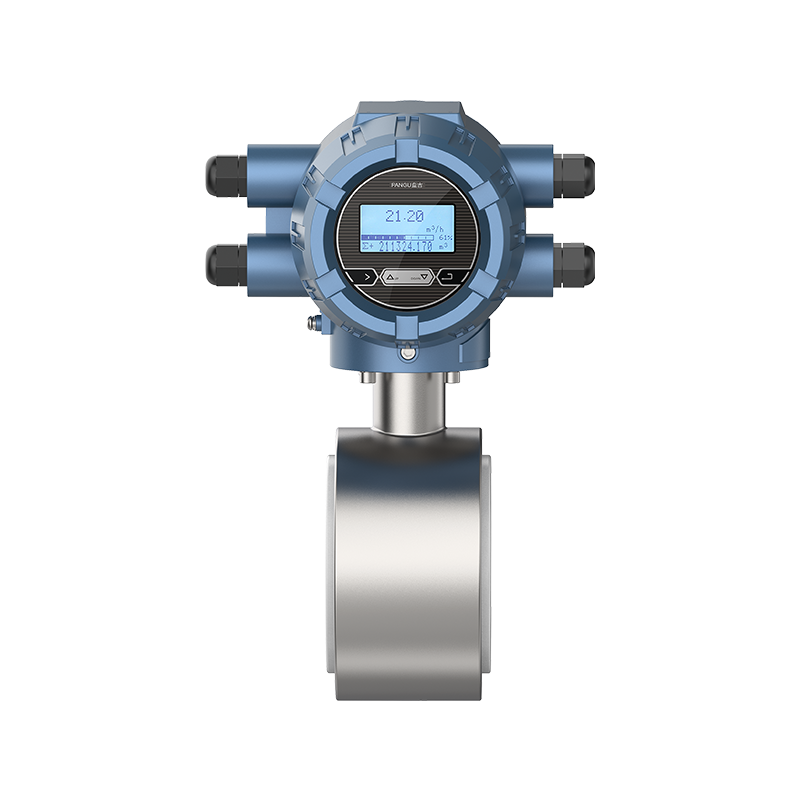
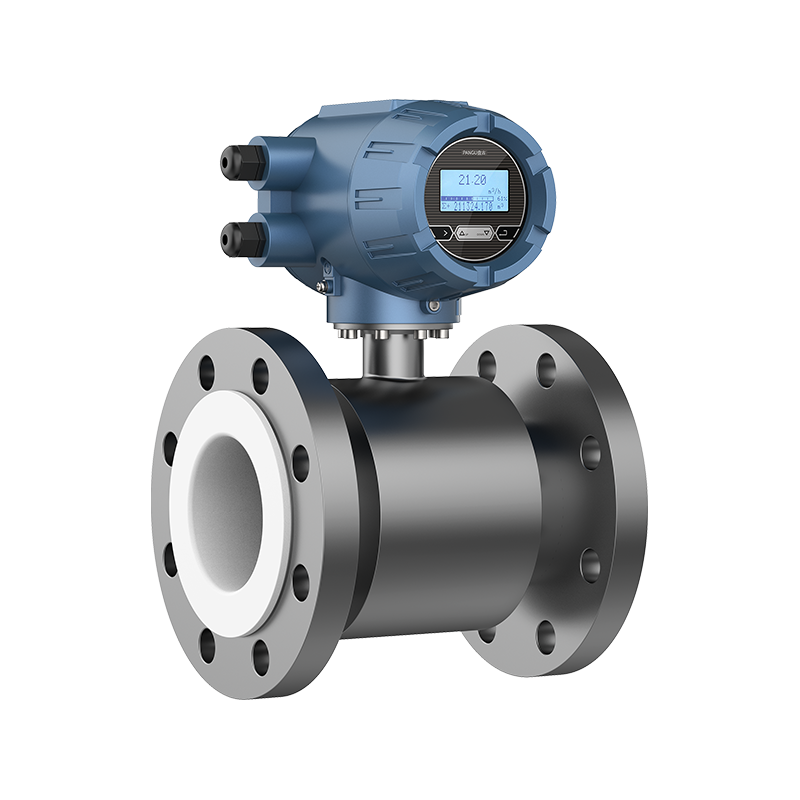 Integrated Electromagnetic Flow MeterThe PMF Integrated Electromagnetic Flowmeter is a precision instrument consisting of a high-performance sensor and an intelligent converter. It is specifically designe...View Product →
Key Selection Criteria for Potable Water Flow Meters
Specifying a flow meter for drinking water is more than comparing datasheet accuracy. The real questions revolve around how the instrument will behave in the actual pipeline network, and how its data will be used downstream. Get these four decisions right and you avoid most field issues.
1. Accuracy Class and Criticality of the Application
Utility billing and custody transfer points demand a higher accuracy class, typically ±0.2% of reading. For secondary supply and process control, ±0.5% is often sufficient. A higher accuracy class costs more but pays back through reduced product loss and better leak detection.
2. Pipe Size and Flow Velocity Range
Electromagnetic flow meters perform optimally when the flow velocity is between 1 and 3 m/s. For a DN100 water supply line, this translates to a flow rate range of roughly 28 to 85 m³/h. Sizing the meter to the expected velocity range, rather than the nominal pipe diameter, prevents poor low-flow performance and helps maintain the recommended ±0.5% reading accuracy.
3. Datalogging and Remote Communication
In modern water management, a flow meter alone is not enough. The data must be communicated to a SCADA system or recorder. A multi-channel paperless recorder (such as the KT500) can capture flow, pressure, and other signals in one place, supporting better operational decisions and audit trails. However, for a direct flow measurement link, the key is to ensure the meter has a compatible output like 4–20 mA, pulse, or RS485 with Modbus.
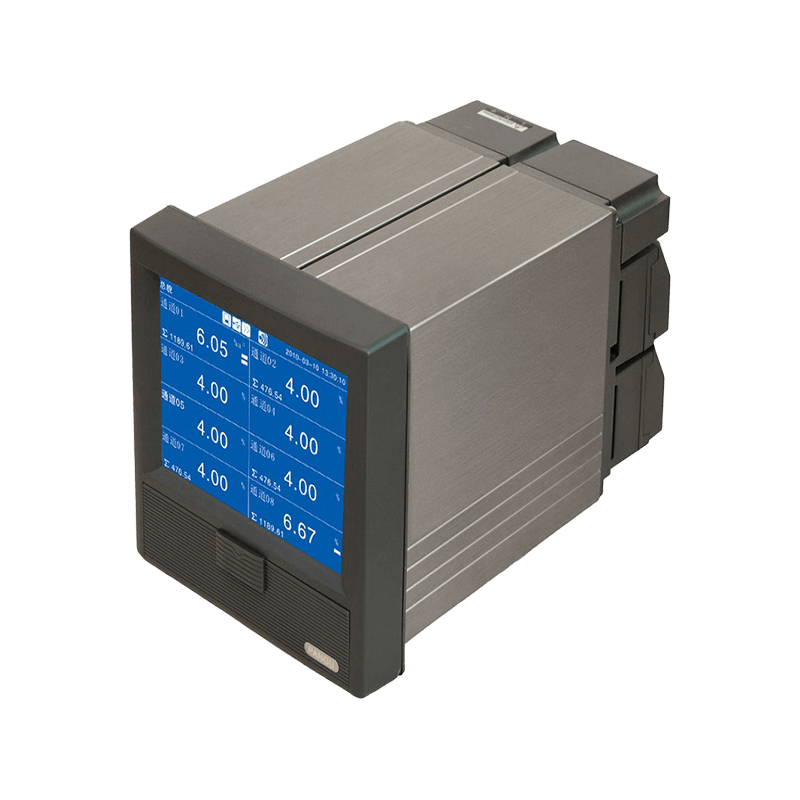 KT500 16 Channel Paperless Recorder Industrial Multi Channel Data LoggerThe KT500 Paperless Recorder is a high-performance, 16-channel industrial data logger engineered for precise data acquisition, monitoring, and recording. Enclosed in a...View Product →
4. Installation Environment and Accessibility
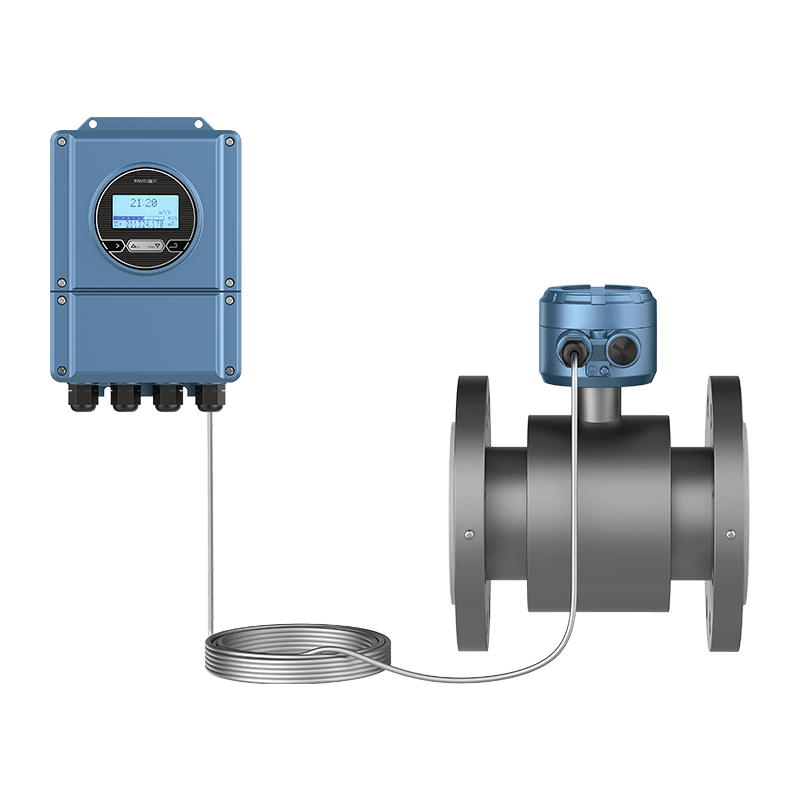
Will the meter be installed in a manhole, a pump station, or a surface-mounted pipeline? Is there a risk of flooding or condensation? A robust IP67 or IP68 enclosure is essential for wet environments. Also consider whether a split-type remote electromagnetic flow meter is more practical, as it allows the electronics to be mounted in a nearby control cabinet while the sensor sits in the pipe.
Calibration and Verification: The Backbone of Trustworthy Data
Accuracy on a datasheet only means something if the meter is properly calibrated at the factory and can be verified later in service. This is where a producer's test capability becomes a defining selection factor that is easy to overlook.
At Hangzhou Pangu Automation System Co., Ltd., the factory operates a DN15–DN1000 full-automatic high-precision water flow calibration facility. The system uses three independent pipelines and two verification methods: the standard meter method and the static mass method. This setup allows every flow meter leaving the factory to be verified across its stated range, not just at one flow point. For potable water utilities, such traceability is crucial for binding cost allocation, water loss audits, and regulatory reporting.
The 4000 m² smart factory with a high-precision calibration facility is more than a production detail; it directly influences how confidently an engineer can specify a flow meter for a critical water asset. When a meter is calibrated at multiple points from DN15 to DN1000, it demonstrates that the manufacturer not only understands the technology but also owns the process of translating design to field performance.
Real-World Applications Across the Water Supply Chain
Potable water flow measurement spans every stage of the urban water cycle, from raw water abstraction to distribution. A single product line must adapt to these different conditions, or the utility ends up with multiple suppliers and inconsistent data standards.
Water Supply Lines and Intake Stations
Large-diameter electromagnetic flow meters are commonly used at plant intakes to reconcile treated water output with the network's total demand. Because these lines operate continuously, a meter with low pressure drop and high reliability at moderate flow speed is preferred. The water supply flow meter page on this website gives a deeper view into sizing and installation practices for such applications.
Secondary Water Supply Pump Stations
In mid-rise buildings and residential zones, the flow meter's job is to provide real-time verification that the pump station delivers the expected flow to boost pressure. Mistakes in this measurement lead to mismatched pump operation or pressure complaints. An electromagnetic meter with a stable zero-point and long-term calibration stability handles the repeated start-stop cycles of booster pumps effectively.
Treatment Plants and Distribution Networks
Inside a treatment plant, meters handle flows of raw water, clarified water, and final treated water. Metering here needs to be accurate enough to support the plant's energy balance and chemical dosing calculations. This is where a high-precision electromagnetic flowmeter with good repeatability becomes a process instrument, not just a revenue meter.
Across all these environments, the common requirement is for a meter that performs without drift and does not require frequent recalibration. A simple, verified installation is what separates a good project outcome from a data headache.
Installation and Maintenance Best Practices
Even a top-tier flow meter can be defeated by incorrect installation. Here are the three most common mistakes in water lines and how to avoid them.
- Insufficient straight pipe run. Install at least 5 diameters upstream and 2 diameters downstream of the sensor for typical water applications. This ensures a fully developed flow profile, which is necessary to meet the stated accuracy class.
- Ignoring grounding requirements. Electromagnetic flow meters generate a tiny voltage signal. Poor grounding can introduce electrical noise, causing unstable readings. Bond the meter to the same potential as the pipeline and follow the manufacturer's grounding instructions carefully.
- Air pockets at the meter location. Air bubbles or partially filled pipes are the enemy of a magmeter. Install the meter where the pipe is full and avoid the top point of the line where pockets can accumulate.
Maintenance is often minimal, but a zero-point verification and an inspection of the liner are advisable at intervals. When the meter is used for clean potable water, the main risk is extraneous conductive deposits that can bridge the electrodes over many years. Standard preventive maintenance includes verifying the remote transmitter, checking wiring connections, and ensuring the enclosure seals remain intact.
For engineers who need to evaluate the consequences of flow measurement failure, the [news article on solving flow measurement failures in harsh environments](https://www.pangu-automation.com/news/company-news/solving-flow-measurement-failures-highprecision-electromagnetic-flowmeter-for-harsh-industrial.html) offers a practical look at how repeatability can be maintained when the media or the site conditions are less than ideal.
Frequently Asked Questions
Q1: Can an electromagnetic flow meter be used for potable water without affecting drinking water safety?
Yes. The flow tube can be lined with food-grade materials such as PTFE or polypropylene, which do not leach into the water. The electronic unit is remote from the sensing tube and does not contact the water. Certified electromagnetic flowmeters meet elastomer and polymer standards suitable for potable water service.
Q2: What should I do if my water flow meter shows a flow reading when the pump is stopped?
This is usually a signal from trapped air or an electrical isolation issue. First purge the line to remove air pockets, then check that the grounding rings are properly installed and that the cable is securely connected. If the problem persists, perform the meter's zero-point adjustment with the pipe full and no flow.
Q3: How long does an electromagnetic flow meter typically last?
In a well-installed potable water application, an electromagnetic flowmeter can function reliably for 10 to 20 years or more. The sensor has no moving parts, so wear is minimal. The primary replacement drivers are degradation of liner material or failure of the electronic board, both of which can be addressed through preventive maintenance.
Q4: Is it necessary to buy a highly accurate (0.2%) meter for all potable water lines?
No. The required accuracy is determined by the purpose of the point. For a water audit or billing boundary, a high accuracy class is justified. For process control, such as in a pump station, ±0.5% is usually sufficient. Specifying a 0.2% meter where it is not needed adds cost and provides little operational benefit.
A Practical Path to Reliable Potable Water Flow Data
Selecting the right potable water flow meter is not merely a procurement decision; it is a first step toward better network management, reduced non-revenue water, and defensible billing data. The electromagnetic flowmeter, with its high accuracy, clean-body design, and long service life, is the most dependable tool for utility and industrial water lines.
By focusing on accurate calibration, proper sizing, and a straightforward installation plan, water professionals can build a measurement system that stays reliable for years. At Pangu Automation, our integrated and split-type electromagnetic flowmeters, backed by a rigorous in-house calibration facility, offer the kind of consistent performance that potable water operations require.
If you are planning a new potable water metering point or reevaluating existing meters that have become unreliable, it is worth consulting a supplier who can discuss your pipe conditions and accuracy needs. The goal is to get a flow meter that tells the truth about your water network for its entire service life.
PREV:How Can You Achieve Zero-Contamination & Faster CIP Cleaning in Sanitary Flow Measurement?
NEXT:3 Inch Steam Flow Meter: Selection Guide, Accuracy Tips and Best Practices
NEXT:3 Inch Steam Flow Meter: Selection Guide, Accuracy Tips and Best Practices
Interested in cooperation or have questions?
Contact Us Now!
Kelly

+86 13967196545

pangusales@vip.163.com
Production Base:

Building 1 and Building 42, No. 889 Huancheng North Road, Deqing County, Huzhou City, Zhejiang Province
Jiji
+86 15397010616
pgsalesjiji@vip.163.com

+86-0571-87770830
Corporate Headquarters:
602-702, Block D, Building 3, Area B,Xigang New Territories, 206 Zhenhua Road,Hangzhou City, Zhejiang Province, China

Copyright © Hangzhou Pangu Automation System Co., Ltd. Rights Reserved.
Custom Digital Panel Mount Industrial Instruments Suppliers
