 Read More

 Get A Quote

3 Inch Steam Flow Meter: Selection Guide, Accuracy Tips and Best Practices
Home / News / Industry News / 3 Inch Steam Flow Meter: Selection Guide, Accuracy Tips and Best Practices
Product Category
NEW Category
Contact us
Contact Us
We specialise in the research, development and manufacture of electrical wires and cables.
 +86 13967196545
Related News
- Electromagnetic Flow Meter vs. Vortex Flow Meter: Principles, Differences, and Selection Guide
- Why Do Water Flow Meters Lose Accuracy and How Can You Fix Them?
- Mastering Wastewater Flow: The Engineering, Selection, and Maintenance of Electromagnetic Flow Meters
- Why Is Your Electromagnetic Flow Meter Signal Unstable, and How Do You Fix Slurry Coating and Grounding Issues?
3 Inch Steam Flow Meter: Selection Guide, Accuracy Tips and Best Practices
Content
- 1 Why a 3 Inch Steam Flow Meter Needs Special Attention
- 2 Comparing Flow Meter Technologies for 3 Inch Steam Lines
- 3 Installation and Straight Run Requirements for DN80 Steam Flow Meters
- 4 Why Temperature and Pressure Compensation Is Critical
- 5 When You Need a Flow Computer for 3 Inch Steam Metering
- 6 Common Mistakes and Real-World Purchasing Considerations
- 7 Frequently Asked Questions About 3 Inch Steam Flow Meters
Picture this: a 3 inch (DN80) steam line feeding a reactor suddenly shows a flow rate that swings from 2,000 kg/h to 6,000 kg/h over an hour, although the process load has not changed. The operator blames the flow meter, but the real culprit is often a combination of steam density fluctuations, an undersized straight pipe run, and a meter technology that was never designed for hot, compressible media.
The short answer for most plants is this: use a vortex shedding flow meter for the 3 inch steam pipe, and pair it with temperature and pressure compensation to obtain true mass flow. In many cases, a dedicated flow computer takes these signals and performs the real-time calculation. This approach delivers the repeatability operators need for troubleshooting, energy accounting, or even custody transfer.
Below we explain why pipe size alone cannot guide your choice, how different meter technologies compare, and what to check before buying.
Why a 3 Inch Steam Flow Meter Needs Special Attention
A 3 inch pipe is not just a slightly larger pipe. In steam service, DN80 (nominal diameter 80 mm) sits in the range where both vortex and differential pressure meters can work well, but the practical difficulties become more visible.
Steam is a compressible fluid. At 6 bar gauge, saturated steam has a density of about 3.6 kg/m³. If the pressure drifts by 0.5 bar, the density changes by roughly 8% at the same temperature. A volumetric flow meter that ignores this can produce a mass flow error well beyond the meter’s stated accuracy.
In a 3 inch line, the average velocity at typical process loads may run from 12 to 40 m/s. A vortex meter can handle that range, but only if the flow profile is stable. A short straight run, a nearby control valve, or a pipe elbow can distort the vortex street and cause readings to jump.
Comparing Flow Meter Technologies for 3 Inch Steam Lines
Each technology has its place, but only a few should be considered for steam. The table below avoids marketing language and focuses on what matters in practice.
| Technology | Accuracy | Straight Run | Maintenance | Steam Suitability |
|---|---|---|---|---|
| Vortex shedding | ±1% of reading | Upstream 10D to 20D | Low, no moving parts | Good for clean steam |
| Orifice plate | ±2% of full scale | Upstream 10D to 40D | Moderate, needs pressure taps | Acceptable, high pressure loss |
| Electromagnetic | ±0.5% of reading | Upstream 5D | Low | Not for steam |
| Turbine | ±0.5% of reading | Upstream 10D | High, bearings wear | Not recommended |
Electromagnetic flow meters are excellent for conductive liquids, but steam is not conductive. They also cannot tolerate the high temperature of steam. So if a supplier suggests an electromagnetic meter for your 3 inch steam line, that is a red flag.
Installation and Straight Run Requirements for DN80 Steam Flow Meters
A flow meter that is properly sized but poorly installed will still fail. For a 3 inch (DN80) vortex flow meter, minimum straight run requirements are:
- Upstream straight pipe: at least 10 pipe diameters (800 mm) upstream of the meter.
- Downstream straight pipe: at least 5 pipe diameters (400 mm) after the meter.
- If there is a partially open valve or a single elbow upstream, increase the upstream run to 20D (1,600 mm).
- Install the pressure transmitter 2D to 3D downstream of the flow meter, and the temperature sensor about 3D downstream as well.
Steam can pulsate when a steam trap or a pressure reducing valve is close to the meter. High pulsation breaks the vortex street and makes the meter overread. If your line has these features, consider adding a pulsation dampener or relocating the meter.
Why Temperature and Pressure Compensation Is Critical
A vortex meter on a 3 inch steam line measures velocity and outputs a frequency that is proportional to volumetric flow. Steam density, however, changes with both temperature and pressure. If the pressure increases from 6 bar to 7 bar at the same saturation temperature, density increases by roughly 16%, and the same volume flow represents a much larger mass flow.
This is why a flow computer is not a luxury. It takes the pulse signal from the vortex meter, reads the pressure and temperature transmitters, and calculates the actual steam mass flow using the steam table. The FX1100 fiscal flow computer for steam, gas and heat energy is designed for this exact task. It accepts multiple input signals and provides the compensated flow values that operators need for energy accounting or even fiscal settlement.
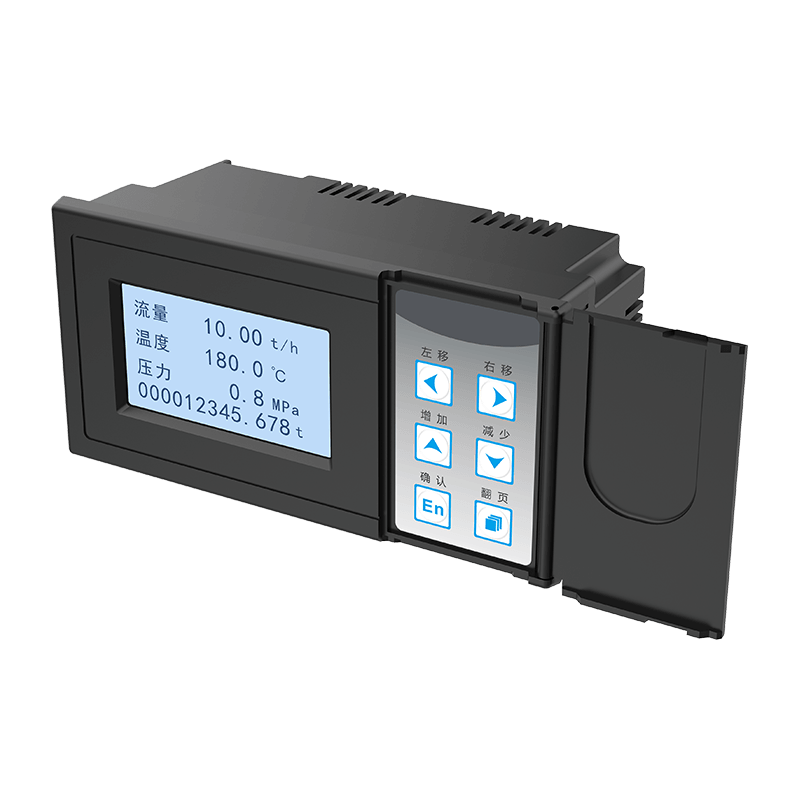 FX1100 Fiscal Flow Computer for Steam, Gas, and Heat EnergyThis flow computer calculates compensated steam mass flow using inputs from vortex meters, pressure, and temperature transmitters. Ideal for energy accounting and fiscal settlement, it supports multiple media and offers data management via software.View Product →
When You Need a Flow Computer for 3 Inch Steam Metering
If your 3 inch steam line is used for internal monitoring, a simple flow meter with an integral display may be enough. But for energy accounting, boiler efficiency tracking, or custody transfer between plants, a dedicated flow computer provides the necessary calculation, storage, and report-ready outputs.
The FX6000 custody transfer flow computer for steam and liquid heat offers a higher level of compensation, totalization, and communication for applications where the metered value is directly used for billing. It handles steam and liquid heat energy with a clear focus on repeatability and auditability.
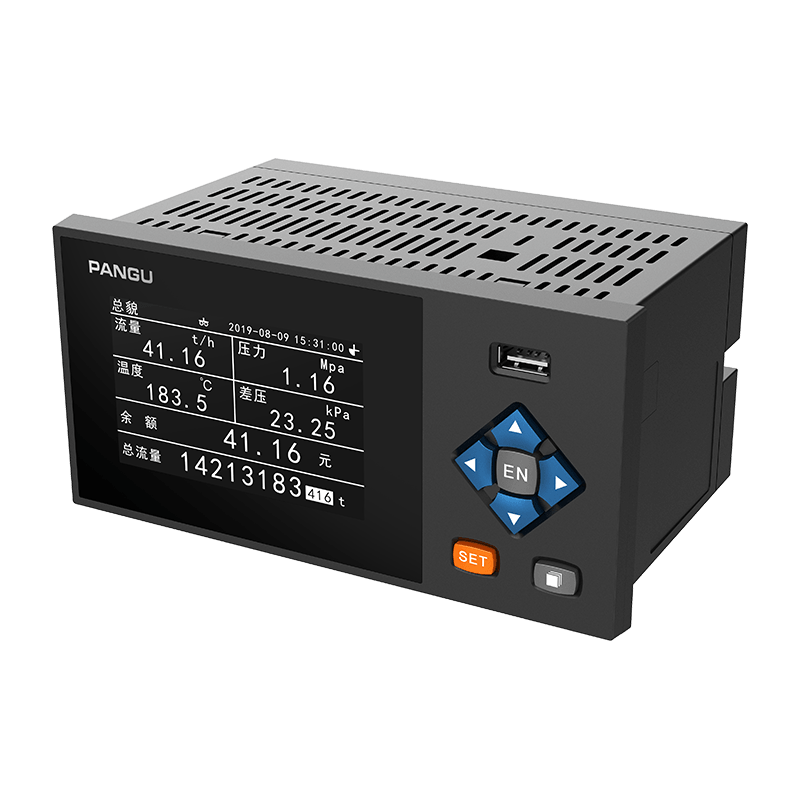 FX6000 Custody Transfer Flow Computer for Steam and Liquid HeatDesigned for billing applications, this flow computer provides advanced compensation and totalization. It supports pre-payment management, remote transmission, and detailed reports, ensuring repeatability and auditability for custody transfer.View Product →
Pairing the flow computer with a multi-channel paperless recorder can also help you review long-term trends and spot abnormalities, such as a sudden drop in steam flow that signals a trap failure or a blocked line.
Common Mistakes and Real-World Purchasing Considerations
When buyers search for a 3 inch steam flow meter, they often focus on the bore size and package price. Practical experience shows that several other factors determine long-term satisfaction:
- Pressure and temperature rating: A DN80 steam meter body must survive your maximum design pressure and temperature. Verify the flange rating and sensor material.
- Compensation inputs: Ask whether the meter package includes a pressure transmitter and temperature sensor, or whether you must add them separately.
- Straight run: If your existing piping cannot provide 10D upstream, a different installation point or a custom meter with integrated flow conditioner may be needed.
- Steam quality: Wet steam or condensate flashes can damage the sensing element. Confirm whether the meter is designed for the allowable moisture content.
- Calibration certificate: A traceable calibration at the actual instrument range gives you confidence in the stated accuracy.
Pricing differences of 30% often reflect these factors, not just the sensor itself.
Frequently Asked Questions About 3 Inch Steam Flow Meters
Q1: Can an electromagnetic flow meter measure 3 inch steam?
No. Electromagnetic flow meters rely on the conductivity of the fluid. Steam is a gas and is not conductive, so the meter will either read zero or produce unstable output. Electromagnetic meters are best for water, conductive liquids, and slurries.
Q2: Is 3 inch flow meter the same as DN80?
Yes. In most industrial contexts, a 3 inch line refers to a nominal pipe diameter of 80 mm (DN80). Always check the actual outer diameter because some schedule differences affect the flow meter connection.
Q3: Do I need a pressure and temperature transmitter for steam flow?
For mass flow or energy flow, yes. Without compensation, a 1% pressure change can produce several percent error in the steam mass flow. A flow computer integrates these signals to give accurate results.
Q4: How much straight pipe do I need before a 3 inch steam vortex meter?
A minimum of 10D upstream is common for a simple installation, but 20D is recommended if there are elbows, tees, or valves. Downstream, provide at least 5D. Longer straight runs improve repeatability.
Selecting a 3 inch steam flow meter starts with understanding the steam conditions, not the pipe alone. Vortex meters remain the most practical choice for typical DN80 steam service. Add pressure and temperature compensation, choose a flow computer when the totalized mass or energy value matters, and verify that your installation provides enough straight pipe. With these elements in place, you can trust the readings from your steam line.
PREV:Potable Water Flow Meter: Accurate Measurement for Utilities & Industry
NEXT:What Role Do Electrical Data Loggers Play in Precision MLCC Manufacturing?
NEXT:What Role Do Electrical Data Loggers Play in Precision MLCC Manufacturing?
Interested in cooperation or have questions?
Contact Us Now!
Kelly

+86 13967196545

pangusales@vip.163.com
Production Base:

Building 1 and Building 42, No. 889 Huancheng North Road, Deqing County, Huzhou City, Zhejiang Province
Jiji
+86 15397010616
pgsalesjiji@vip.163.com

+86-0571-87770830
Corporate Headquarters:
602-702, Block D, Building 3, Area B,Xigang New Territories, 206 Zhenhua Road,Hangzhou City, Zhejiang Province, China

Copyright © Hangzhou Pangu Automation System Co., Ltd. Rights Reserved.
Custom Digital Panel Mount Industrial Instruments Suppliers
