 Read More
 Get A Quote

What Role Do Electrical Data Loggers Play in Precision MLCC Manufacturing?
Home / News / Industry News / What Role Do Electrical Data Loggers Play in Precision MLCC Manufacturing?
Product Category
NEW Category
Contact us
Contact Us
We specialise in the research, development and manufacture of electrical wires and cables.
 +86 13967196545
Related News
- Synergizing Pangu Electromagnetic Flowmeters with Paperless Recorders: Precision Flow Control and Tamper-Proof Data Integrity
- Why Is Your Electromagnetic Flow Meter Signal Unstable, and How Do You Fix Slurry Coating and Grounding Issues?
- Magnetic Flow Meter Showing Reading with No Flow? Don't Rush to Replace It!
- Why Does an Electromagnetic Flow Meter Show Flow in an Empty Pipe? (Causes & Troubleshooting)
What Role Do Electrical Data Loggers Play in Precision MLCC Manufacturing?
Content
- 1 Introduction to Advanced MLCC Production Control
- 2 Critical Process Stages Requiring Continuous Data Collection
- 3 Core Functional Benefits of Advanced Data Acquisition Systems
- 4 Atmosphere Control and Sintering Protection Measures
- 5 Engineering Best Practices for Data Management and Archiving
- 6 Frequently Asked Questions
- 6.0.1 Q1: Why are electrical data loggers essential for multi-layer ceramic capacitor manufacturing?
- 6.0.2 Q2: How do logging instruments help prevent manufacturing defects during firing?
- 6.0.3 Q3: What signal types do modern monitoring units accept from factory equipment?
- 6.0.4 Q4: How does data archiving support regulatory and customer audits?
- 6.0.5 Q5: Can monitoring devices connect directly with factory automation software?
Introduction to Advanced MLCC Production Control
Multilayer ceramic capacitors represent critical passive components powering modern electronic systems, demanding exceptional precision across every fabrication stage. Advanced industrial production relies heavily on stable thermal management, accurate gaseous atmosphere regulation, and consistent material deposition to prevent structural defects. Modern facilities integrate sophisticated electrical data loggers to capture continuous operational metrics from high-temperature sintering furnaces, tape casting machines, and environmental testing chambers. These monitoring tools eliminate traditional manual recording vulnerabilities, ensuring comprehensive compliance with rigorous quality standards and guaranteeing high product reliability.
The implementation of high-precision data acquisition architectures directly addresses the strict tolerance requirements inherent in modern capacitor fabrication. Because raw material behavior changes dramatically under slight thermal or chemical variations, maintaining tight control over operational parameters determines overall manufacturing success. Industrial monitoring devices continuously archive multi-channel sensor signals, providing engineers with actionable intelligence regarding equipment health, environmental stability, and historical batch trends.
Critical Process Stages Requiring Continuous Data Collection
Capacitor fabrication involves multiple chemical and thermal transformations where parameters must remain strictly controlled. The deployment of advanced electrical data loggers ensures that critical variables across sensitive processing stages are continuously monitored and logged without interruption.
Key Operational Stages and Parameters
- Slurry Preparation: Monitoring ambient room humidity, temperature, and mixing vessel parameters to achieve uniform viscosity and prevent batch inconsistency.
- Tape Casting: Controlling drying chamber thermal profiles to maintain precise green sheet thickness, keeping tolerances within micron levels.
- Binder Removal (Debinding): Managing gradual thermal ramps to eliminate organic binders safely without causing delamination or structural cracking.
- High-Temperature Siring: Regulating reducing atmospheres, oxygen partial pressure, and multi-zone furnace temperatures to protect internal metal electrodes.
The table below summarizes the primary operational stages, controlled variables, and monitoring objectives utilized within standard manufacturing environments.
Core Functional Benefits of Advanced Data Acquisition Systems
Industrial measurement units provide critical advantages that elevate plant operational efficiency and secure product consistency. By capturing real-time analog and digital inputs, plant managers achieve total visibility over hidden operational vulnerabilities.
Key Advantages in Factory Operations
- Continuous Automated Logging: Replaces error-prone manual record-keeping with digital storage systems capable of maintaining records for thousands of continuous operation hours.
- Real-time Anomaly Detection: Generates immediate visual and acoustic alarms whenever monitored parameters deviate from established baseline thresholds.
- Batch Traceability Integration: Links historical logs directly with Manufacturing Execution Systems to establish complete lot genealogy and root-cause clarity.
- Compliance Verification: Provides auditors and tier-one customers with verifiable proof of adherence to international quality management benchmarks.
Atmosphere Control and Sintering Protection Measures
Advanced ceramic capacitor manufacturing relies heavily on base metal electrode technology, requiring reduction atmospheres during high-temperature firing. Even minor fluctuations in oxygen partial pressure or hydrogen concentration can cause severe dielectric degradation or electrode oxidation. Precise logging devices track these gas metrics alongside core temperature data to prevent catastrophic batch losses.
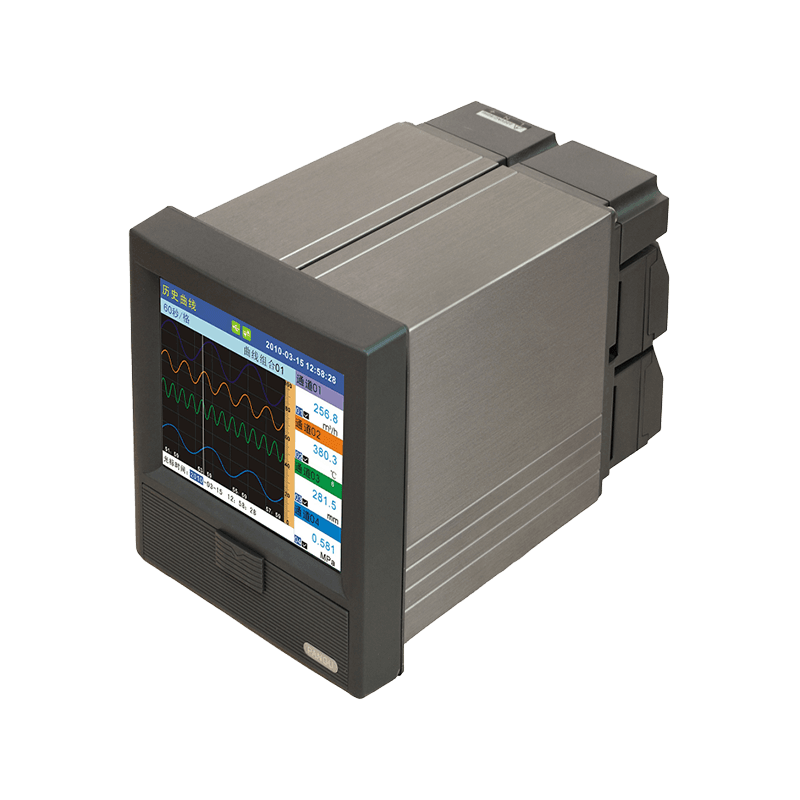
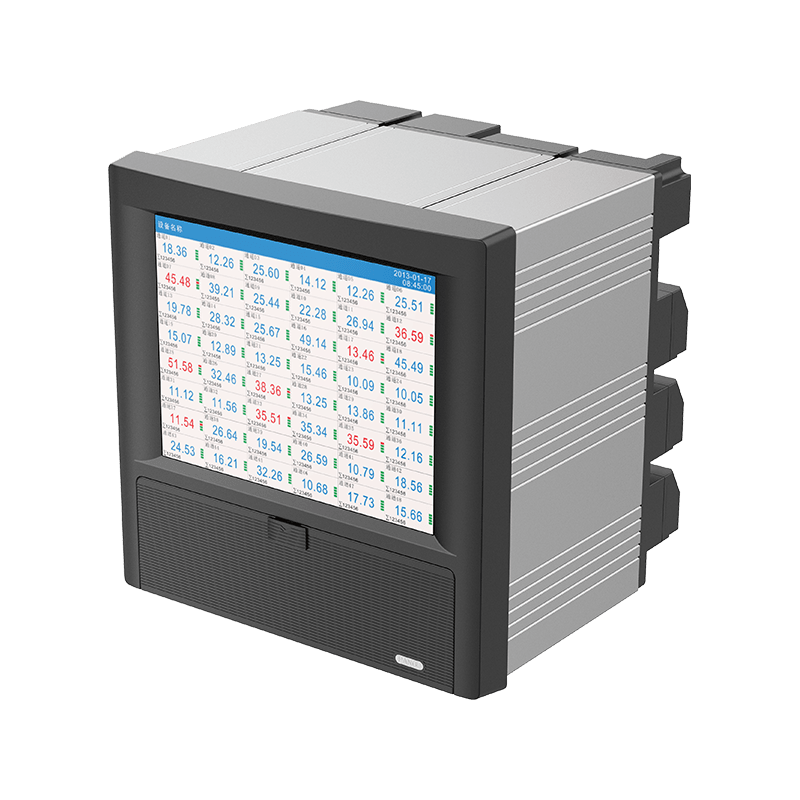
Maintaining tight oxygen partial pressure windows requires multi-channel instrumentation capable of handling thermocouple inputs alongside gas analyzer signals. Engineers use historical trending views on high-definition display panels to spot subtle baseline drifts before safety limits are breached. This proactive approach minimizes unexpected downtime and extends the operational lifecycle of expensive furnace heating elements.
Engineering Best Practices for Data Management and Archiving
Effective utilization of collected operational data demands structured archiving protocols and routine integrity checks. Plant engineers should establish clear retention schedules, secure backup procedures, and standardized export formats to support internal audits and external customer reviews.
Modern recording hardware simplifies data transfer through Ethernet ports, USB storage media, and secure Modbus communication protocols. Integrating these logging terminals into broader plant-wide automation frameworks allows supervisors to monitor distant production lines from centralized control rooms without physical site inspections.
Engineering Insight: Regular calibration schedules for thermocouple sensors and oxygen analyzers ensure that recorded historical curves remain accurate and reliable for long-term quality auditing.
Frequently Asked Questions
Q1: Why are electrical data loggers essential for multi-layer ceramic capacitor manufacturing?
These devices capture continuous process metrics across temperature-sensitive stages like binder removal and sintering, ensuring strict parameter compliance and complete batch traceability.
Q2: How do logging instruments help prevent manufacturing defects during firing?
By providing real-time alarms and historical curve tracking, operators can identify thermal drift or atmospheric changes immediately, preventing entire furnace loads from failing.
Q3: What signal types do modern monitoring units accept from factory equipment?
They typically accept thermocouple inputs, resistance temperature detectors, standard analog current signals, and digital communication protocols like Modbus for seamless integration.
Q4: How does data archiving support regulatory and customer audits?
Exported historical records provide verifiable proof of controlled thermal and atmospheric conditions, satisfying the documentation requirements of international quality standards.
Q5: Can monitoring devices connect directly with factory automation software?
Yes, modern recording units feature built-in networking interfaces that connect directly with Manufacturing Execution Systems for centralized monitoring and data management.
PREV:3 Inch Steam Flow Meter: Selection Guide, Accuracy Tips and Best Practices
NEXT:Can the grounding electrode and grounding ring be equipped simultaneously on the same electromagnetic flowmeter?
NEXT:Can the grounding electrode and grounding ring be equipped simultaneously on the same electromagnetic flowmeter?
Interested in cooperation or have questions?
Contact Us Now!
Kelly

+86 13967196545

pangusales@vip.163.com
Production Base:

Building 1 and Building 42, No. 889 Huancheng North Road, Deqing County, Huzhou City, Zhejiang Province
Jiji
+86 15397010616
pgsalesjiji@vip.163.com

+86-0571-87770830
Corporate Headquarters:
602-702, Block D, Building 3, Area B,Xigang New Territories, 206 Zhenhua Road,Hangzhou City, Zhejiang Province, China

Copyright © Hangzhou Pangu Automation System Co., Ltd. Rights Reserved.
Custom Digital Panel Mount Industrial Instruments Suppliers
