 Read More

 Get A Quote

Why Does an Electromagnetic Flowmeter Become Inaccurate After Long-Term Use?
Home / News / Industry News / Why Does an Electromagnetic Flowmeter Become Inaccurate After Long-Term Use?
Product Category
NEW Category
Contact us
Contact Us
We specialise in the research, development and manufacture of electrical wires and cables.
 +86 13967196545
Related News
- Why Does an Electromagnetic Flow Meter Show Flow in an Empty Pipe? (Causes & Troubleshooting)
- Electromagnetic Flowmeter Accuracy: Why Copper Coils Matter More Than Ever
- Why Is Your Electromagnetic Flow Meter Signal Unstable, and How Do You Fix Slurry Coating and Grounding Issues?
- Electromagnetic Flow Meter vs. Vortex Flow Meter: Principles, Differences, and Selection Guide
Why Does an Electromagnetic Flowmeter Become Inaccurate After Long-Term Use?
Content
- 1 How an Electromagnetic Flowmeter Measures Flow (in 60 Seconds)
- 2 The 8 Real Reasons Accuracy Drifts Over Time
- 2.1 1. Electrode fouling and coating (the #1 cause)
- 2.2 2. Liner scale and build-up changes the effective diameter
- 2.3 3. Liner wear, abrasion and erosion
- 2.4 4. Electrode corrosion and polarization
- 2.5 5. Liner swelling, softening and insulation loss
- 2.6 6. Grounding degradation
- 2.7 7. Conductivity shift and low-conductivity fluids
- 2.8 8. Air bubbles, partial pipe filling and electronics aging
- 3 How to Diagnose and Prevent Long-Term Drift
- 4 Built for the Long Haul: A Real Factory Case
- 5 Frequently Asked Questions
- 6 Contact Us for Professional Flow Solutions
An electromagnetic flowmeter that reads ±0.5% on commissioning day can quietly drift to several percent out of spec after a few years in the field. This is one of the most common service complaints we receive, and it almost never happens overnight — accuracy erodes gradually until a batch reconciliation, a custody-transfer dispute, or a failed audit finally exposes it. So why does a meter with no moving parts lose accuracy over time? The short answer: the measurement depends on a clean electrode surface, an intact insulated liner, a stable conductive path, and a healthy ground — and every one of those can degrade. In this guide we break down the eight real root causes of long-term drift, how to diagnose each one, and how to keep a meter honest for years.
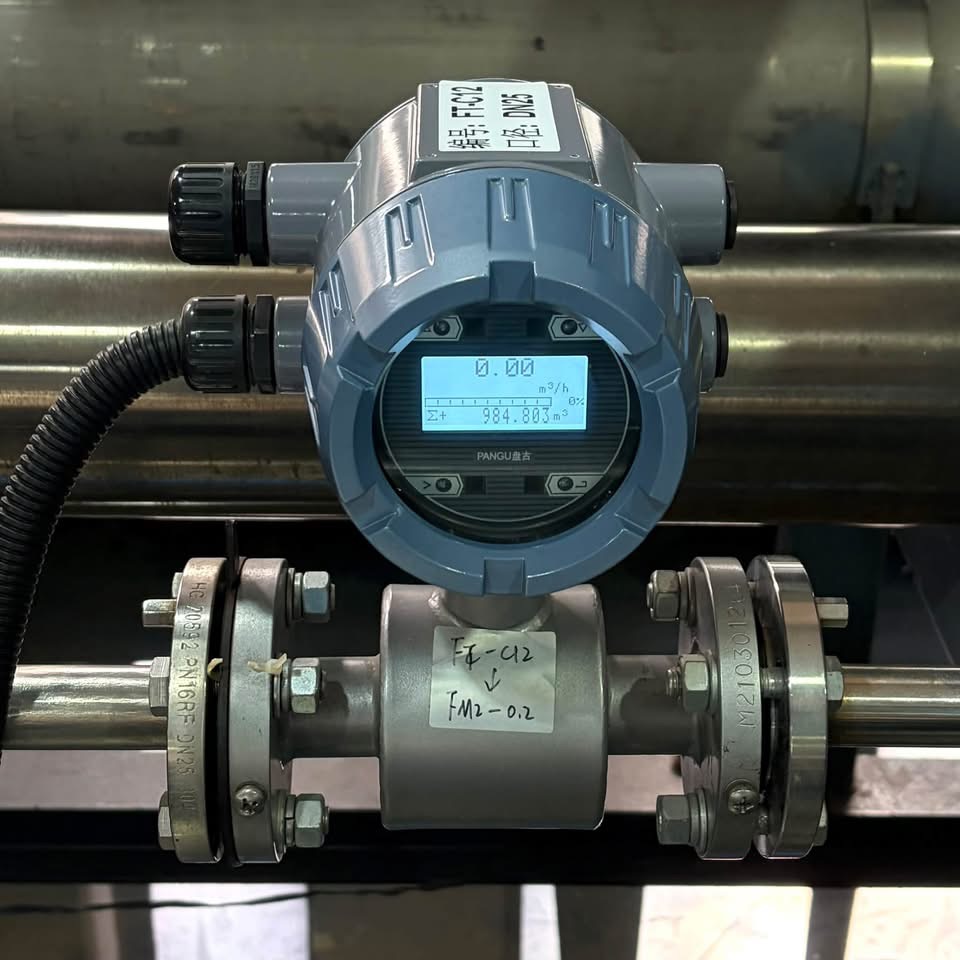
How an Electromagnetic Flowmeter Measures Flow (in 60 Seconds)
An magnetic flowmeter works on Faraday's law of electromagnetic induction. Conductive liquid flowing through the measuring tube cuts the magnetic flux produced by the exciting coils, generating an induced voltage (EMF) across two electrodes that is proportional to the average flow velocity:
E = k · B · D · V
where E is the induced signal, B the magnetic flux density, D the tube inner diameter, and V the mean velocity. The converter amplifies this microvolt-level signal, rejects noise, and converts it into instantaneous flow, totalized volume, 4–20 mA, RS-485 and pulse outputs.
The key point for our discussion: the meter calculates flow from a formula that assumes a known inner diameter, full pipe, clean electrodes, intact insulation and a proper reference potential. Anything that quietly changes one of these assumptions during operation changes the reading — without throwing an obvious fault code. That is exactly why accuracy can decay silently.
The 8 Real Reasons Accuracy Drifts Over Time
1. Electrode fouling and coating (the #1 cause)
The two electrodes sit flush with the liner to "pick up" the induced voltage. Over months and years, the fluid deposits material on them: mineral scale in hard water, paraffin and wax in petroleum streams, biofilm in water and wastewater, and polymer or slurry build-up in chemical and battery-paste lines. A coating on the electrode acts as a partial insulating barrier, raising the electrode output impedance and attenuating the true signal. The symptoms are predictable: process noise, drifting or unstable readings, and in advanced stages a falsely low flow rate — or a meter that becomes unusable when noise masks the signal entirely. The smaller the electrode, the more sensitive it is to contamination, so fouling-driven zero shifts are common in service.
Fix: choose an easy-to-clean liner such as PTFE, keep velocity high enough to discourage settling, and provide an access point for periodic electrode cleaning.
2. Liner scale and build-up changes the effective diameter
The diameter D in Faraday's formula is the inner bore of the liner. When scale or product accumulates on the liner wall, the effective bore shrinks — so the meter, still "thinking" the bore is the original size, reports a flow value that no longer matches reality. This produces a systematic bias that grows with the deposit thickness, exactly as the liner-fouling error model predicts. A meter that passed calibration on a clean bench can be off by a measurable margin months later simply because the liner is no longer the diameter it was calibrated at.
3. Liner wear, abrasion and erosion
The mirror image of scaling: abrasive slurries — silica sand, pulp, mineral slurry, cement and paper stock — can scour the liner, enlarging the bore or thinning the insulation. Rubber and PU linings are wear-resistant for water and sewage but will not survive heavy grit; PTFE handles aggressive chemicals but can be scored by sharp solids. Once the liner thins or pits, both the geometry and the insulation resistance degrade, leaking signal to the wall and pushing the reading off.
4. Electrode corrosion and polarization
Electrodes are in direct contact with the process. The wrong alloy for the medium corrodes over time: 316L struggles with strong acids, and even Hastelloy or titanium can pit in chlorides. As the electrode surface is eaten away, its geometry and contact with the fluid change, and electrochemical polarization voltages build up on the surface. The classic field symptom is a zero that no longer returns to zero when the pipe is full and static — a tell-tale of polarized or contaminated electrodes. In high-solidity slurries, continuous charge exchange at the two-phase interface accelerates this.
5. Liner swelling, softening and insulation loss
Chemical compatibility matters over the long haul. Strong-polarity solvents (e.g. NMP), hot steam cleaning, and aggressive media can swell, soften or blister ordinary rubber and polyurethane linings. A deformed liner no longer holds the calibrated inner diameter, peeled material can re-contaminate the process, and degraded insulation lets current leak through the pipe wall. The drift is often invisible for the first days of service and then climbs steadily — a pattern that points squarely at liner incompatibility.
6. Grounding degradation
"Electromagnetic flowmeter sensor should be well grounded; the measuring accuracy depends on the grounding effect to a considerable extent." A ground loop that was sound at install can loosen, corrode, or lose contact as paint, rust, vibration or cathodic-protection currents intervene — especially on insulated or protected pipelines. A weakened reference potential injects common-mode noise and unstable offsets that the converter cannot fully reject, so accuracy creeps down even though nothing about the sensor "broke."
7. Conductivity shift and low-conductivity fluids
Electromagnetic meters need a minimum conductivity — for the PMF series this is ≥ 5 μS/cm (with ≥ 30 μS/cm preferred in practice). As fluids get purer or process conditions change, conductivity can drop below a healthy margin, which raises the electrode output impedance and, through the converter's loading effect, produces measurement error and instability. This is why low-conductivity service is unforgiving: it requires purpose-designed converters and electrodes, not a standard water-range meter.
8. Air bubbles, partial pipe filling and electronics aging
Trapped gas or a partially filled pipe means the meter sees the volume of bubbles, not true liquid flow — readings become low and erratic, and large air slugs can trigger a false empty-pipe alarm. On the converter side, decades-old analog front-ends and reference components age, and zero points slowly wander. Periodic zero calibration resets this baseline.
A practical benchmark from the field: a large share of "inaccurate meter" reports are not electronics faults at all. Manufacturer service data reports that roughly two-thirds of faults trace back to wrong model selection or incorrect installation rather than to instrument failure. This is why diagnosis should always start outside the converter — at the liner, the electrodes, the ground and the pipe conditions.
How to Diagnose and Prevent Long-Term Drift
A simple, repeatable routine catches most drift before it causes damage:
- Static zero check: close the downstream valve with the pipe full and confirm the meter reads zero. A non-zero reading means fouled, polarized or corroded electrodes, or a converter baseline to re-zero.
- Full-pipe / empty-pipe test: verify the meter is not measuring with entrained gas or a partly full bore.
- Electrode & liner inspection: during a planned shutdown, look for scale, coating, scoring, swelling or blistering.
- Ground integrity check: measure insulation and ground resistance; tighten or re-make corroded grounding connections.
- Re-calibration interval: schedule a wet calibration every 12–24 months in critical custody or batch service, and inspect more often in abrasive or fouling service.
Most long-term drift is preventable by matching the meter to the fluid at selection time — correct liner, correct electrode alloy, correct conductivity rating, proper upstream/downstream straight-pipe and grounding — rather than fixing it after the fact.
Built for the Long Haul: A Real Factory Case
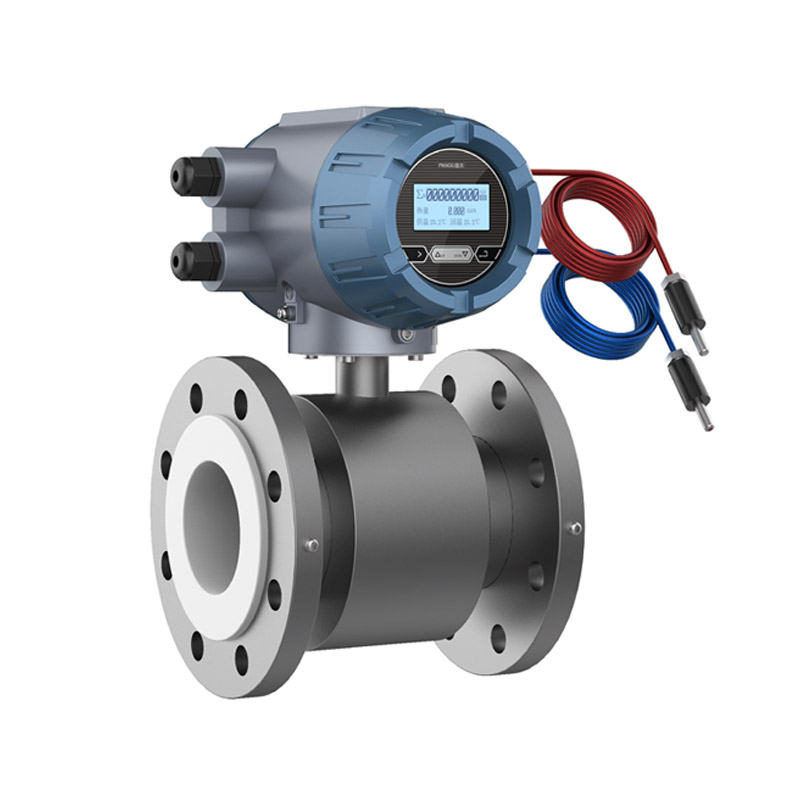
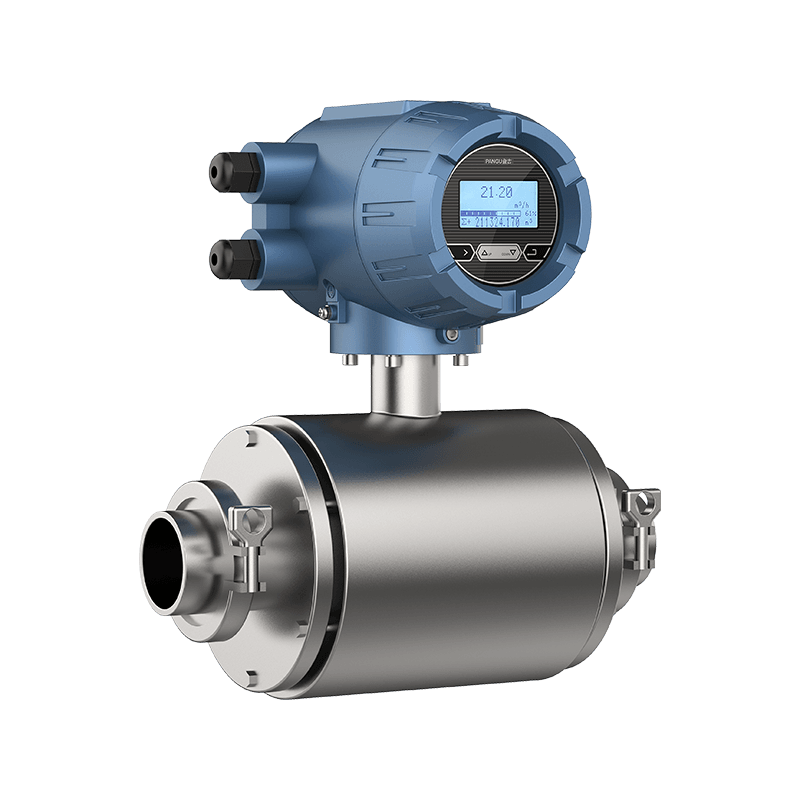
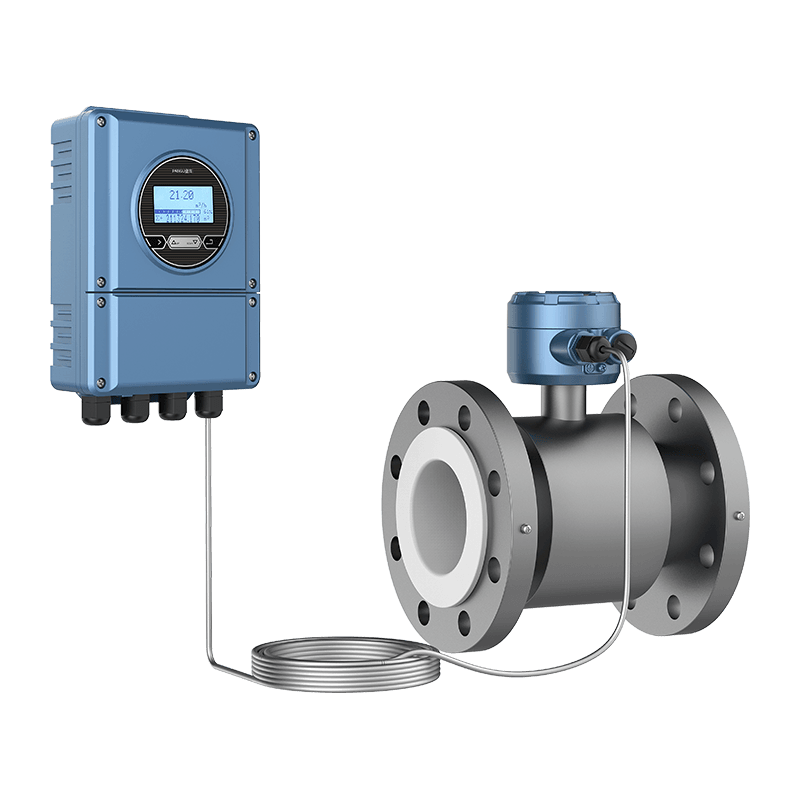
This is exactly the design philosophy behind the PMF series electromagnetic flowmeter from Hangzhou Pangu Automation System Co., Ltd (PANGU), a national high-tech enterprise with more than 20 years focused purely on electromagnetic flow, energy and water meters. The PMF line is offered as a China High Accuracy Digital Electromagnetic Flow Meter, covering DN15–2000 mm and 0–10 m/s, with interchangeable lining and electrode materials (rubber, PTFE, and corrosion-resistant alloys) chosen to resist fouling, abrasion and chemical attack — the three biggest drivers of long-term drift. The series supports low-conductivity service, RS-485 / MODBUS-RTU networking and integrated totalization, backed by ISO 9001, ISO 14001, ISO 45001, CE and Ex explosion-proof certification.
| Low Conductivity Electromagnetic Flow Meters Factory, Company |
Frequently Asked Questions
How often should an electromagnetic flowmeter be re-calibrated?
In critical custody-transfer, batch or utility-billing service, every 12–24 months is a common interval. Abrasive, fouling or high-temperature duties call for shorter intervals and a static zero check between full calibrations.
Can a clean meter still read inaccurately?
Yes. Partial pipe filling, entrained air, a degraded ground, or a conductivity drop below the meter's rating can all cause error on an otherwise clean instrument — which is why diagnosis starts with pipe and ground conditions, not the converter.
Why does my meter read low after a few years?
The usual culprits are electrode coating or liner scale that attenuate the signal and shrink the effective bore, plus polarized or corroded electrodes that fail to return to zero when static.
Which lining lasts longest for fouling service?
PTFE resists scale and chemical attack and offers a non-stick surface, making it a strong choice where deposits and aggressive media shorten the life of ordinary rubber or PU linings.
Do electromagnetic flowmeters work on low-conductivity liquids?
Only within their rating — the PMF series specifies ≥ 5 μS/cm (30 μS/cm preferred). For purer fluids, specify a meter and converter designed for low-conductivity service rather than a standard water-range model.
Contact Us for Professional Flow Solutions
Need expert advice on flowmeter selection, calibration, or technical support? Reach out to our engineering team today to ensure optimal measurement accuracy for your systems.
PREV:The Cost of Industrial Data Loss: How Paperless Recorders Secure Critical Production Processes
NEXT:Where Are Paperless Recorders Used? Key Industry Applications & Modular Hardware Selection Guide
NEXT:Where Are Paperless Recorders Used? Key Industry Applications & Modular Hardware Selection Guide
Interested in cooperation or have questions?
Contact Us Now!
Kelly

+86 13967196545

pangusales@vip.163.com
Production Base:

Building 1 and Building 42, No. 889 Huancheng North Road, Deqing County, Huzhou City, Zhejiang Province
Jiji
+86 15397010616
pgsalesjiji@vip.163.com

+86-0571-87770830
Corporate Headquarters:
602-702, Block D, Building 3, Area B,Xigang New Territories, 206 Zhenhua Road,Hangzhou City, Zhejiang Province, China

Copyright © Hangzhou Pangu Automation System Co., Ltd. Rights Reserved.
Custom Digital Panel Mount Industrial Instruments Suppliers
