 Read More

 Get A Quote

Why Does an Electromagnetic Flow Meter Show Flow in an Empty Pipe? (Causes & Troubleshooting)
Home / News / Industry News / Why Does an Electromagnetic Flow Meter Show Flow in an Empty Pipe? (Causes & Troubleshooting)
Product Category
NEW Category
Contact us
Contact Us
We specialise in the research, development and manufacture of electrical wires and cables.
 +86 13967196545
Related News
- Why Is Your Electromagnetic Flow Meter Signal Unstable, and How Do You Fix Slurry Coating and Grounding Issues?
- Electromagnetic Flow Meter vs. Vortex Flow Meter: Principles, Differences, and Selection Guide
- Why Do Water Flow Meters Lose Accuracy and How Can You Fix Them?
- Mastering Wastewater Flow: The Engineering, Selection, and Maintenance of Electromagnetic Flow Meters
Why Does an Electromagnetic Flow Meter Show Flow in an Empty Pipe? (Causes & Troubleshooting)
Content
Introduction: The Phantom Flow Reading Dilemma
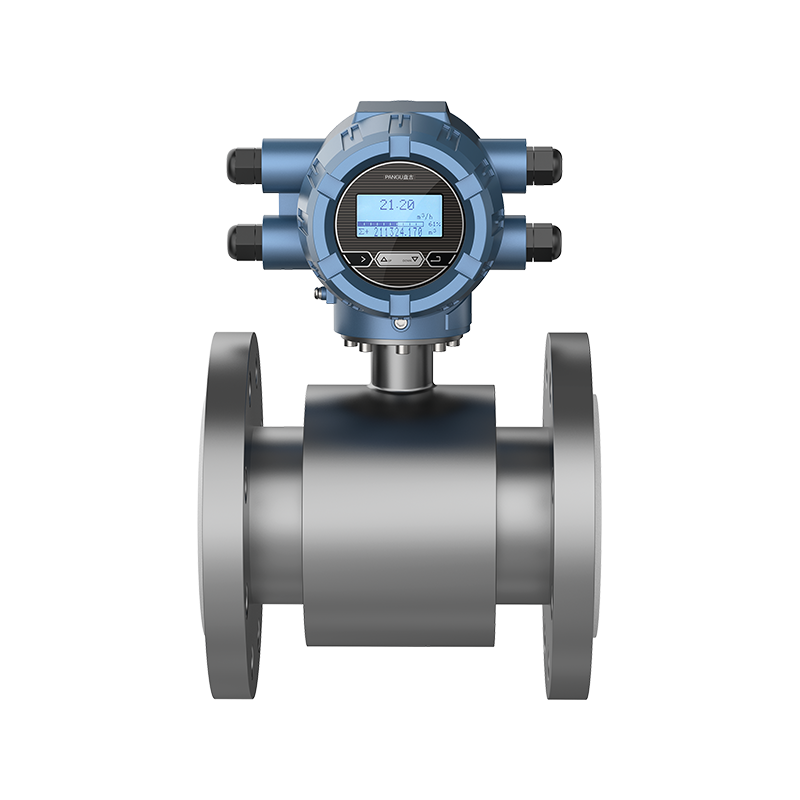
One of the most frequent technical support inquiries received by field engineers involves phantom flow readings on electromagnetic flow meters—a condition where the transmitter displays continuous or fluctuating flow rate even when the pipeline is completely dry or unpressurized.
While operators often suspect hardware or converter failure, field diagnostics show that over 80% of empty-pipe flow anomalies stem from external piping conditions, lack of grounding, and electrical signal noise interference.
This technical guide breaks down a real-world case study, analyzes root causes, and outlines step-by-step diagnostic and preventive solutions.
Case Study: Diagnostics of an Empty-Pipe Signal Fluctuation
1. Initial Operational Complaint
A manufacturing plant reported that an inline electromagnetic flow meter displayed fluctuating flow values under dry pipe conditions, triggering false alarms in their automated DCS control loop.
2. Field Audit Findings
On-site inspection revealed three distinct installation anomalies:
- Plastic Piping Material: The flow meter was installed between non-conductive plastic (PVC/PP) pipes without dedicated grounding rings or grounding wires.
- Severe Pipe Corrosion: Neighboring metallic pipe segments exhibited severe rust scaling and internal coating degradation.
- Mismatched Bore Sizes: Upstream and downstream pipe diameters differed from the flow meter's nominal size (DN), causing hydrodynamic irregularities.
3. Ultrasonic Verification & Root Cause Identification
To isolate the flow meter hardware, engineers performed secondary testing using a portable clamp-on ultrasonic flow meter across three positions (upstream, inline, and downstream). The ultrasonic meter confirmed zero fluid motion across all points, proving the electromagnetic flow meter hardware was structurally intact.
Technical Root Cause: Electromagnetic flow meters operate by measuring microvolt-level induced EMF across sensor electrodes. Plastic piping acts as an insulator, preventing static charges and environmental Electromagnetic Interference (EMI) from grounding out. The ungrounded electrodes pick up ambient electrical noise, which the transmitter interprets as active fluid flow.
Comprehensive Root Cause Analysis Matrix
| Observed Factor | Physical Mechanism | Impact on Flow Reading |
|---|---|---|
| Un-grounded Plastic Pipes | Accumulation of static electricity and stray EMI without reference potential. | Signal electrode picks up noise, causing zero-point drift and phantom readings. |
| Pipeline Corrosion | Conductive rust particles and altered internal geometry. | Short-circuiting of electrodes or distorted flow velocity profiles. |
| Mismatched Pipe Diameters | Sudden expansion/reduction creates turbulence and air pockets. | Unstable flow profile and signal noise during partial-fill conditions. |
Step-by-Step Troubleshooting & Corrective Actions
Step 1: Temporary & Permanent Grounding Implementation
Connect a grounding wire directly from the flow meter sensor converter to a verified earth ground. If installed in plastic or lined pipes, install stainless steel or Hastelloy grounding rings on both upstream and downstream flanges to create an electrical bridge with the liquid medium.
Step 2: Correcting Pipe Diameter & Straight Run Requirements
Ensure straight-pipe run standards are maintained (5D upstream and 3D downstream of nominal pipe diameter). Use concentric reducers if line size changes are necessary, ensuring air pockets do not collect near the upper sensor electrodes.
Step 3: Empty Pipe Detection Setup (Transmitter Configuration)
Modern electromagnetic flow transmitters include built-in Empty Pipe Detection (EPD) circuits. Ensure EPD mode is enabled in the transmitter menu and set the EPD threshold according to fluid conductivity.
Frequently Asked Questions
Q1: Why does a flow meter show readings when no liquid is flowing?
A: This is usually caused by electromagnetic interference (EMI) or static electricity buildup due to improper grounding, especially in non-conductive plastic or lined pipelines.
Q2: Do electromagnetic flow meters require grounding rings in plastic pipes?
A: Yes. Plastic pipes are electrical insulators. Grounding rings are essential to connect the liquid electrically to the flow meter body, providing a stable zero-voltage reference point.
Conclusion
Phantom flow readings during empty pipe conditions are rarely an indicator of meter failure. Instead, they signal environmental EMI interference and non-compliant installation practices. By ensuring proper grounding in plastic pipelines, matching pipe diameters, and maintaining pipeline integrity, process plants can eliminate false flow signals and guarantee measurement accuracy.
PREV:Benchmarking Hangzhou Pangu vs. KROHNE Electromagnetic Flowmeters in Severe Pulsating Flow Conditions
NEXT:How Can You Achieve Zero-Contamination & Faster CIP Cleaning in Sanitary Flow Measurement?
NEXT:How Can You Achieve Zero-Contamination & Faster CIP Cleaning in Sanitary Flow Measurement?
Interested in cooperation or have questions?
Contact Us Now!
Kelly

+86 13967196545

pangusales@vip.163.com
Production Base:

Building 1 and Building 42, No. 889 Huancheng North Road, Deqing County, Huzhou City, Zhejiang Province
Jiji
+86 15397010616
pgsalesjiji@vip.163.com

+86-0571-87770830
Corporate Headquarters:
602-702, Block D, Building 3, Area B,Xigang New Territories, 206 Zhenhua Road,Hangzhou City, Zhejiang Province, China

Copyright © Hangzhou Pangu Automation System Co., Ltd. Rights Reserved.
Custom Digital Panel Mount Industrial Instruments Suppliers
