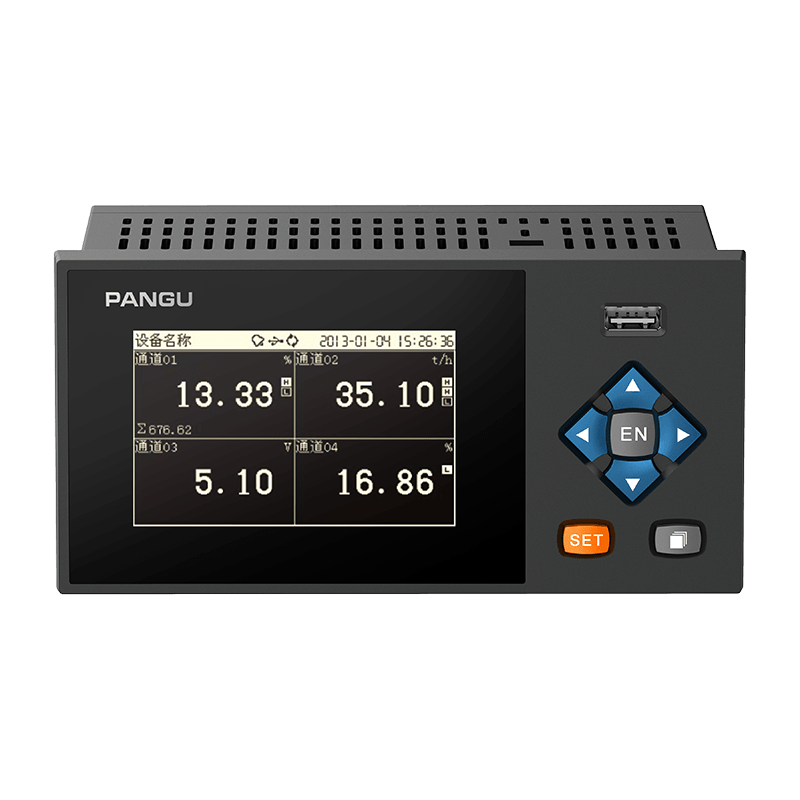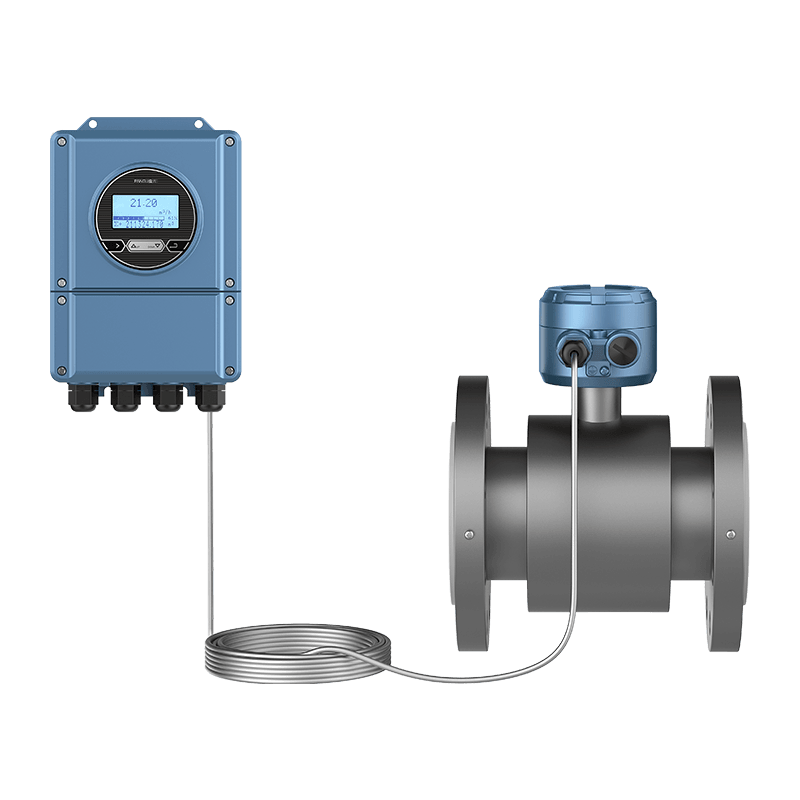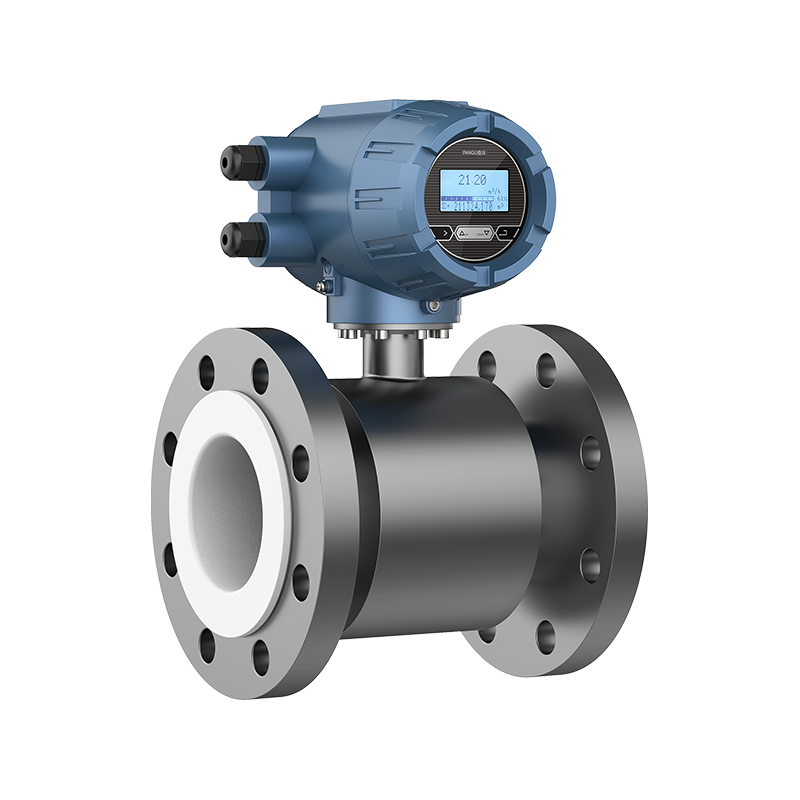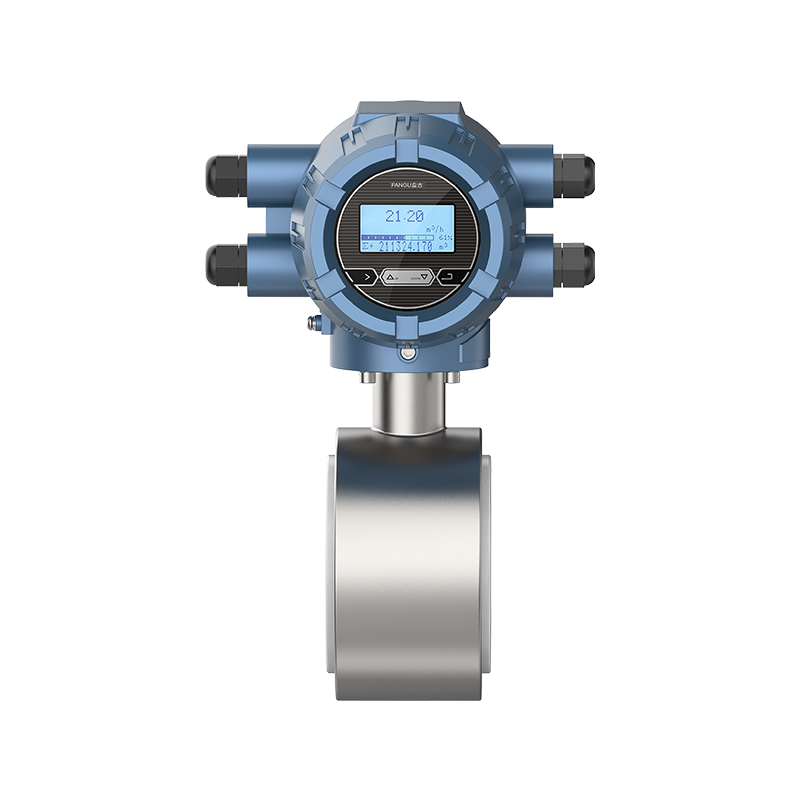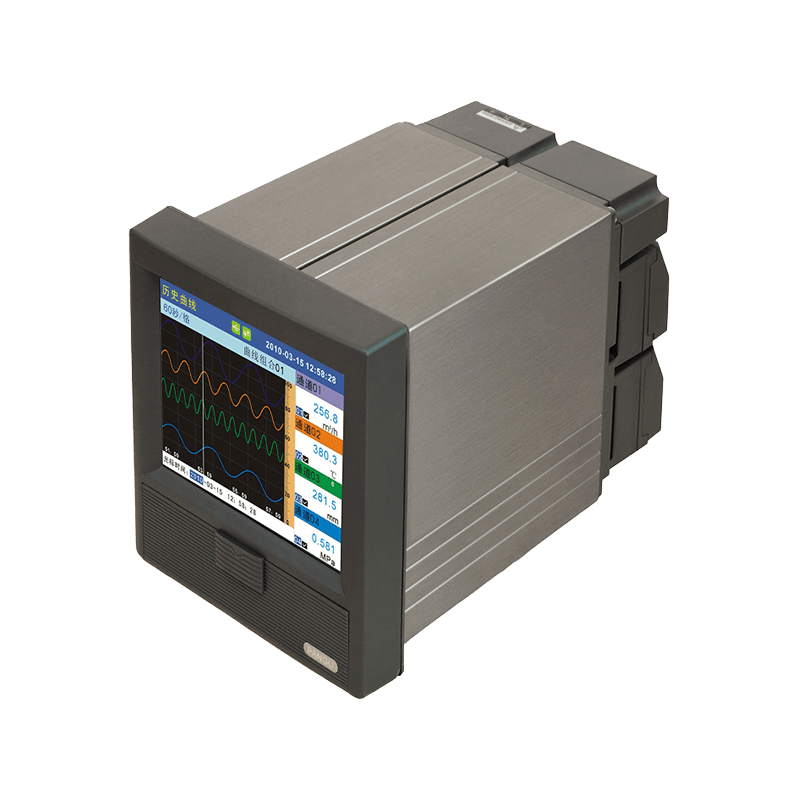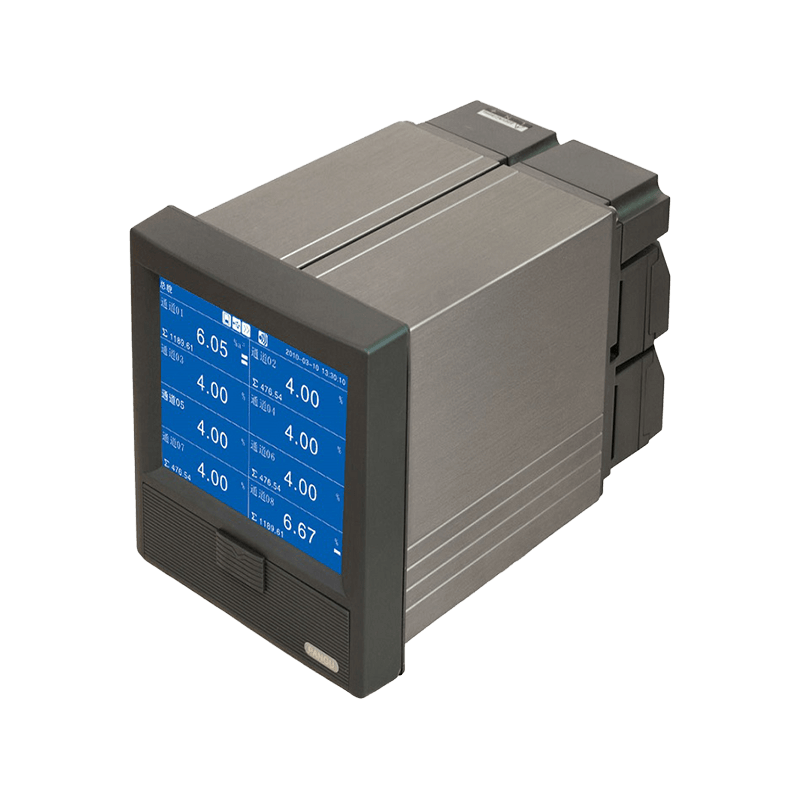
DC24V Industrial Flowmeter: Designed for industrial measurement systems using a 24V DC power supply, supporting integration into compatible process monitoring and automation installations.
Get a Quote →A DC24V Industrial Flowmeter is a flow measurement instrument configured to operate from a 24-volt direct-current power supply. This power arrangement is commonly used in industrial automation and process control systems, where instruments are connected to DC power distribution, control cabinets, or dedicated field power circuits. Depending on the measuring principle and model configuration, a DC24V flowmeter can monitor liquid flow and provide measurement information for local indication, process monitoring, totalization, or integration with a plant control system.
DC24V describes the instrument's power supply requirement rather than its measurement principle or output signal. It does not automatically indicate whether a meter is electromagnetic, ultrasonic, or another type, nor does it confirm compatibility with every control system. Buyers should check the specified supply voltage range, power consumption, wiring arrangement, signal outputs, and measurement conditions for the exact model before selection.
The 24V DC supply is a practical power arrangement for instruments used in automated production lines, utility monitoring, and distributed process installations.
The meter receives electrical power from a DC source. The actual permitted voltage range and current demand must be confirmed from the product datasheet.
May be supplied by a regulated DC power unit, control cabinet, or suitable field power circuit.
Check rated voltage, allowable voltage variation, current consumption, and power polarity before connection.
Follow the model-specific terminal diagram and separate power wiring from signal wiring where required.
Evaluate the stability of the DC supply and the effect of interruptions on measurement, display, and communication functions.
In industrial installations, the power supply and measurement signal are two separate aspects of instrument integration. A flowmeter may receive DC24V power while transmitting measurement data through an independently specified output or communication interface. The availability of a particular signal must be verified for the selected model.
Provides operating energy to the instrument.
Measures process flow according to its sensing principle.
Receives supported measurement data for monitoring or control.
A DC24V power requirement does not mean the flowmeter automatically provides a 24V output. Confirm the signal type, electrical characteristics, terminal allocation, and receiving-device compatibility separately.
Industrial flowmeters may offer different ways to transmit measurement information. The required interface should be defined according to the connected PLC, recorder, display unit, data acquisition system, or supervisory platform. Do not assume that every DC24V model supports all common industrial signals.
Used for transmitting a process measurement value to compatible analog input channels. Confirm whether the output is active or passive and check its electrical load requirements.
Can be used by compatible counters or control equipment for flow-related counting. Verify pulse characteristics, output type, and receiving input specifications.
May support digital data exchange with external devices when the relevant interface and protocol are provided by the meter configuration.
Displays available flow information at the instrument. Screen content, totalization, and configuration access depend on the model.
Configuration check: Specify the required output and communication functions in the purchase inquiry. Confirm whether they can operate together and whether additional wiring or accessories are required.
The power supply specification does not determine which flow measurement technology should be used. The measuring principle must be selected according to the medium and process conditions. For example, electromagnetic flowmeters are intended for conductive liquids, while other measurement technologies may be required for different media or operating conditions.
Correct electrical installation helps prevent unstable operation, signal interference, and connection errors. Installation should follow the manufacturer's wiring diagram and the electrical requirements of the project.
Never connect a power source based only on the DC24V Tag name. The instrument nameplate, terminal diagram, and technical datasheet take precedence over general product descriptions.
Stable operation depends on the interaction between the electrical supply, measurement environment, sensor installation, and connected equipment. A suitable DC24V source alone cannot compensate for incorrect sensor sizing, unsuitable process conditions, or poor wiring practices.
Voltage fluctuations, excessive cable voltage drop, or an undersized power source can affect instrument operation. Check the supply at the instrument terminals under normal operating conditions.
Variable-frequency drives, motors, switching devices, and nearby power cables may introduce interference. Follow the recommended cable routing, shielding, and grounding arrangements.
Air entrainment, incomplete pipe filling, turbulence, and operation outside the specified flow range may affect measurement quality, depending on the meter type.
Ambient temperature, humidity, vibration, dust, and water exposure should remain within the instrument's documented operating limits and enclosure protection rating.
DC24V flowmeters are relevant to industrial systems that use low-voltage DC power distribution for field instruments. Their application depends on the measurement technology, process medium, electrical interface, and installation requirements.
Monitoring compatible liquid flow in treatment processes, water supply lines, and utility distribution networks.
Measuring process liquids when the sensor materials, measuring principle, and electrical configuration meet operating requirements.
Supporting flow monitoring in compatible water circuits and other building service systems with DC-powered instrumentation.
Integrating flow measurement into production equipment and automated process lines with centralized DC power distribution.
Monitoring cooling water, circulation lines, and other compatible liquid services in industrial facilities.
Providing measurement signals to data acquisition or control systems where the required interfaces are supported.
For distributors, system integrators, and industrial end users, a complete inquiry should include the power requirement and the measurement specification. This allows the supplier to evaluate the instrument as part of the complete process and control system.
| Specification group | Information required | Procurement purpose |
|---|---|---|
| Power supply | DC24V rating, permitted voltage range, power consumption, and polarity | Confirms electrical compatibility with the available supply |
| Measurement | Measuring principle, medium, flow range, accuracy, and pipe size | Establishes whether the instrument suits the process |
| Construction | Sensor material, liner, electrode, housing, and process connection | Checks mechanical and chemical compatibility |
| Output interface | 4-20mA, pulse, RS485, or other specified interfaces | Ensures connection to external monitoring equipment |
| Installation environment | Ambient temperature, humidity, vibration, and protection rating | Assesses suitability for the installation location |
| Documentation | Datasheet, wiring diagram, operating manual, and calibration records if required | Supports engineering review, installation, and acceptance |
Provide the process medium, pipe size, flow range, DC24V supply details, required output signals, and installation environment. If the meter will be integrated into an existing control cabinet, include the receiving device and wiring requirements.
Answers to common questions about DC power requirements, signal compatibility, installation, and model selection.
DC24V indicates that the flowmeter is designed to use a 24-volt direct-current power supply. The permitted voltage range and power consumption should be confirmed in the technical datasheet for the specific model.
Not necessarily. DC24V normally refers to the instrument's power supply requirement. Output signals such as 4-20mA, pulse, or RS485 are separate specifications and must be confirmed independently.
It can be integrated with a PLC if the flowmeter provides an output compatible with the PLC input. Check the signal type, electrical characteristics, wiring terminals, and input configuration before connection.
A regulated 24V DC supply may be suitable when its output voltage, current capacity, ripple, grounding arrangement, and electrical protection meet the flowmeter requirements. Refer to the instrument documentation before use.
No. The power supply specification does not define the output interface. Some models may provide 4-20mA, pulse, serial communication, or other options. Confirm the available functions for the selected configuration.
Conventional electromagnetic flowmeters require sufficient liquid conductivity to generate a measurable signal. Non-conductive liquids are generally unsuitable, regardless of whether the instrument uses DC24V power.
Voltage outside the specified operating range may cause abnormal operation, measurement interruptions, display issues, or communication faults. Check the voltage at the meter terminals and verify that the power supply has sufficient capacity.
Multiple instruments may share a suitable DC power source if the supply capacity, wiring layout, protection, voltage drop, and grounding arrangement are properly designed. Follow the electrical specifications of each connected instrument.
Cable selection depends on current consumption, cable length, installation environment, and the manufacturer's wiring recommendations. Signal cables may have separate shielding or routing requirements to reduce electrical interference.
Outdoor suitability depends on the enclosure protection rating, ambient temperature range, humidity resistance, corrosion protection, and other environmental specifications. DC24V power alone does not indicate outdoor suitability.
Provide the medium, pipe diameter, flow range, process temperature and pressure, DC24V supply conditions, required output signals, installation environment, and any documentation requirements. These details help determine the appropriate model and configuration.
Not automatically. The replacement must be checked for measurement performance, supply voltage, output interfaces, physical dimensions, process connections, and installation requirements. A suitable DC-powered model should be selected based on the complete system specification.

Hangzhou Pangu Automation System Co., Ltd. is professional China wholesale DC24V Industrial Flowmeter manufacturers and DC24V Industrial Flowmeter suppliers, with strict quality control and years of industrial application experience.
 Aging Chamber
 High-Speed Chip Mounter
 Glue Dispensing Machine
 Potting Process
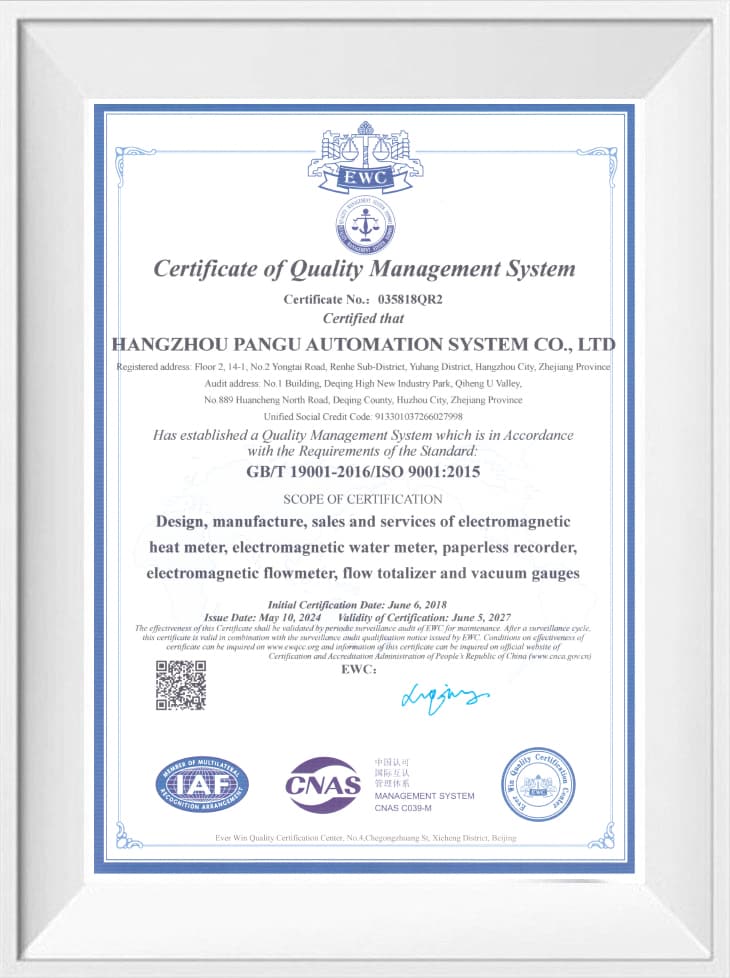 Quality Management System Certification
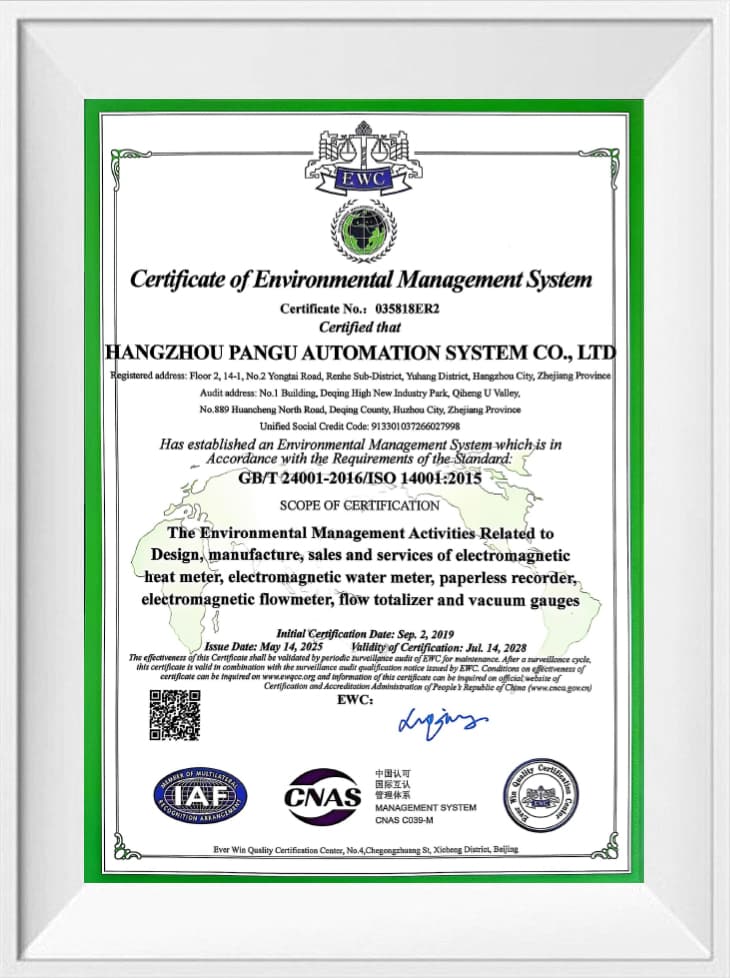 Environmental Management System Certification
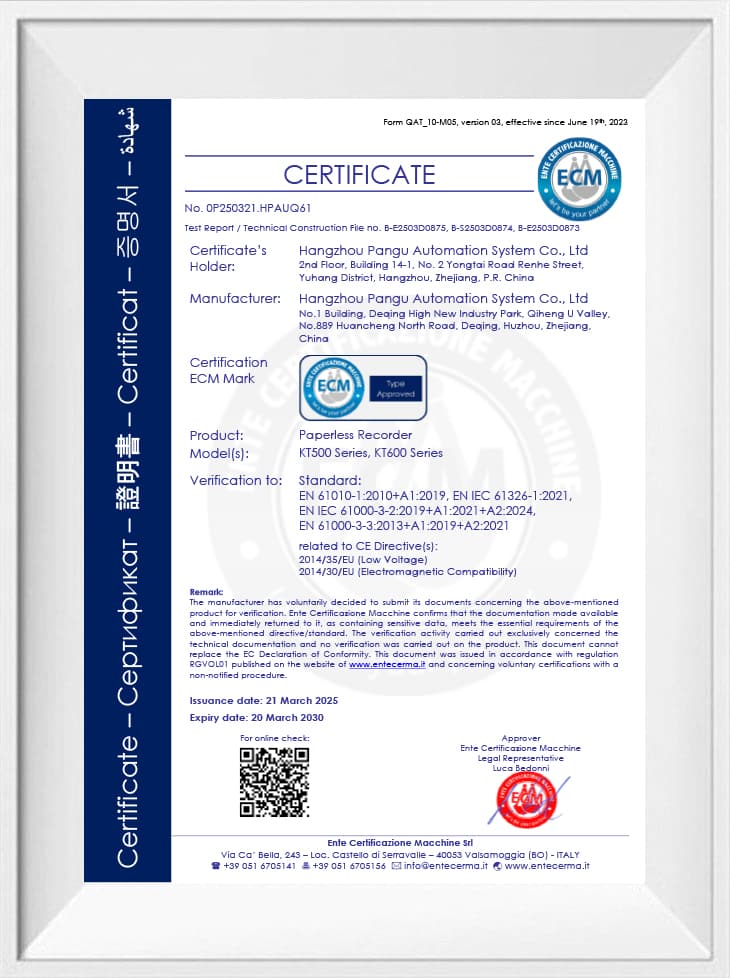 CE Certificate
 SIL Certificate
Yes. Send us your requirements and we will propose a solution.
Standard models ship quickly; custom orders depend on quantity.
Tell us your requirements and our engineers will reply promptly.
✉pangusales@vip.163.com
☎+86 13967196545
⚑602-702, Block D, Building 3, Area B,Xigang New Territories, 206 Zhenhua Road,Hangzhou City, Zhejiang Province, China