
Our agricultural irrigation water metering solutions provide dependable water flow measurement for irrigation networks, supporting water distribution management and efficient agricultural water use.
Get a Quote →Agricultural irrigation water metering is the measurement of water drawn from wells, rivers, canals and storage ponds and delivered to fields through pipes and channels. A meter at the pump, the field inlet or the zone valve records how much water reaches each crop area, giving growers and water managers a factual basis for scheduling, cost control and compliance with water allocation rules.
Irrigation sites are far from ideal for instruments. Water may carry sand, algae and fertilizer, power is often limited, and equipment sits outdoors for many seasons. Meters for this work therefore need rugged construction, tolerance for dirty water, simple installation and, increasingly, low-power data reporting. This page explains the main options and the points buyers should check before selecting a metering solution.
Compliance with Water Rights
Many regions limit extraction volumes, and metered records show that use stays inside permitted limits.
Better Irrigation Scheduling
Measured volumes can be compared with crop demand and soil moisture to avoid under- or over-watering.
Pumping Energy Control
Flow data alongside energy use shows pump efficiency and reveals worn pumps, clogged filters or leaking pipes.
Leak and Fault Detection
A sudden rise or fall in flow compared with the normal pattern helps identify broken pipes, blocked emitters or stuck valves.
Fair Cost Sharing
In shared schemes, individual meters allow charges to follow actual use rather than land area alone.
Fertigation Accountability
When fertilizer is injected into the line, knowing the water volume supports accurate nutrient application records.
On many farms the main meter sits downstream of the pump and filter, so it records the water that actually enters the field network. A solar panel or battery powers a logger that sends readings to a phone or online platform.
For several fields on one supply, additional meters can be placed at each zone valve, giving a clear picture of where the water goes.
The table gives a general overview. Local rules, water quality and available power often decide the final choice.
| Technology | Pipe Condition | Dirty Water Tolerance | Power | Typical Irrigation Use |
|---|---|---|---|---|
| Electromagnetic | Full pipe | Very good | Battery or solar | Pump outlets, field mains |
| Ultrasonic clamp-on | Full pipe | Moderate | Battery or mains | Retrofit, temporary checks |
| Propeller or Woltman mechanical | Full pipe | Moderate | None needed | Large mains, low-cost sites |
| Insertion paddlewheel | Full pipe | Limited | Battery | Medium pipes, quick installation |
| Open channel flume with level sensor | Open channel | Very good | Solar or battery | Canals and ditches |
Where mains power is missing, battery-powered electromagnetic meters and solar-powered loggers are popular because they keep an obstruction-free pipe and require little attention during the season.
Low flow rates and fine filters call for meters with good low-flow sensitivity, placed after the filtration station.
Higher flows and varying pressure suit full-bore meters at the pivot point or pump outlet.
Open channel structures with level sensors record gravity-fed supply to fields and distribution branches.
Controlled systems need accurate small-volume measurement for water and nutrient solution dosing.
Block-level meters on zone valves help compare water use between varieties and plan deficit irrigation.
Wellhead meters document extraction volume and support groundwater management and reporting duties.
Recommended Practice
Conditions to Plan For
Solar and Battery Power
Low-power meters and loggers can run for long periods from a small panel or battery pack, which suits fields without electrical supply.
Remote Data Access
Cellular and low-power radio links let managers read volumes from a phone or computer, without driving to each pump site.
Start-of-Season Checks
Before the irrigation period, check seals, cables, batteries and sensor surfaces, and confirm that readings are sensible.
End-of-Season Care
Drain exposed meters where frost is expected, clean sensor faces and store removable electronics as the manufacturer advises.
Site data: pipe size, flow range, water quality, pressure and any chemical injection points.
Power and communication: power source, expected battery life and signal coverage at the site.
Environmental rating: ingress protection, operating temperature range and resistance to sunlight and dust.
Regulatory fit: any approval, sealing or reporting rules set by the local water authority.
Support and documents: calibration report, manuals, spare parts and installation guidance.
Tip: A short description of the water source, pipe layout and power situation, together with a few site photos, lets a supplier propose the right meter and mounting accessories without extra rounds of questions.
Meters give a factual record of water use, which supports compliance with extraction limits, helps schedule irrigation, shows pump and pipe problems and allows fair cost allocation in shared systems.
Electromagnetic flowmeters are widely used because they have no moving parts or obstruction in the pipe, so sand and organic matter cause fewer problems. They need a conductive liquid, which is normal for irrigation water.
Yes. Battery-powered electromagnetic and ultrasonic meters, and mechanical meters that need no power at all, are common in the field. Solar-powered loggers can add data reporting without a grid connection.
A flume or weir combined with a level sensor is the usual method. Level readings are converted into flow using the known shape of the structure, which suits gravity-fed canals and ditches.
It can, depending on the chemicals and concentration. Wetted materials should be compatible with the injected solution, and the meter is usually placed so that mixing is complete, or located upstream of the injection point.
Air pockets, partly filled pipes and installation too close to pumps or valves are the usual causes. Choosing a location where the pipe stays full and following the straight length guidance helps reduce the problem.
A logger attached to the meter stores readings and sends them through cellular or low-power radio networks. Some sites use a local display only, and the readings are noted during routine visits.
Drain exposed pipework and meters where possible, or insulate them and use models rated for low temperatures. Follow the manufacturer guidance, since frozen water inside a meter body can cause damage.
A check at the start and end of each season is common practice, covering seals, cables, batteries and sensor surfaces. Formal verification intervals depend on local regulations and the use of the data.
Share the water source, pipe size and material, flow range, water quality, power and communication situation, and any regulatory requirement. Photos of the proposed installation point are very helpful.

Hangzhou Pangu Automation System Co., Ltd. is professional China wholesale Agricultural Irrigation Water Metering manufacturers and Agricultural Irrigation Water Metering suppliers, with strict quality control and years of industrial application experience.
 Aging Chamber
 High-Speed Chip Mounter
 Glue Dispensing Machine
 Potting Process
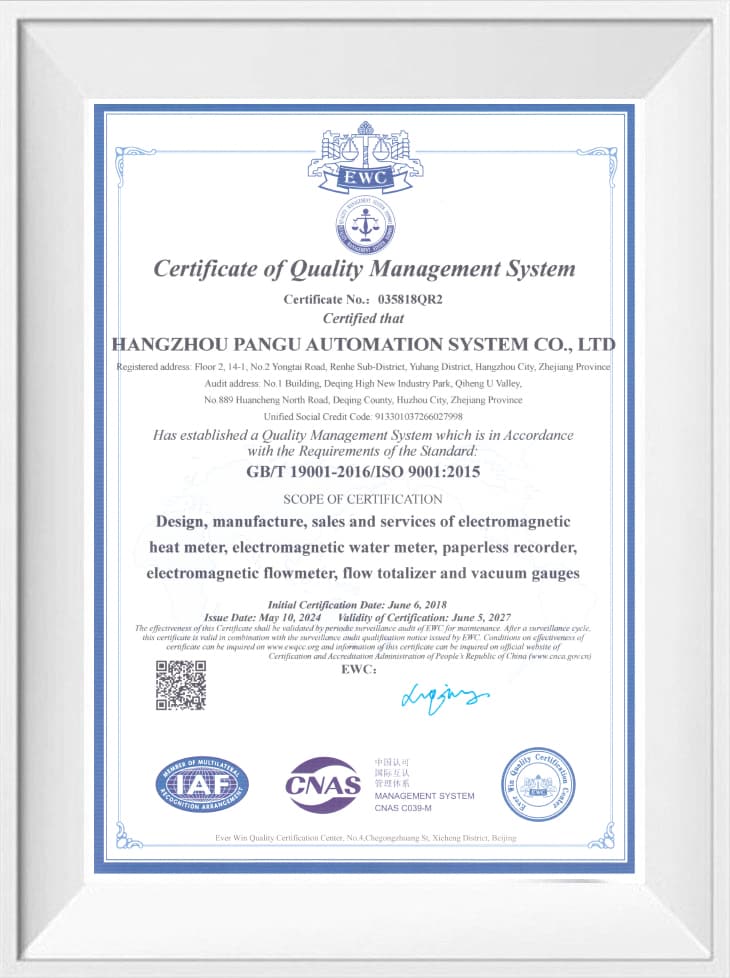 Quality Management System Certification
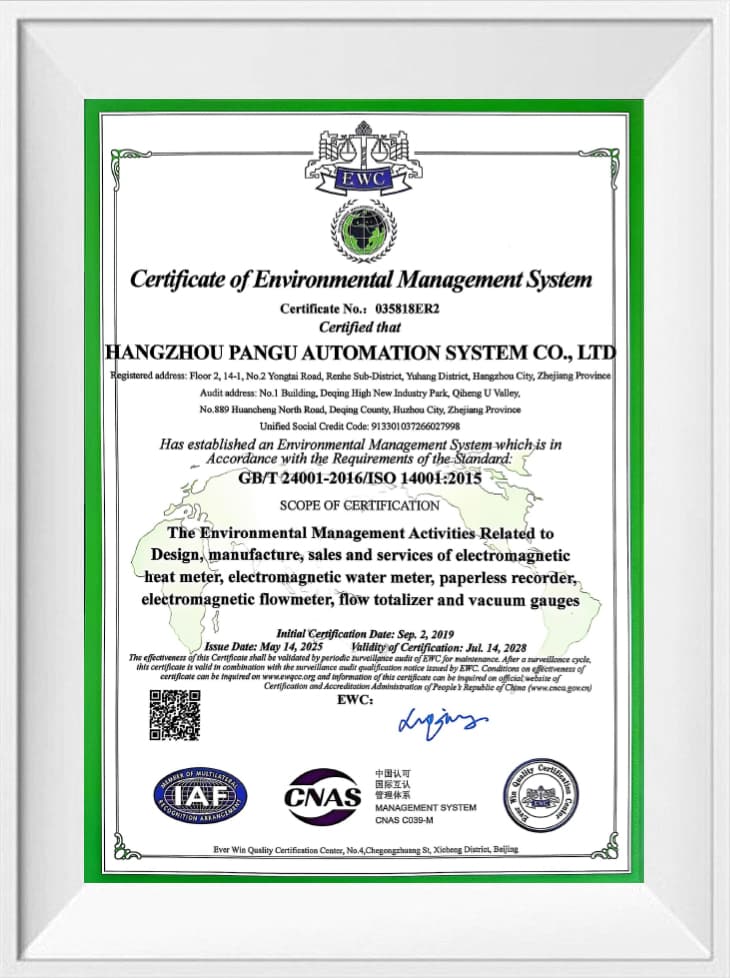 Environmental Management System Certification
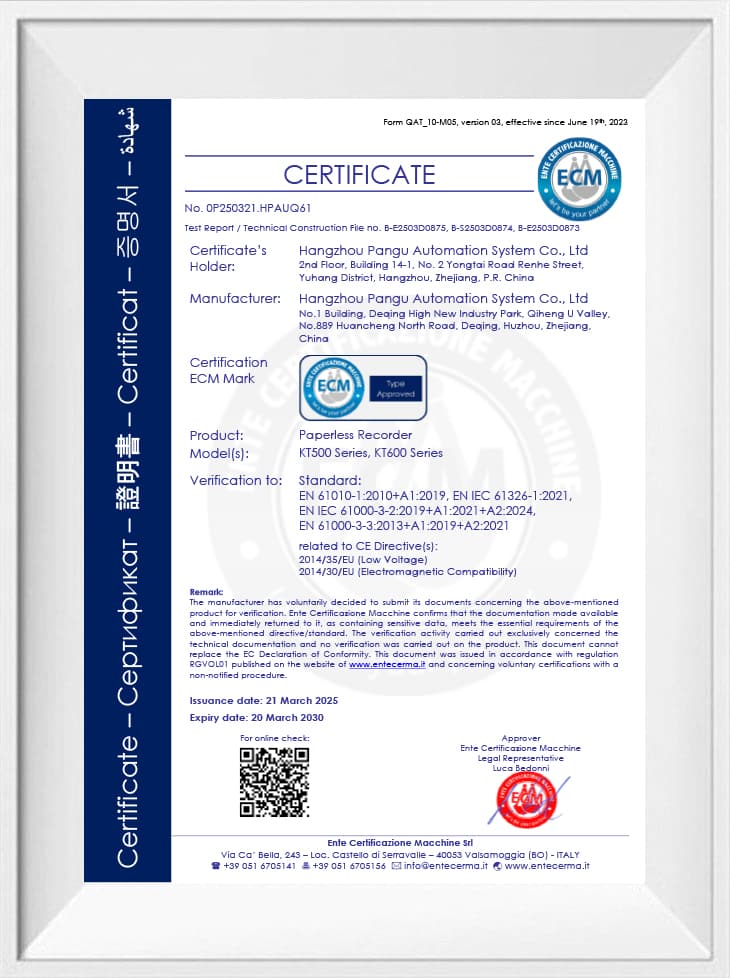 CE Certificate
 SIL Certificate
Yes. Send us your requirements and we will propose a solution.
Standard models ship quickly; custom orders depend on quantity.
Tell us your requirements and our engineers will reply promptly.
✉pangusales@vip.163.com
☎+86 13967196545
⚑602-702, Block D, Building 3, Area B,Xigang New Territories, 206 Zhenhua Road,Hangzhou City, Zhejiang Province, China